









Watch the so-called “culture wars” long enough, and you’ll notice that hot-button issues come and go. Sure, reproductive rights is a perennial favorite, but some controversies come to the fore, generate heated debate, and then quietly fade, making room for new social disputes.
In recent decades, for example, there have been fleeting fights over Ten Commandments displays, warning labels on entertainment such as music and video games, and measures mandating English as the official language.
But one of the biggest “culture war” issues of all time is school prayer — that is, policies that mandate public schools encourage and promote worship among children. The issue has been at the center of historic court rulings and proposed constitutional amendments, but in the 21st century, even the most aggressive social conservatives have largely moved on to more contemporary cultural disputes.
Alabama’s newest senator apparently hopes to relitigate the issue.
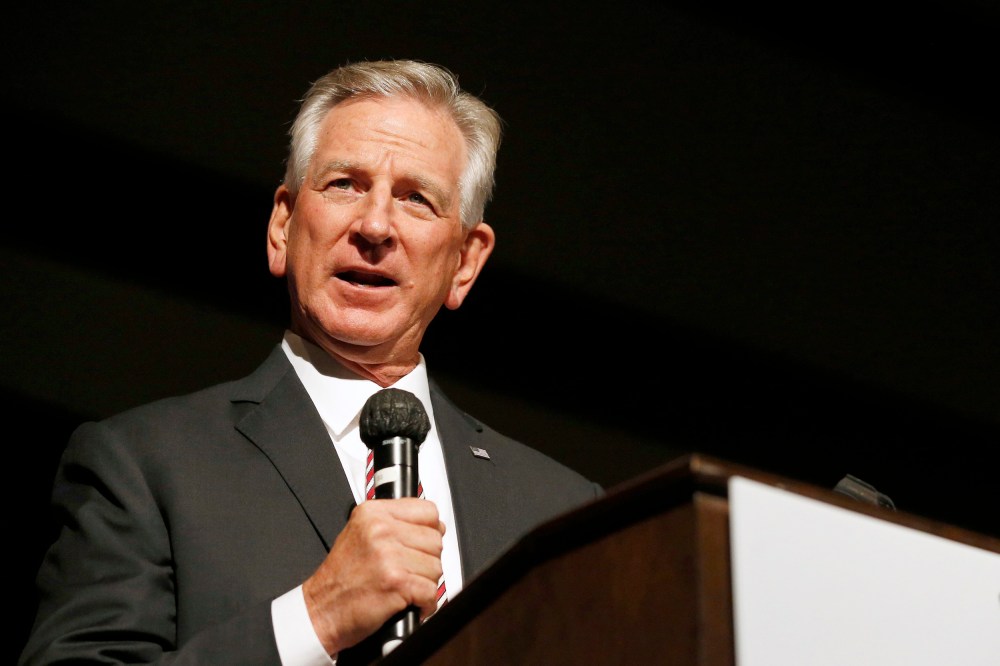
Teaching children moral values by “putting God and prayer back in school,” and giving students opportunities in career tech programs were among the educational priorities Republican Alabama Senator Tommy Tuberville cited during his first speech on the Senate floor.
“We’ve got to start teaching our young people moral values again,” the coach-turned-politician declared in his maiden Senate speech. “That starts with putting God and prayer back in schools.”
Oh my.
Right off the bat, it’s worth emphasizing that “God and prayer” were never removed from schools, Tuberville’s declaration notwithstanding. There’s an old joke that says so long as there are math tests, there will always be prayer in schools, which is amusing, but more importantly, it reflects an often-overlooked truth: students can already pray if they want to. Under current law, they can also form after-school Bible clubs and invite other students to worship services.
What’s not allowed is governments using public institutions to intervene in matters of faith. Courts have consistently ruled that schools simply must remain neutral on religious issues, which is the sort of framework that should satisfy the left and right equally: it protects civil liberties while limiting the power of government.
Evidently, however, Tuberville wants to turn back the clock to an era in which public officials intervened in children’s religious upbringing, communities fought over whose religion would be favored, and kids from minority traditions were told to wait in the hall.
To be sure, those who support the separation of church and state probably don’t have to worry too much about the Alabama Republican’s plans. For one thing, there’s no reason to assume Tuberville actually has any such plan, or has given the matter serious consideration. For another, even if some kind of federal school-prayer policy were to pass someday, it’s unlikely to clear the courts.
But the fact that the Alabaman even included this in his first-ever speech on the Senate floor served as a reminder that his political career is off to a difficult start.
As regular readers may recall, Tommy Tuberville was a unique kind of U.S. Senate candidate. The Republican settled on a campaign strategy that Americans generally don’t see among those seeking statewide office: say very little, do very little, and expect to win by maintaining a relatively low public profile.
During the state’s GOP primaries, for example, Tuberville refused to debate former Attorney General Jeff Sessions. During the general election, he also refused to debate then-Sen. Doug Jones (D). After struggling to discuss what the Voting Rights Act is, the retired coach seemed to retreat even further from microphones. In mid-October, the Alabama Media Group’s Kyle Whitmire noted, “With three weeks left before the election, Tuberville’s campaign strategy is to say as little as possible. No debates. No interviews. No nothing. Tuberville is in hiding.” The columnist added, “[I]f a campaign won’t let its candidate speak openly because he can’t do so without saying dumb things that hurt his chances of winning the election, what the heck is going to happen when he’s in the United States Senate?” None of this seemed to matter too much to voters in Alabama — Tuberville won in a landslide — and as he prepared to take office, the Republican raised new doubts about his competence with comments to the Alabama Daily News’ Todd Stacy, arguing that World War II was about “freeing Europe of socialism.” (It wasn’t.) In the same interview, Tuberville added, “You know, our government wasn’t set up for one group to have all three of branches of government. It wasn’t set up that way, our three branches, the House, the Senate, and executive.” In the United States, the three branches of government are the legislative, the judiciary, and the executive. Yesterday, the Alabama Republican appeared confused about the basics on school prayer, too. This does shed some light on why Tuberville avoided debates and interviews ahead of his successful election victory. Postscript: For more background information on this issue, my friends at Church & State magazine — full disclosure: I wrote for the magazine back in the 1990s — recently devoted an issue to school prayer. Maybe someone should send Alabama’s junior senator a copy.
Steve Benen is a producer for "The Rachel Maddow Show," the editor of MaddowBlog and an MS NOW political contributor. He's also the bestselling author of "Ministry of Truth: Democracy, Reality, and the Republicans' War on the Recent Past."
Latest Post
Recommended


