








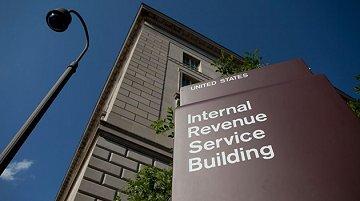
The story looked pretty bad on Friday: the Internal Revenue Service inappropriately flagged conservative political groups for additional scrutiny when Tea Party organizations and others sought tax-exempt status. The IRS has a responsibility to be even-handed, and by its own admission, in many cases, it wasn’t.
The story is a little worse now.
At various points over the past two years, Internal Revenue Service officials singled out for scrutiny not only groups with “tea party” or “patriot” in their names but also nonprofit groups that criticized the government and sought to educate Americans about the U.S. Constitution, according to documents in an audit conducted by the agency’s inspector general.
The documents, obtained by The Washington Post from a congressional aide with knowledge of the findings, show that the IRS field office in charge of evaluating applications for tax-exempt status decided to focus on groups making statements that “criticize how the country is being run” and those that were involved in educating Americans “on the Constitution and Bill of Rights.”
If there were any doubts there will be hell to pay, they should be gone now. The IRS’s actions have drawn bipartisan criticism, and the question isn’t whether officials will lose their jobs, but rather, how many. Those calling for a full investigation are entirely correct.
There are, however, some substantive angles to this that are worth keeping in mind as the controversy continues to unfold. For example, I’m not unsympathetic to the notion that the IRS needs some kind of clear standards when it comes to groups applying for 501(c)4 tax-exempt status. Putting aside the irony of Tea Party groups demanding a tax subsidy for their work, there’s been a proliferation of political/educational organizations applying for this status, and it stands to reason that IRS will need some credible, objective standards to evaluate applications on the merits.
In many cases, it appears the Cincinnati branch applied tougher scrutiny to certain kinds of groups, and there’s no plausible defense for this. One might argue that the proliferation of 501(c)4 applications led low-level staffers to come up with standards on the fly, which made problems inevitable. But that’s not much of an excuse, and it doesn’t negate the need for a fair and neutral test applied evenly, without regard for ideology.
Let’s also note that as political controversies go, this one appears to have a ceiling.
This item from Time’s Joe Klein, for example, struck me as way off the mark.
Previous Presidents, including great ones like Roosevelt, have used the IRS against their enemies. But I don’t think Barack Obama ever wanted to be on the same page as Richard Nixon. In this specific case, he now is. No, actually he’s not, and it’s irresponsible to say otherwise. The IRS commissioner at the time was a Bush/Cheney appointee, and had no incentive to punish conservative groups. Indeed, we learned over the weekend that when senior IRS officials learned of the additional scrutiny paid to conservative groups, they did the right thing. [O]n June 29, 2011, Lois G. Lerner, who heads the IRS division that oversees tax-exempt organizations, learned at a meeting that groups were being targeted, according to the watchdog’s report…. Lerner instructed agents to change the criteria for flagging groups “immediately,” the report says. To argue that the president “used the IRS” against his enemies is ridiculous given what we know. There can be little doubt that some officials in the IRS showed terrible judgment and made inexcusable errors. The need for an investigation is obvious. What’s more, even the way in which the IRS has handled the apology is a mess, quietly making a bumbling announcement on Friday morning, as if that would make the story go away. But before we start casually accusing the White House of Nixonian tactics based on literally nothing, let’s try to keep our heads on straight. It’s an ugly enough controversy without Beltway pundits turning this into something it’s not.
The place for in-depth analysis, commentary and informed perspectives. Recommended


