








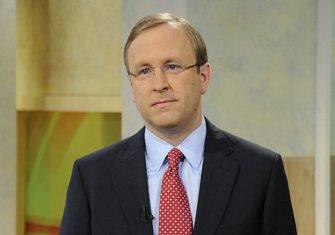
We’ve been keeping a close eye on the controversy surrounding ABC News’ Jonathan Karl and his misleading reporting on Benghazi, which played a critical role in moving the controversy out of Republican media and into the mainstream. Yesterday, for the first time, Karl expressed “regret” for his missteps, though his apology was not without flaw.
To briefly recap, 10 days ago, Karl told the public he had an exclusive report on internal administration emails, which purportedly showed a top White House official pushing to change Benghazi talking points for political reasons. The report was wrong — it mischaracterized the official’s communications; it included fabricated quotes; it told viewers Karl had “obtained” emails that he had not actually seen; and it effectively got the substance of the story backwards.
Yesterday, Howard Kurtz on CNN shared a statement he’d received from Karl.
“Clearly, I regret the email was quoted incorrectly and I regret that it’s become a distraction from the story, which still entirely stands. I should have been clearer about the attribution. We updated our story immediately after new information became available.”
The ABC reporter later said on Twitter that he “sincerely” regrets his error, adding that he apologizes for failing to tell viewers that “the reporting was based on a summary provided by a source.”
It’s tempting to think this should effectively settle the matter, but the closer one looks at Karl’s response — over a week in the making — the more I’m inclined to believe the underlying problems haven’t been resolved.
The email was “quoted incorrectly”? Well, that’s not quite right. Karl’s original ABC report included a quote that had been made up to advance a partisan attack based on nothing. “Quoted incorrectly” suggests Karl put a quotation mark in the wrong place, or misunderstood the nature of a paraphrase, but that’s not what happened. Karl received bogus information, which he then presented (badly) as accurate information.
The story “still entirely stands”? It shouldn’t; the story is wrong. As Josh Marshall noted, “[Y]ou can’t have a major part of the story be false and have the story ‘entirely stand.’” Karl “should have been clearer about the attribution”? Probably so, though that’s really just part of the larger problem. When Karl said he’d “obtained” materials he had not actually obtained, this goes well beyond an attribution problem. When he put in quotes words that were made up, the clarity of the attribution was a tangential point. ABC “updated” Karl’s story “immediately”? The network has certainly done several follow-up reports, but as best as I can tell, there’s been no correction, and there’s been no acknowledgement that Karl’s reporting was simply incorrect. (Apparently, ABC and Karl don’t see the need to correct the mistake because, as he put it, Karl thinks his original report “still entirely stands.”) And finally, there’s also the not-inconsequential matter of who, exactly, provided Karl with the bogus leak in the first place, which is important insofar as it matters when Capitol Hill professionals lie to a reporter in the hopes of lying to the public. Karl has not yet said anything about the identity of the person responsible for the bogus leak.
The place for in-depth analysis, commentary and informed perspectives. Recommended


