








For years, we’ve watched President Donald Trump avoid accountability. While there is some indication that he may ultimately face justice in a criminal or civil courtroom, he has thus far avoided serious political punishment. After the House impeached him in December 2019 for trying to extort Ukraine’s president, Senate Republicans let Trump off without calling a single witness. This despite the warning in Democratic Rep. Adam Schiff’s closing argument that Trump had betrayed our national security and that he would do it again if they didn’t hold him accountable.
After the House impeached him in December 2019 for trying to extort Ukraine’s president, Senate Republicans let Trump off without calling a single witness.
Predictably, Trump did do it again. In what has become known as “the big lie,” Trump refused to concede an election he had clearly lost, alleged widespread voter fraud despite clear evidence that there was none and became the first president to directly interfere with the peaceful transfer of power. Trump summoned a mob to Washington, D.C., and unleashed it on the U.S. Capitol on Jan. 6. As a result, he is now the first president to have been impeached twice, and he faces another Senate trial, this time on charges that he incited insurrection.
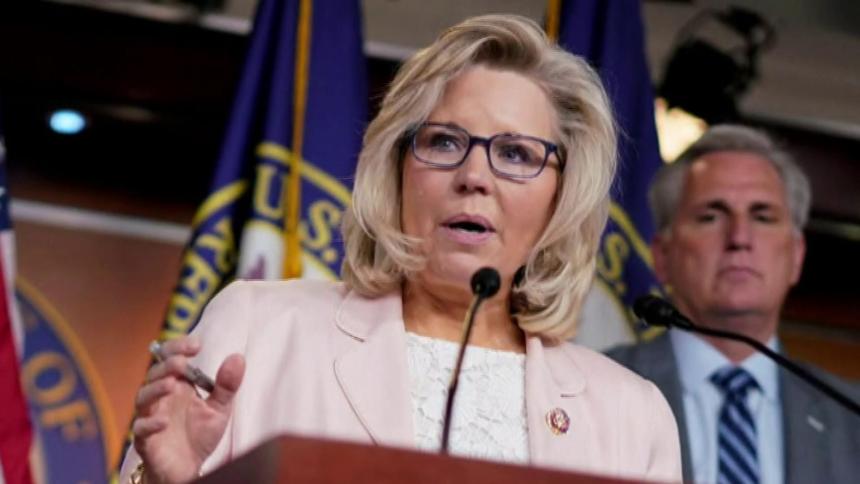
During re-impeachment, 10 Republicans voted with Democrats in the House. Rep. Liz Cheney, the third-ranking House Republican, was subsequently censured by Republicans in her home state, Wyoming. In contrast, nearly two-thirds of House Republicans signed on to a mid-December Texas lawsuit seeking to overturn the election. Now that we’re past the first shock of seeing the Capitol overrun, House Republicans don’t seem to believe Trump has done anything seriously objectionable, let alone impeachable. They continue to shelter a member who condoned violence against fellow members.
Nor does the Senate seem inclined to take any real measures against Trump. Forty-five senators voted in favor of a procedural motion arguing that a trial for someone who is no longer in office is unconstitutional. Had it been successful, the motion would have terminated proceedings. The Constitution is technically silent in this regard, but one would expect originalists — which many Republican lawmakers claim to be — to acknowledge that the plain text doesn’t prohibit a trial. Sadly, consistency doesn’t appear to be a virtue for this crowd.
Furthermore, as many constitutional law experts have argued, while the Constitution doesn’t expressly deal with our current scenario, it strongly suggests that Trump can be tried on impeachment charges after leaving office. The impeachment, the equivalent of an indictment in a criminal case, was brought while Trump was still president. No one would suggest that an embezzler should go free just because he resigned from his job. And if resignation bars a trial, then one of the most important tools the Founding Fathers gave the Senate — the ability to ban a malfeasant president from holding federal office ever again — could be defeated by a quick resignation, or, as in this case, the transfer of power. So the 45 votes in the Senate to discontinue the impeachment trial reflect either a lack of willingness to go on record against Trump or, perhaps, continued support for him.
It would take 67 votes to convict Trump in the Senate. I’m not holding my breath.
It would take 67 votes to convict Trump in the Senate. I’m not holding my breath.
Sure, there are fantasy scenarios. Since the votes necessary to convict are counted as a percentage of the total number of senators present, some have suggested that if enough senators stayed home, Democrats could muster the votes to convict. No senators have intimated that they might do this. With the news that Trump’s initial legal team resigned because Trump still insists that the election was stolen from him, maybe just enough outraged Senate Republicans will vote to convict. This notion seems equally dubious.
Republicans have never delivered on holding Trump accountable. Nothing he has done has been too outrageous, too offensive to the Constitution, to justify angering the base and losing power. America has watched the party of Trump choose party over country over and over. So while a few senators may echo Liz Cheney’s brave stance, Trump will likely remain unconvicted and eligible to run for office again.
As we draw further away from the traumatic events of Jan. 6, their singular impact seems to diminish as they retreat into memory. We have said the word “insurrection” so many times that it now feels less world-shattering. Some people seem ready to heed calls for “healing,” even when they come from people who bear at least some responsibility for what happened. A Capitol Police office was bludgeoned with an American flag. Members of the mob wanted to kill House Speaker Nancy Pelosi and Vice President Mike Pence. There must be accountability for all of that — even if the Republicans in the Senate choose, yet again, to turn a blind eye to what Trump did. And if Senate Republicans do fail to hold him accountable, it will be up to the American people to do it at the ballot box. We know it’s possible, because we just did it in 2020. That’s the power Trump and his supporters tried to take away and all the more reason to exercise it. Unfortunately, in the wake of the election, Republicans have already filed 106 bills in 28 states to make it more difficult to vote. In 2020, it took a full court press from candidates, voting rights activists, lawyers and American voters, all of whom were figuring out how to vote in the middle of an unprecedented pandemic. If the Senate fails to convict Trump, that will have to happen again. Anyone who fails to renounce violent insurrection is unfit to govern. It will be up to voters to keep such people out of office. If you hoped Biden’s inauguration would settle the matter, you now know with certainty it did not. Trump and Trumpism remain with us. But as our new president said in his inaugural address, it doesn’t take all of us to protect democracy. It just takes “enough of us.” Enough of us to make sure that if the Senate won’t do its job, citizens fulfilling the most important obligation we have — voting — will do it for them.


