








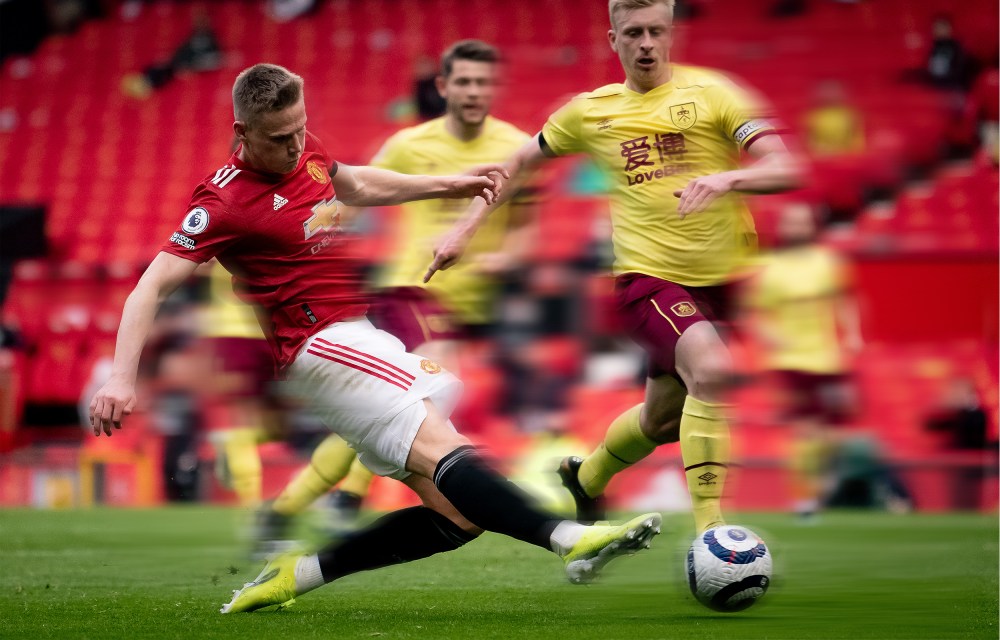
In case you’ve been living in a cave, or just the United States, an unprecedented upheaval has recently roiled the world of professional soccer.
A “super league” would turn the sport into the pastime of plutocrats, several of them American.
Originally, 12 of the best soccer clubs on Earth — including Manchester United, Arsenal, Read Madrid and Barcelona — announced they would be leaving their national, historic leagues to form what they are calling, embarrassingly enough, the European Super League. (The 10-year-old child who I assume came up with the name was not available for comment.)
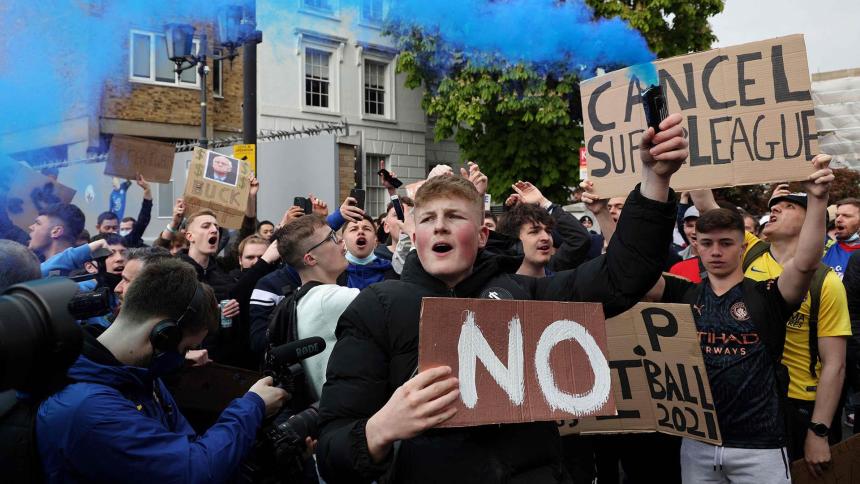
The move was met with intensive backlash from fans around the world; consequently, the scheme quickly began to crumble. First Chelsea declared it was leaving the Super League, followed by several other clubs. On Tuesday evening, the remaining clubs met and decided that it was time to suspend the operation.
According to their statement, the Super League is now on pause as they work to “reshape the project.” The failed league then admitted what has been obvious: that the edifice had crumbled “due to outside pressure.” In other words, the Super League is no more as a result of a combination of mass resistance and mass revulsion.
The immediate resistance and revulsion expressed by fans is understandable. Imagine if the six most valuable NFL teams — not necessarily the best, but just the most valuable — decided to split off and form their own league. They would only play each other in a series of monotonous, repetitive contests, sitting back and raking in billions in guaranteed broadcast revenue.
OK, it would increase the odds that the Dallas Cowboys could actually win a championship of some kind. But while this new, risible league might score some points for spectacle, similar to a celebrity boxing match, any title would be deemed a joke. Any records would be seen as illegitimate. Any highlights would be about as thrilling as a dunk in an exhibition basketball game.
It would be a sporting tragedy, with some of the most adored franchises on Earth throwing a middle finger at the fans, the communities that have supported them for decades and at the sport itself.
This move would gut traditional rivalries, remove relegation — the process by which a team is sent to a lower league if it doesn’t win enough games — from the equation and damage countless smaller clubs. It would help complete a process that has been going on for years, in which these esteemed clubs have been slowly torn away from their working-class and community roots.
As Sassuolo FC manager Roberto De Zerbi said, “This is the equivalent of telling the son of a factory worker he can’t grow up to be a doctor.”
Sassuolo manager Roberto De Zerbi on the Super League: “We’re playing Milan tomorrow and if it were solely up to me I wouldn’t want to play bc they signed up to the Super League. This is the equivalent of telling the son of a factory worker he can’t grow up to be a doctor.”
— Gabriele Marcotti (@Marcotti) April 20, 2021
A “super league” would further turn the sport into the pastime of plutocrats, several of them American, to whom the owning of these clubs is just another asset in their mighty portfolios.
It’s a great short-term business move that would have been incredibly damaging to the sport.
The move, it is estimated, would have netted each team about $400 million in broadcast and ad dollars. It’s a great short-term business move that would have been incredibly damaging to the sport. Already, UEFA, the Union of European Football Associations, had lambasted the new league, calling it “cynical” in a statement that noted its previous threat — backed by FIFA, the governing body of global soccer — to ban anyone who played in the games from international competitions like the World Cup.
James Corden took time from his late-night show to call it “the worst kind of greed I’ve ever seen in sport” and that “it’s the end of the sport we love. It truly is.” Even British Prime Minister Boris Johnson, like seemingly everyone else in Europe, got in his two cents, calling out the breakaway league by tweeting that such a move would be “very damaging” and that “clubs involved must answer to their fans and the wider footballing community before taking any further steps.”
The chairman of the Super League, Real Madrid President Florentino Pérez, said they were doing it all for the people, explaining in a statement, “Football is the only global sport in the world with more than four billion fans and our responsibility as big clubs is to respond to their desires.” But there’s no real evidence that anyone’s “desire” would have been slaked by this move. From the start, the popular reaction on display was revulsion. You can look far and wide among the 4 billion for support of this move and come up empty handed. That’s what the new Super League would have been: the final victory in the long war between manna and the people’s game. Pérez then shifted his stance to say it wasn’t the ardor of fans that has driven this super swindle — it was Covid-19 and its subsequent financial losses. Multibillionaire owners using Covid-19 to cry poverty feels cynical in the worst way. The timing of this move, which has been in the works long before the pandemic, also felt like a way to mute popular resistance. There is a long tradition in Europe of fans organizing and protesting when their teams act in a manner at odds with the best long-term interests of their clubs, and we saw that despite the pandemic. Fans in Europe took to the streets to beat this back. They fought because what we see, tragically, are the worst fears of diehard fans coming to fruition. For years, as billionaire Americans started buying historic franchises like Liverpool FC, there was the concern that every last decision would be governed by profit ahead of people, local communities and rivalries be damned. That’s what the new Super League would have been: the final victory in the long war between manna and the people’s game. It may not be happening this go around, but the only rational response to make sure there are no Super Leagues in our future is to call for fan ownership of teams. For inspiration, fans can look to the Bundesliga, the powerhouse German league, where the teams rejected the Super League. They were able to do so with their full chest precisely because top teams like Bayern Munich, as Ben Joyce pointed out at Tribune, are fan-run operations. Here’s where the U.S. can actually be an inspiration, too, with select teams like the fan-owned Green Bay Packers. If teams were owned by Jerry Jones, owner of the Dallas Cowboys, for example, they’d already have their bags packed. It is possible to make sure your franchise represents the best of your community instead of the greed of ownership. But it will take a continued fight. It will take organization and the assertion of fan power to make this vision a reality, and to make sure that the next Super League-like stunt does not succeed.
Dave Zirin
Dave Zirin is sports editor of The Nation. He is the author of 11 books on the politics of sports, including "The Kaepernick Effect." He is also the host of the "Edge of Sports" podcast. 


