








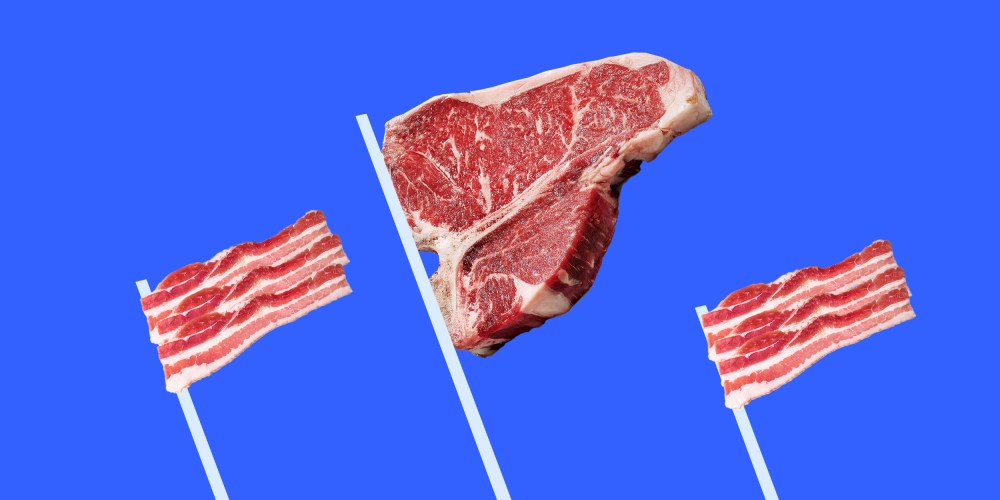
I often say climate change is not just an emissions problem but also a cultural problem. We won’t muster the will to create a sustainable economy until we change what we value as a society.
Republicans like to frame climate action as a threat to traditional American identity.
Republicans understand this extremely well. That’s why, when they talk about climate policy, they rarely make arguments about the core issue of greenhouse gases.
Instead, Republicans like to frame climate action as a threat to traditional American identity — an assault on the things that make us who we are. The recent GOP-induced panic over red meat is a perfect example.
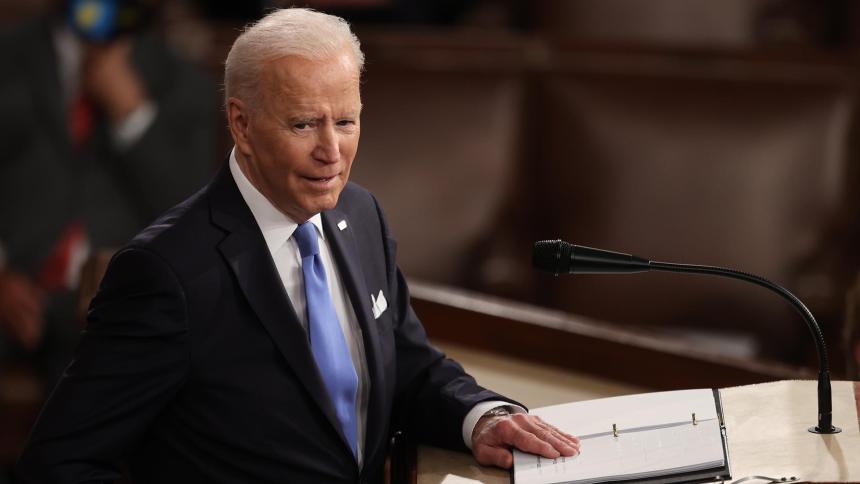
When President Joe Biden announced his plan to cut U.S. greenhouse emissions in half by 2050 last week, Republicans didn’t respond by challenging the scientific need for the goal. They responded by erroneously claiming that the plan would force Americans to reduce their consumption of red meat by a whopping 90 percent.
This stuff is completely imaginary. Biden has not proposed any limit on Americans’ meat consumption.
— Daniel Dale (@ddale8) April 25, 2021
What happened: 1) The Daily Mail ran an article that dishonestly connected Biden’s climate plan with a not-at-all-about-Biden study. 2) Others on the right just ran with this. pic.twitter.com/VRB52TPmUj
The fact that Biden’s plan never actually mentioned meat production or consumption didn’t matter. The chance to scare Americans into perceiving climate action as a threat to their identity was too valuable to pass up.
Make no mistake: Access to cheap, abundant red meat is a certain type of American value. I learned about that in 2018, after The Washington Post published a recipe for a vegetarian alternative to hot dogs, and the internet (liberal and conservative alike) exploded into a murderous, meat-defending rage.
Working on a story at the time, I called up Bruce Kraig, a food historian who has written two books about hot dogs in America, to try to understand why. He tied the outrage directly to American culture. “Underlying the defense of hot dogs is the idea of American values,” he told me. “In this case, those values are xenophobia and American exceptionalism.”
Kraig explained to me that widespread access to cheap red meat was one of the first things to set Americans apart from Europeans in post-Civil War America. “If [you were] a working-class factory worker in Liverpool, you [weren’t] going to eat as much meat,” Kraig said. “But working-class Americans could get it, and they knew that.”
Access to cheap, abundant red meat is a certain type of American value.
This fueled a national sense of superiority over Europeans, who Kraig said were actually pretty grossed out by Americans’ level of meat consumption at the time.
Meat-adoring culture in America didn’t just happen naturally, though. Starting in the 1940s, meat company advertisers capitalized on existing sentiments by framing cheap meat as war-fighting food, kid-friendly food, food for traditional working-class families. Soon, meat advertising slogans became icons of American popular culture: I wish I were an Oscar Meyer wiener. Beef: It’s what’s for dinner. Arby’s: We have the meats. The meat industry continues to have a big influence on American meat-loving culture today. Companies and trade organizations “spend billions of dollars a year on lobbying and promotion so that we don’t lose our appetites for animal protein,” Salon reported in 2016. It added: “Some researchers argue that increasing meat consumption around the globe, the U.S. included, is not demand driven but supply driven: it’s pushed more by the actions of the meat industry and not so much by the desires of our taste buds.” The advertising actions of the meat industry are now focused not just on maintaining meat culture in America, but also on creating a culture that despises plant-based alternatives. Last year, for example, the Center for Consumer Freedom ran a Super Bowl ad casting doubt on the safety of ingredients in “synthetic meat.” The group also ran full-page ads in The New York Times, asking, “What’s hiding in your plant-based meat?” When Republicans lie about meat to delay climate action, they, too, are performing a sort of advertising service for the meat industry, which directs about 80 percent of its political donations to Republicans and happens to be one of the most significant sources of climate pollution in the country. The commonality that ties the ads and the lies together is that they seek to activate a certain part of our brains — the part that says: “Cheap and abundant meat is America. Cheap and abundant meat is me.” Republicans do this with fossil fuels, too. They frame them as a core part of American identity — and climate action as an attempt to strip you of it. It’s an almost genius-level form of psychological warfare to protect profits of high-polluting industries. It would be laudable if the consequences weren’t so dire.
Emily Atkin
Emily Atkin, an award-winning climate journalist, is the founder of HEATED, a daily newsletter devoted to original climate reporting and analysis. She previously held staff positions at The New Republic, ThinkProgress and Sinclair Broadcast Group. She is a contributor to the climate solutions anthology "All We Can Save" and holds a journalism degree from the State University of New York at New Paltz, where she teaches a climate reporting course. She lives in Washington, D.C. 


