








Shortly after its dramatic victory over Spain on Tuesday, Morocco’s World Cup team celebrated by hoisting the Palestinian flag and parading it for the thousands of fans in attendance at the Qatar World Cup stadium and millions of viewers around the world. The players carried out the same gesture after defeating Canada in the group stage of play.
Morocco’s improbable World Cup run continues to galvanize the Arab world. And it is using the adoration and love from its fans to spotlight the Palestinian cause.
Morocco celebrate their win against Spain with a Palestinian flag. Every North African and Middle East team has made sure that the Palestine issue is prominent at every game pic.twitter.com/ZJU2Dog9Ee
— Mark Ogden (@MarkOgden_) December 6, 2022
It did not take long for Western journalists to notice and focus on the explosion of solidarity expressed with Palestinians at this World Cup. But instead of writing about why the Palestinian cause was central to Arab identity at a World Cup held in the Arab world, many journalists have centered their commentary and reporting around the experiences of Israelis and Israeli reporters.
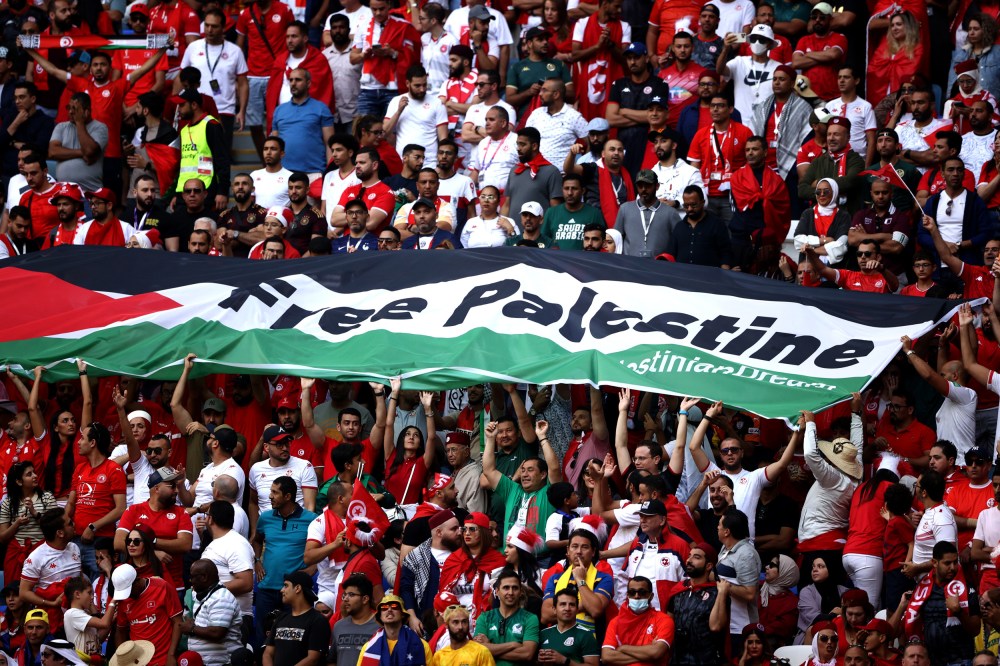
Throughout this World Cup, we have heard and seen Western media, pundits and commentators bang the drum about human rights in the region in ways that gloss over similar or worse offenses in the West. When a spectator ran across the field with an LGBTQ flag and wearing a T-shirt expressing support for Iranian women and Ukrainians, the reaction on the field was showcased by outlets as a snub to human rights. When a Tunisian fan with a Palestinian flag dashed across the field, his act of protest was barely mentioned. As I wrote recently, it has been a reminder that the West does not view all human rights equally.
Instead of writing about why the Palestinian cause was central to Arab identity at a World Cup held in the Arab world, many journalists have centered their commentary and reporting around the experiences of Israelis and Israeli reporters.
When outlets point out how Israelis are not feeling welcomed at the first World Cup in the Arab world, it is yet another reminder of how out of touch the Western narrative is when it comes to the Arab world.
Implying that Israeli journalists or fans are simply unwelcome guests in Qatar is an obfuscation of the underlying resentment Arabs feel toward a country that has been accused of committing apartheid against the Palestinian people. Israel has also been accused of committing violations of international law, including carrying out extrajudicial killings (Israel has denied the accusations, saying it acts out of self-defense); it continues to occupy Arab lands to this day.
Once again, we see Western narratives that oversimplify Arab sentiments while omitting Israeli aggressions on neighboring Arab countries. They do so while promoting orientalist tropes of Arabs as angry and confrontational, while casting Israelis as victims.
While some have focused on reports of Israeli journalists being shunned or mistreated by Arab spectators, Western media have made little mention that non-Arab spectators have also expressed support and solidarity with Palestinians. An English fan who was interviewed by an Israeli reporter shouted “Free Palestine,” much to the visible disappointment of the stunned interviewer. A viral Instagram video shows Brazilian fans chanting “Free Palestine” on their way to the stadium. At one of the games, the former president of Croatia brandished the Palestinian keffiyeh, a symbol of Palestinian resistance. As with any World Cup, there are always geopolitical undertones to the matches played on the field. Think of the U.S. vs. Iran match or Tunisia vs. France. For years, we have been told that the Arab world no longer cared about the Palestinians, that Arab governments that had made peace with Israel were looking toward the future. But this World Cup provides a rare example of a free and collective Arab expression, and Arab fans have made the Palestinian flag and other symbols of Palestinian struggle present at nearly every game. The Qatar World Cup emphasizes the importance of hosting the tournament in the Arab world for the first time. At a time when the West has downgraded the plight of the Palestinian people from their diplomatic agendas, the fans at this World Cup are reminding the world that their cause is a just one that has not — and should not — be forgotten.
Ayman Mohyeldin is a host of "‘The Weekend: Primetime" and an MS NOW political analyst. 


