









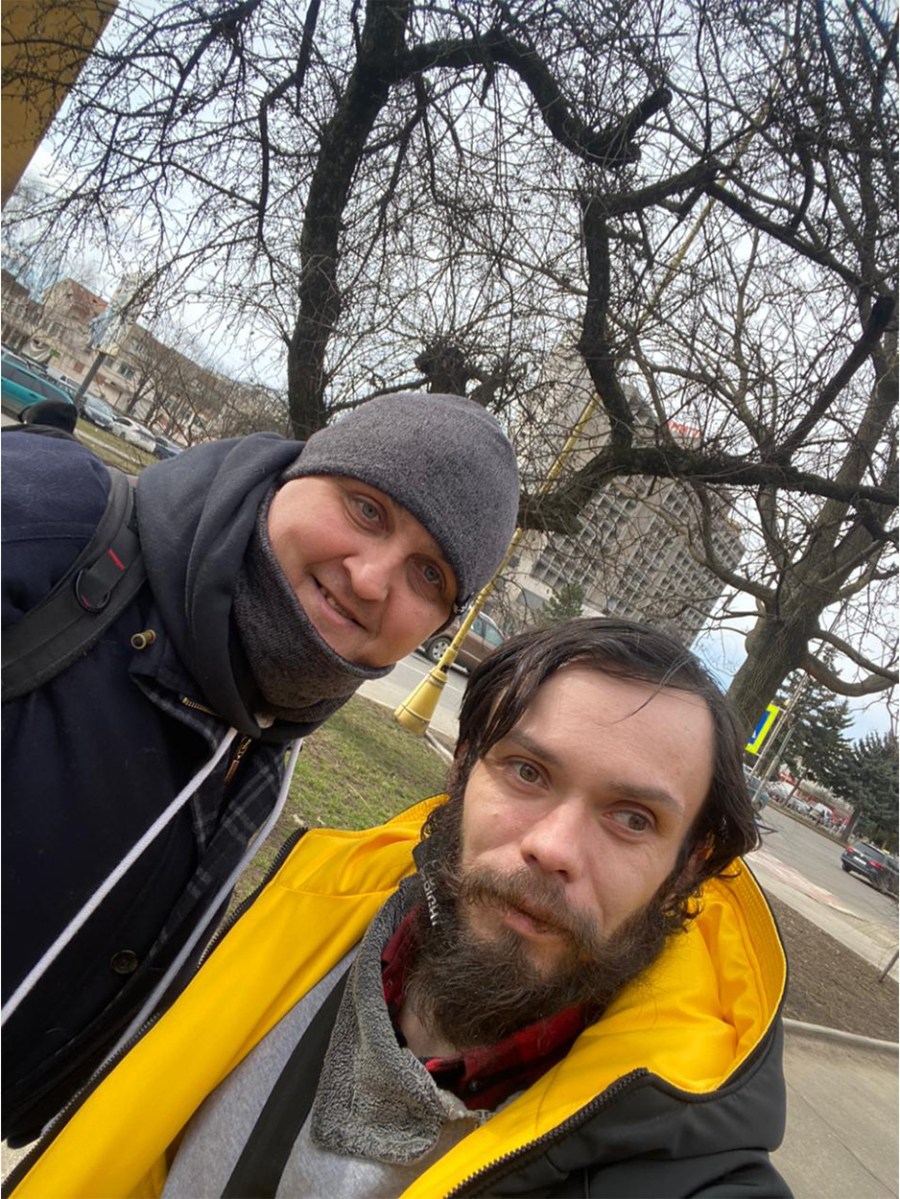
Thirty-year-old Oleksandr Nikulinis has spent the last 12 years living in Kyiv. He’s spent the last week helping foreign students flee the country as Russia’s invasion of Ukraine escalates. But when he tried to leave the country with his partner, they were stopped at the border. “Me and my partner are HIV-positive and he has congenital heart disease,” Nikulinis told me via Whatsapp. “I have a fourth stage of HIV, and visual impairment.”
The humanitarian response has lacked inclusivity and accessibility for many.
Nikulinis’ predicament isn’t uncommon for the estimated 2.7 million Ukrainians with disabilities, many of whom are now forced to flee Russian President Vladimir Putin’s deadly invasion along with the rest of the population.
An estimated 1.7 million Ukrainians have already left. As bombs continue to detonate across the country, 10 million more could be expected to flee — the fastest-growing number of refugees since World World II.
Despite collective condemnation of Russia and support for Ukraine’s sovereignty among the international community, the humanitarian response has lacked inclusivity and accessibility for many. From inaccessible evacuation centers to a lack of information in accessible formats such as braille or sign language, the lack of proper resources for people with disabilities has had devastating consequences. “There are people [with disabilities] trapped, there are people dying; we have been left behind,” Yuliia Sachuk, the chairperson for Fight for Right, a prominent national Ukrainian organization that supports persons with disabilities, said in a statement shared by the Partnership for Inclusive Disaster Strategies, a U.S organization devoted to inclusive disaster relief. “We have been trying to help ourselves, but we need help. We need accessible evacuation efforts prioritized for people with disabilities.”

Anna Landre, who acts as the partnership’s focal point in Ukraine, says the group is trying to field calls and texts from refugees with disabilities but can’t keep up with the amount of requests. Many can’t access the transportation, housing or support they need to get out of Ukraine. Even if they successfully get out, they need a place to go.
The big challenge, Landre said, “is after they get over the border, where are they going to live, how are they going to get there, and all of them have disability access needs, and shelters and transportation at the border are not accessible.”

For some disabled refugees, even making it to the border is not enough. Landre said that they are fielding calls from disabled men who are being barred from evacuating the wreckage altogether. “We’re also having trouble at the border with specifically men with disabilities who want to evacuate but are being told that they need to stay and join the military despite the fact that due to being disabled they’ve been exempt from military service,” she said. “But the border guards don’t care and try to force them to join the military.” Many are being told that their disabilities aren’t “severe” enough. “These are blind men, deaf men, men who are HIV positive and running out of pills and men with heart defects.”
For some disabled refugees, even making it to the border is not enough.
This is the fate that Nikulinis and his partner met when they reached the border. “We got an official certificate that we are excluded from military responsibility. But no one cares,” he said. When he told the guards that he had run out of life-saving medicine for his HIV, he said they told him to smoke marijuana. “It was so humiliating,” he said.
Nikulinis and his partner are currently hiding in a neighboring city, Uzhorod, where he said the situation is a “little bit dangerous for us, because we heard that now police catch men on the street and forcibly taken into the army — we don’t going outside from today.” They are waiting to be part of an Amnesty International convoy to Slovakia and were told their case was transmitted to a lawyer from the European Parliament but have yet to hear back.
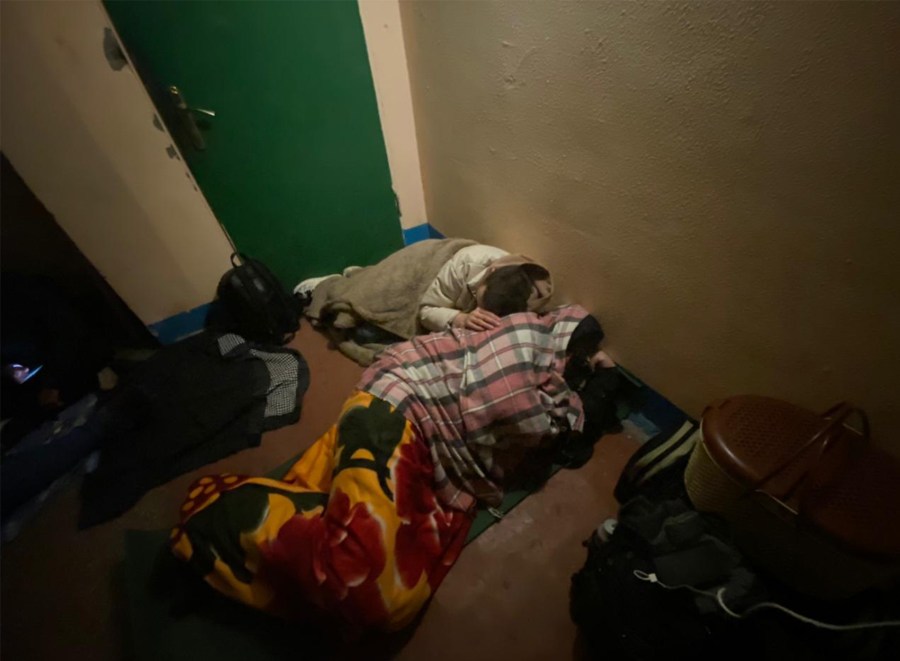
War is devastating for everyone it touches, but people with disabilities are more vulnerable because they’re rarely incorporated in disaster responses. Dr. Victor Pineda, who directs the Inclusive Cities Lab at the University of California, Berkeley, and founded the Global Network for Disability Inclusive and Accessible Urban Development, has been training European mayors and local governments in the wake of the invasion to prevent people from falling through the cracks. Like many other disability rights activists, he’s frustrated with the response.
“Humanitarian organizations, especially the large ones, have not meaningfully engaged with the disability community to create effective response strategy and field operating guidelines that incorporate access and inclusion in emergency plans and in disaster response and humanitarian response,” he told me. This lack of inclusivity has left small disability-led organizations with the herculean task of filling the gap. “People with disabilities are being abandoned by mainstream organizations,” Landre said. “This is someone’s job, but instead we are doing it … a group of war-affected Ukrainians who themselves are either in war right now or who just evacuated this week plus some Americans in a tiny disability organization. This shouldn’t be our job. We are not equipped for this.” He says donations to disability rights groups in Ukraine and those in neighboring countries can go a long way to help those trapped inside this conflict. “People can help by being more proactive for those who are most in need,” Pineda said. “I think it’s important to focus on women and children but there are a lot of organizations that are helping in this regard. Often older people and people with disabilities are not tended to and don’t have the support in place.” For instance, a few days ago a train full of 200 children with developmental and physical disabilities were welcomed in Zahony, Hungary, after a metro station near their orphanages blew up in Kyiv, forcing them to hide underground during the bombing. A local Catholic relief organization, Caritas, arranged for them to be evacuated and transported to safety in nearby Poland, in the city of Opole. “The war looks not like in movies, people are dying,” Nikulinis said. “If somebody thinks that war never comes to their home, it’s not true. It can happen in every part of the world. The only thing needed for evil to triumph is for good people to do nothing.” The hotline for disabled Ukrainians who need services is +380978831508.
Liz Plank
Liz Plank is an award-winning journalist and author, was the host of "Positive Spin." Her book, "For the Love of Men: A New Vision for Mindful Masculinity," was published in 2019. 


