The nation’s foremost political reporters recently provided a window into how Washington elites think and talk about war.
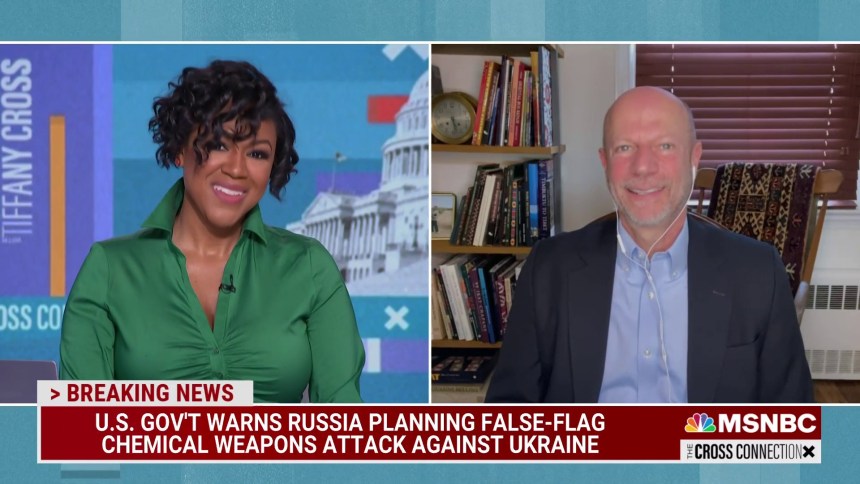
White House press secretary Jen Psaki had just told attendees at her daily press briefing that Russia may be planning a “false flag” chemical weapons attack on Ukraine. “Are you saying if Russia does conduct a chemical weapons attack in Ukraine, there will not be a military response from the United States?” CNN’s Kaitlin Collins asked
Psaki repeated President Joe Biden’s oft-stated intention to avoid sending U.S. troops to Ukraine. “Would President Biden let a chemical weapons attack in Ukraine go unanswered by the United States?” Collins followed up.
I don’t mean to pick on Collins, who is an excellent reporter, but her question inadvertently offered a telling insight. In her framing, the only credible “answer” to a Russian chemical weapons attack is a military one. By that logic, if we’re not dropping a bomb, it doesn’t really count.
We’ve seen this movie before. In 2013, when Syria violated President Barack Obama’s declared “red line” and used chemical weapons against civilians, many expected the U.S. to respond with military force. But Obama demurred, which elicited a far better outcome: Under the threat of a U.S. attack, Syria willingly surrendered its entire stockpile of chemical weapons (the third largest in the world) without a shot fired. Yet to this day, Obama’s “retreat” is viewed in harshly negative terms.
This bizarre disconnect between actions and outcomes is increasingly defining critiques of the U.S. response to the Russian invasion of Ukraine.
A bizarre disconnect between actions and outcomes is increasingly defining critiques of the U.S. response to the Russian invasion of Ukraine.
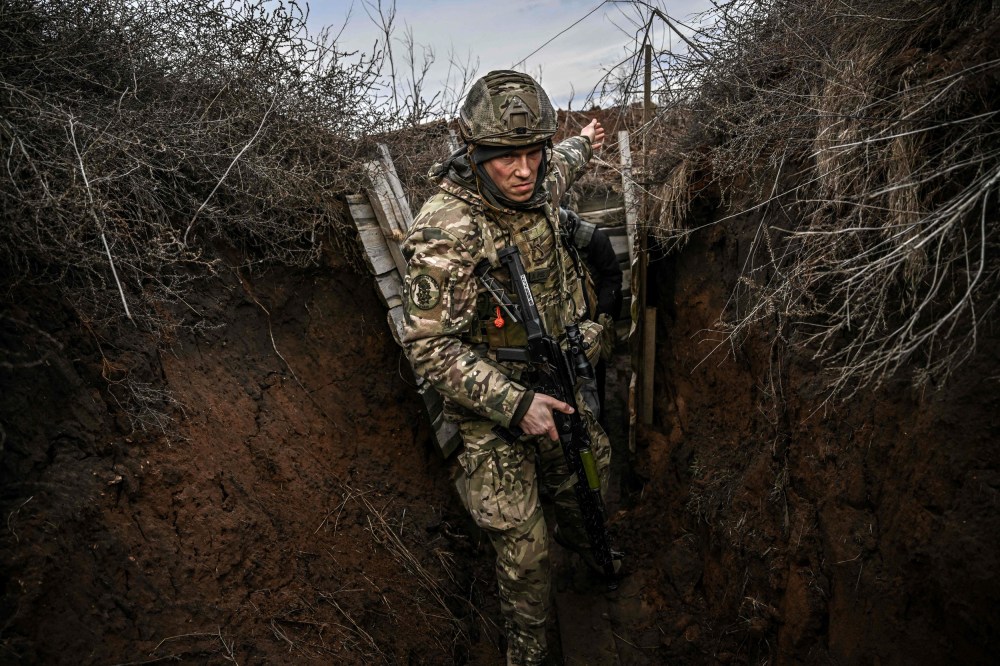
Congress on March 10 passed bipartisan legislation that would provide Ukraine with more than $13 billion — $6.5 billion for military assistance and a roughly equal amount in humanitarian aid. Biden on Wednesday announced another $800 million in military aid to Ukraine, including “800 anti-aircraft systems, 9,000 anti-armor systems, 7,000 small arms like shotguns and grenade launchers, as well as drones and other military equipment.”
These funds and material support come on top of more than $1 billion in security assistance and military aid sent to Ukraine over the past year and $107 million in humanitarian aid provided in the two weeks since millions of Ukrainian refugees fled the country.
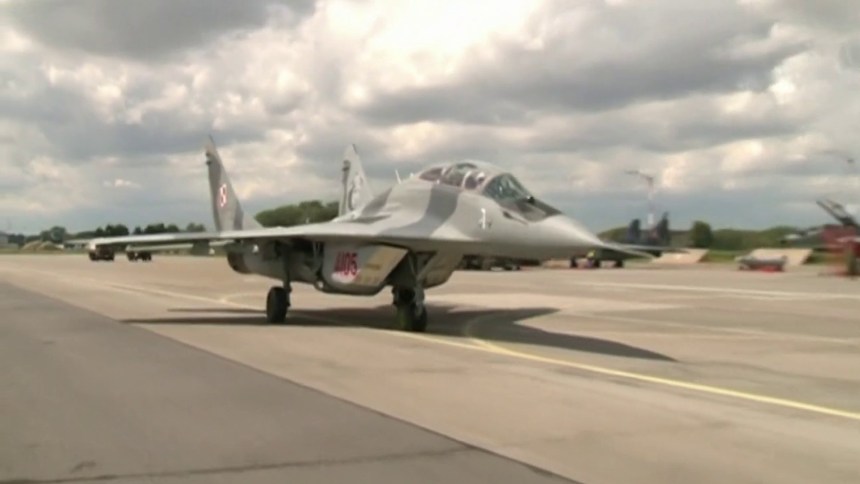
But that’s apparently not good enough. Sen. Lindsey Graham, R-S.C., took to Twitter the day after Congress passed the new Ukraine funding to complain about the White House’s decision not to hasten sending Polish MiGs to Ukraine. And according to Senate Minority Leader Mitch McConnell, “The world needs the Biden administration to be flying this plane … too often it feels like the plane is flying them.”
Aside from the billions in military and humanitarian assistance, the GOP’s critiques also ignore the fact that in the three weeks since Russia went to war in Ukraine, the United States has organized the most debilitating — and speedily enacted — international sanctions in modern history. Moscow has been removed from the SWIFT international payments system and cut off from tens of billions of dollars in its foreign reserves. The U.S. has ended all gas and oil exports from Russia and stripped it of its most favored nation trade status.
These moves are having a catastrophic effect on the Russian economy. The ruble is near collapse. Trading on the country’s main stock exchange has been suspended for weeks. Moscow is on the brink of a sovereign debt default and some analysts are estimating that international sanctions could reverse 30 years of Russian economic gains.
Yet the calls for the U.S. to do more militarily continue to grow. Last week it was the demand for a strategically dubious no-fly zone over Ukraine. While the military benefits of such a move would likely be marginal, the risks are extreme. A no-fly zone over Ukraine would, in effect, be a declaration of war against Russia.
For 70 years the United States has assiduously avoided direct conflict with the Soviet Union and Russia in order to avoid the potential for nuclear conflict. But now armchair generals in Washington are openly advocating for the U.S. to tread down such a perilous path. With the White House firmly rejecting such a move, the aforementioned MiG fighters have become the D.C. cause du jour. In Congress, 58 members of the bipartisan Problem Solvers Caucus wrote to Biden urging him to facilitate the transfer of the planes, along with other air defense systems. Noted international relations expert (and foreign policy hawk) Eliot Cohen, writing in The Atlantic about Biden’s “heartbreaking hesitation” on Ukraine, acknowledged that it’s far from clear that the Ukrainians could use the MiG fighters effectively. “Whether the MiG-29s could be successfully operated by the Ukrainians (who have their own MiG-29s) with just a few weeks of familiarization is an unclear technical point,” he wrote. Nevertheless, Cohen argues that “sometimes, in coalition war, you do things that make a statement and build morale even if they are not militarily optimal.” One might imagine that nearly $14 billion in military and humanitarian assistance is quite a statement and more important than empty gestures of solidarity — but not in Washington, apparently. Some of the complaints about the U.S. response reflect a growing sense of anger and helplessness at the plight of the Ukrainian people. As many had feared, stiff Ukrainian resistance and limited gains on the ground have led Russia to adopt the scorched earth tactics that it used to deadly effect in Chechnya and Syria. It’s difficult to see the daily images of innocent Ukrainians under attack and not want America to do everything in its power to stop the bloodshed. But as we so often learn in war — but all too rarely remember — there are limits to what American power can achieve. And even the best of intentions can lead to far worse consequences. There is, unfortunately, no magic bullet solution to ending this terrible war. Unless the U.S. decides to send tens of thousands of troops into Ukraine to directly counter Russian forces, there is little America can do to reverse the tide militarily — and even that is not guaranteed to succeed. Air attacks alone risk creating an escalatory spiral that could lead to nuclear war. What the U.S. can do is precisely what it’s doing now: provide military assistance that is most beneficial to Ukraine (i.e., Javelins not jets, anti-aircraft weapons, not aircraft); help the millions of refugees who have fled the country; and continue to squeeze Russia economically. This might seem unsatisfactory to those who want immediate results, but it’s unquestionably the single best strategy for stopping Russian aggression and preventing a wider conflict. America’s armed forces might be the biggest tool in the U.S. foreign policy toolbox. But it’s just not always the best one.
Michael Cohen is an MSNBC columnist. He is also the publisher of the newsletter Truth and Consequences and hosts the weekly podcast That ‘70s Movie Podcast.