








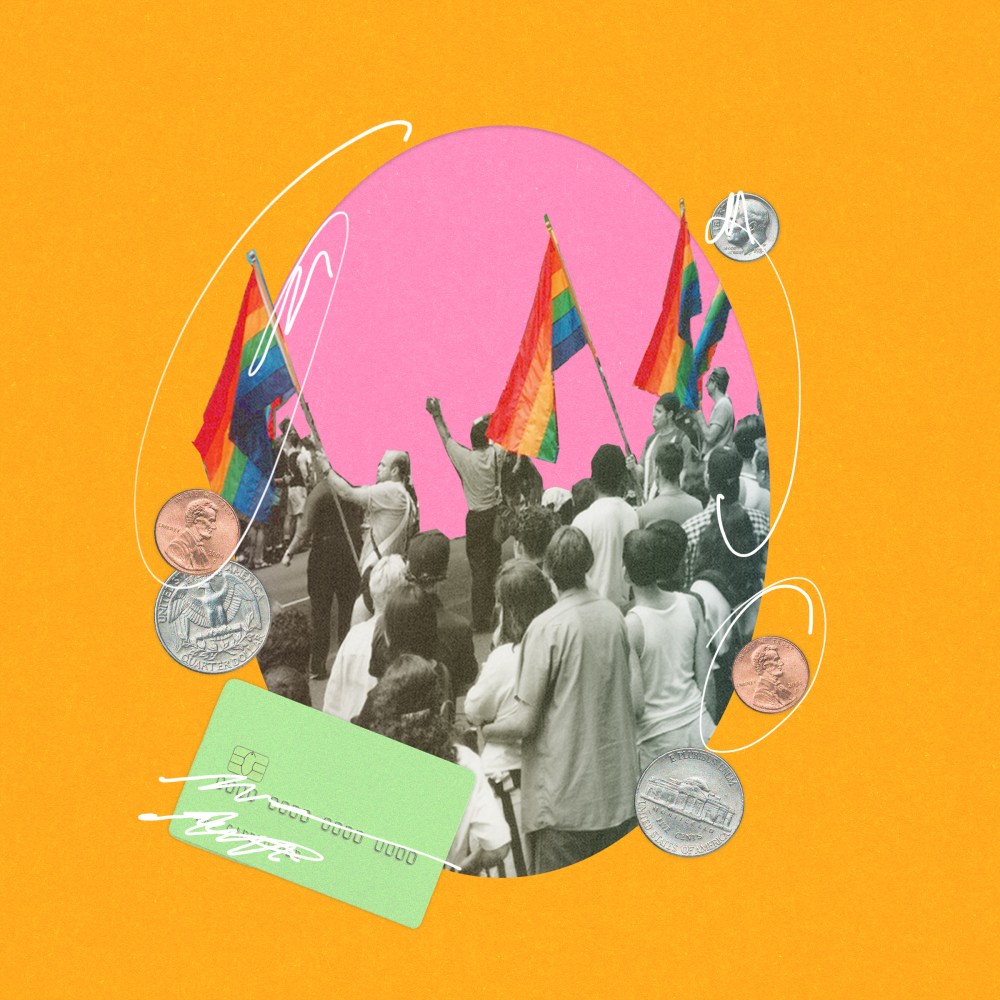
This article is part of “Finding Pride in a Divided America,” a special series from MSNBC Daily.
The last time I attended a Pride parade, it was 2019 in Washington, D.C. I had been to a few before — Portland, Maine, which I had just moved away from, and of course Boston, which is something of a rite of passage for New England queers like me.
Each one felt like a corporate and political spectacle. I met Sen. Elizabeth Warren at the Boston parade in 2017, not long before she unsuccessfully ran for president. My daughter and I marched with a group of colleagues from a former employer of mine, a local Maine bank, that same year, tossing rainbow-themed tchotchkes to the cheering crowds lining Congress Street in Portland’s downtown.
It’s hard to feel proud of yourself when the parade that’s supposed to honor your identity is sponsored by Raytheon.
I didn’t go to Pride in 2020 in part thanks to Covid — but also because I was getting tired of the “corporateness” of it all. It’s hard to feel proud of yourself when the parade that’s supposed to honor your identity is sponsored by Raytheon. That dissonance is partly what led me to stop attending those events.
But looking back now, those years feel like a quaint bygone era in queer rights. With Donald Trump sweeping into office on the back of hundreds of millions of dollars spent on anti-trans ads as he led a crusade against DEI efforts, corporate America responded in kind. And among the first items on the chopping block were Pride sponsorships and corporate support for LGBTQ rights.
This year, Pride has been marked by major corporations, some of which had been our community’s first corporate allies, backing out of major sponsorships. Anheuser-Busch, the parent company of Budweiser, ended its 30-year run as lead sponsor of St. Louis’ PrideFest and pulled back on its spending on San Francisco’s Pride events. Comcast, MSNBC’s parent company, pulled its sponsorship from San Francisco Pride.
Mastercard, PepsiCo and Citibank ended relationships with New York City Pride, while Booz Allen Hamilton, Deloitte and Visa pulled out of sponsoring WorldPride, which was held this year in Washington, D.C.
Where once companies felt free to pursue gay sales dollars, now they see political risk. All of these withdrawals follow extensive right-wing intimidation and harassment campaigns against companies that support LGBTQ people. Budweiser was at the center of perhaps the biggest controversy, when in 2023 a single Instagram partnership with trans influencer Dylan Mulvaney resulted in a massive backlash and boycott that company executives say they’re still dealing with now.
Similarly Target, while not pulling completely out of Pride festivities, significantly pared back its rainbow-themed Pride collection. The company has seen a significant drop in sales following boycotts after corporate leaders announced it was ending its corporate DEI initiatives.

Corporate money in Pride has long been a point of tension within the LGBTQ community. Some organizers argued that corporate sponsors allowed for ever-larger parades, stages and event spaces in which queer and trans people could safely celebrate Pride.
But others within the queer community took a more skeptical approach. We suspected that funding and vocal support were only as good as the cultural acceptance of the moment.
Now that we’re in the throes of an intense backlash against trans lives, and by extension the greater queer movement and LGBTQ rights, the doubters are being proved right. It turns out that corporations are all in on Pride if it means supporting customers with extra dollars in their wallet, but not so much when it comes to supporting our community’s most vulnerable, like trans people (who incidentally are statistically more likely to land among society’s poorest). I myself have long been a critic of corporate Pride, or “rainbow-washing,” especially when many of these same sponsors also sent gobs of money to the very same conservative politicians seeking to take away the rights we have been marching for year after year. And now that these companies are retreating from their support for the community, I can’t help but get a creeping feeling at the back of my neck. It’s not just less funds to commemorate our community; we are less safe when major corporate players actively stop making space for us. But maybe there’s something bigger to say about this moment. It was just us at the first Pride march more than 50 years ago. By standing up for our basic rights to exist, we all built a movement together that changed the country, and the culture. The corporations may be retreating, but we still have a chance to stand together as one community, united in resisting the hatred and vitriol of those who believe none of us should exist. Pride is still here. We are still marching on our streets for our rights. There may be fewer colorful merch items or shiny toys being tossed into the crowd. There might be fewer events and less space this June, but we’re all still here, together. Maybe it’s time for me to show my face at Pride again.
Katelyn Burns is a freelance journalist based in New England. 

