








The year 2022 was, in a word, devastating for women. It was the year we lost fundamental rights; it was the year we lost bodily autonomy; it was the year we became inferior in the eyes of the government; it was the year we slid backwards.
The U.S. Supreme Court’s June decision to overturn nearly 50 years of legal precedent and no longer consider abortion a constitutional right sent women’s rights into a tailspin. Suddenly it was up to individual states to decide on the legality of this safe medical procedure, and with that came the possibility for legislators and judges alike to look at all manor of reproductive health care in a new light. Now it seems nothing is off the table.
These moves make plain that conservatives’ efforts have not been to “protect life,” as they so often like to say, but to control women’s bodies.
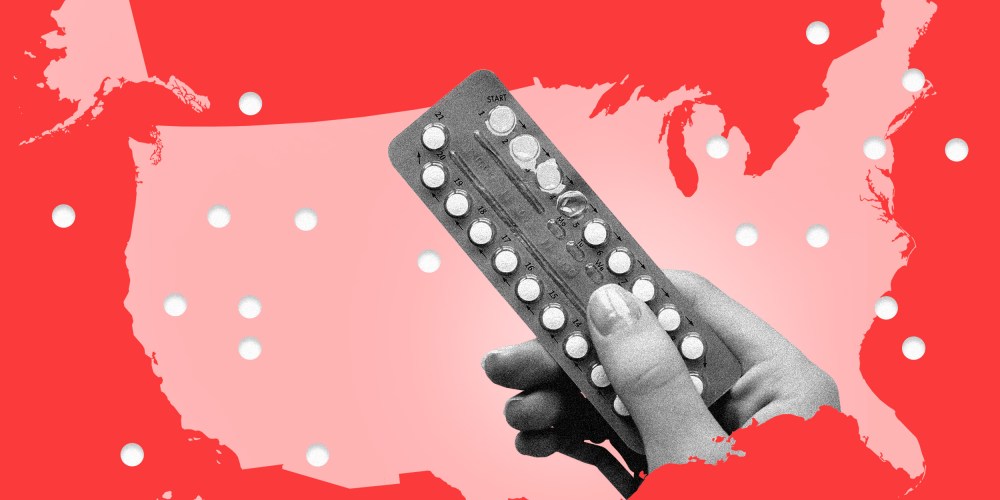
In court decisions and proposed legislation popping up in states like Texas and Louisiana, abortion opponents have set their sights on abortion pills, and adjacent care like providing birth control and treatment for miscarriages. These moves make plain that conservatives’ efforts have not been to “protect life,” as they so often like to say, but to control women’s bodies so they start families in the mold the Christian right is desperately trying to maintain — and to punish them for getting pregnant.
Last week a Trump-appointed judge in Texas took on birth control, claiming a rule that prohibits health care providers from informing parents about their children’s request for reproductive care was unlawful. The rule falls under Title X, a federal grant program established in 1970 that provides affordable birth control, reproductive care, cancer screenings and sexually transmitted infection testing for low-income individuals, including minors. But plaintiff Alexander Deanda claimed that if, hypothetically, his daughters were to seek birth control under Title X, they would be violating his Christian religious beliefs of practicing abstinence until marriage. And as their father, he stipulated, he had a right to know.
Federal District Court Judge Matthew Kacsmaryk agreed with Deanda, setting it up so that Texas teenagers will have an exceedingly difficult time obtaining birth control without parental consent. Though the ruling will likely be appealed, it sets a precedent for other judges across the country to control access to contraception.
Plans for a move like this were in motion long before Roe v. Wade was overturned. As legal site Balls and Strikes points out, “Kacsmaryk was put on the bench by Trump precisely for his hardline beliefs in this arena. He was an anti-contraception warrior at First Liberty, a hard-right conservative Christian litigation shop in Texas, suing the government over the Affordable Care Act’s contraception requirement and filing an amicus brief in support of a Washington state pharmacy that refused to dispense emergency contraception.”
Elsewhere in Texas, the state Legislature is planning to go after access to medication abortion pills when the new session begins in January. According to recent Washington Post reporting, “Republican lawmakers in Texas are preparing to introduce legislation that would require internet providers to block abortion pill websites in the same way they can censor child pornography.” This is in reaction to a proliferation of abortion pills by mail we’ve seen since Roe was overturned, and conservative lawmakers are hoping that providing the pills will be considered a violation of state bans.

Marjorie Dannenfelser, the president of Susan B. Anthony Pro-Life America, went so far as to tell the Post, “Everyone who is trafficking these pills should be in jail for trafficking. It hasn’t happened, but that doesn’t mean it won’t.”
That thinly veiled threat may seem far-fetched, but so did the erosion of abortion rights not so long ago. And for many anti-abortion conservatives, making women travel hundreds of miles, lose wages and put themselves in potential danger to safely terminate an unwanted pregnancy isn’t enough. The June Supreme Court decision should’ve left them with an enormous sense of accomplishment, but it appears to only have stoked their appetite for more.
And in Louisiana, where there’s a nearly complete ban on abortion, some reproductive care providers are refusing to see pregnant patients until the start of their second trimester when a miscarriage is less likely. By seeing them earlier in the pregnancy, they fear being held liable for anything that could cross into a gray area of providing abortion care. The husband of one such patient tells NPR, “They specifically said, ‘We now no longer see women until they’re at least 12 weeks. And I said, ‘Oh Lord. Is this because of what I think? And they said, ‘Yes.’” Some of us may feel confident living in a state with strong abortion rights, but even that isn’t a guarantee of future safety. Some of us may feel confident living in a state with strong abortion rights, but even that isn’t a guarantee of future safety. In Colorado, for example, the entire reproductive care system is under enormous strain. People are traveling there from neighboring states with local bans to seek abortions, “which means that women in the state have to wait weeks to be seen, as well,” according to writer Jessica Valenti’s abortion-focused newsletter. This is all a reminder that though we are divided into states and territories, we are, in the end, one nation. And the decisions in one part of the country have material impacts on the rest. The fact that women can travel to other states to get reproductive care is not proof of reproductive freedom — it is reproductive discrimination that allows your geography to dictate how much you can control your own body. A new year is supposed to bring renewed hope. It’s a time for dreams and resolutions that you push out into the void with a certain optimism, even when they’re far-fetched. Perhaps this year will be different, you tell yourself. Perhaps by my own sheer force of will, I’ll be able to right the ship not only for myself but for others struggling. But once the new year’s stars in your eyes dim, reality comes roaring back: And for women, this January will be ferocious. One thing is for certain: Now’s not the time to take your eyes off the erosion of these fundamental rights.
Marisa Kabas
Marisa Kabas writes about politics, media and gender and their many intersections. Her work has appeared in Rolling Stone, HuffPost and The New Republic, and she writes a newsletter called The Handbasket. She is based in Brooklyn, New York. 

