









After years of anti-immigrant, “Build the Wall” rhetoric, we have seen one of the highest-profile examples of someone who was in the United States illegally committing an act of shocking violence. We learned this week that the man who took a hammer to the head of House Speaker Nancy Pelosi’s 82-year-old husband was undocumented, here on an expired temporary visitor visa, and radicalized online. And the attacker is part of one of the largest populations in the United States illegally: Canadians.
In the past 10 years, visa overstays in the United States outnumbered illegal border crossings by a 2:1 ratio.
The Republican Party has used anti-immigrant rhetoric against Latinos and Hispanics for years, making sure it remains a potent topic for voters in the midterm elections. Arizona Senate candidate Blake Masters has made so-called illegal immigration a centerpiece of his campaign but has been silent on the attack on Paul Pelosi. New Hampshire Senate candidate Don Bolduc, who wants to continue Title 42 public health restrictions at the southern border despite President Joe Biden declaring the pandemic over, did issue prayers to the Pelosi family saying “violence is never the answer.” But neither of them, nor any other political leader, is seizing on this crime committed by a supposed “illegal immigrant” to start deporting Canadians.
Follow our 2022 midterm elections live blog at msnbc.com/midterms for the latest results, news and expert analysis in real time.
This is not a Blame Canada shtick. This is the reality: In the past 10 years, visa overstays in the United States outnumbered illegal border crossings by a 2:1 ratio. It’s a trend that’s been growing since 2004, with more than 600,000 people on average living illegally in the United States each year after their visas expired, according to the Department of Homeland Security. After former President Donald Trump’s first year in office, DHS released a report showing that the largest group of people who overstay their official welcome in the United States come from across the northern border.
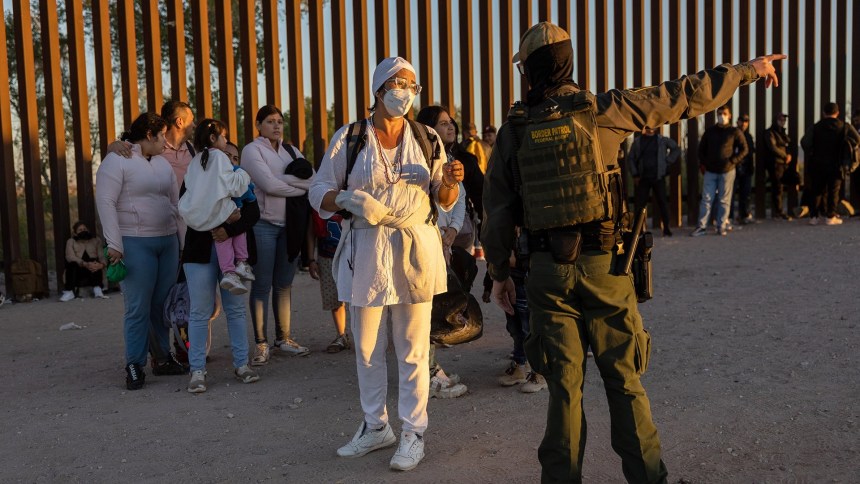
Two reasons are given by lawyers and policy officials for this immigration problem. One is a visa processing challenge: Exits are harder to track because most countries — including the U.S. — typically only stamp or check passports upon entry, rather than exit. Through a special set of immigration rules Canadians can visit the United States for up to six months (minus one day) without a formal visa after which they are considered an “unlawful presence.” This exemption allows the United States to welcome more than 9 million Canadian visitors every year who mostly travel by land.
The second challenge is a cultural one. As one lawyer said of his Canadian client in 2018: “I told her she’s been illegal for three years, and she was shocked. They seem to think they’re kind of the 51st state and the laws don’t apply to them.” It’s not a belief successive administrations have been eager to correct with stronger immigration enforcement to the north.
The difference in perception Americans have between Canadians and Mexicans has significant policy and political implications. American cultural demonization of Canadians is limited to comedians cracking jokes about Justin Bieber and saying “eh?” repeatedly. The trope for Canadians is that they’re too nice while our neighbors to the south have been the target of rape and drug cartel jokes for years. Trump launched his campaign on the back of these stereotypes, saying,“When Mexico sends its people, they’re not sending their best. … They’re bringing drugs. They’re bringing crime. They’re rapists.”
Voters that Republicans are courting with their immigration rhetoric are really worried about American identity looking and feeling a certain way.
When Trump called for the creation of a deportation force and promised to expel 2 million to 3 million undocumented people, there was little surprise that law enforcement targeted people from Central and South America. The disparity in enforcement was still dramatic: In 2017, DHS reported 350 Canadians were deported compared with nearly 130,000 Mexican nationals.
Now, the idea of a border invasion from the south is firmly rooted in the Republican Party, with 77% of GOP respondents to a poll last year saying they want more fencing along the southern border. Arizona Republican gubernatorial candidate Kari Lake promises an “invasion declaration” if she wins, even though her team acknowledges this act would violate the Constitution. Despite the use of law-and-order rhetoric when it comes to immigration, the political right is specific about which undocumented people get labeled as criminals. Overstaying a visa is currently punishable with up to four years of jail time and a 10 year ban from the United States. But even after this week’s revelations that an egregious act of political violence was committed by someone conservatives would normally term an “illegal immigrant,” there will be no new constituency for deporting Canadians or political railing against Canadians as a criminal monolith. The constituency that votes based on curbing illegal immigration is not really worried about making sure people don’t take advantage of American laws and generosity. If they were, the policy solutions would be entirely different. We’d see calls for Canadians to enter with visas and for greater data sharing with Canadian authorities for cross-border prosecutions. Both of which are part of the many immigration-related policies DHS has in place with Mexico and countries south of the border. Voters that Republicans are courting with their immigration rhetoric are really worried about American identity looking and feeling a certain way. For these voters, their identity cannot be shared with brown day laborers or families willing to risk death to come to the United States. This is the real promise of Trumpism and why immigration holds such a key place in its ideology. That its adherents would mock Pelosi as the latest liberal avatar to be torn down, rather than a near martyr in their crusade, shows that concern about immigrant crime is only skin deep.
Nayyera Haq is a global affairs journalist. 

