








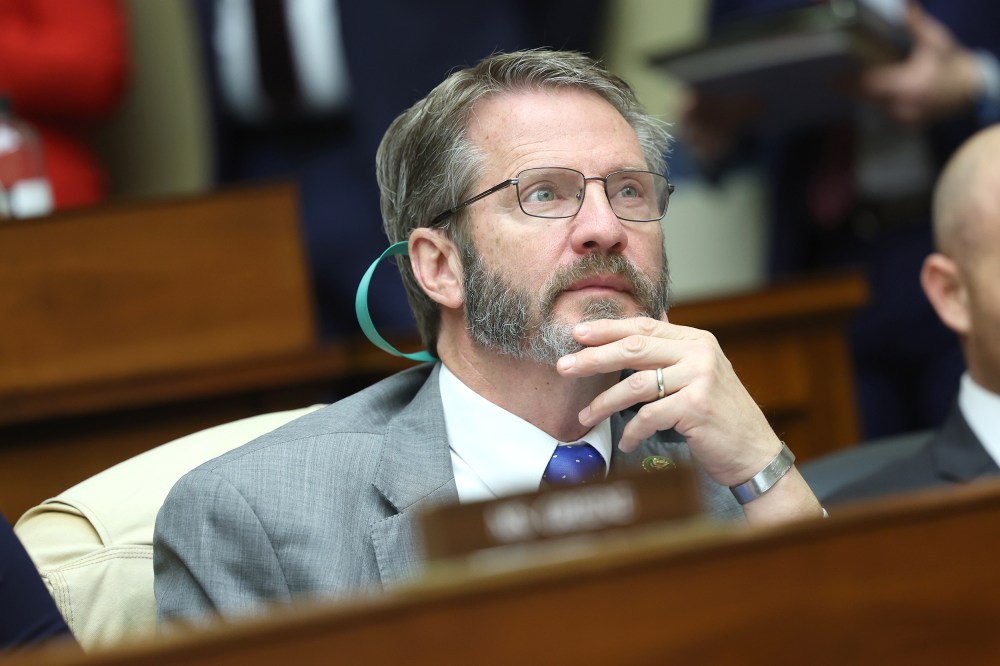
On Monday, six people, three of them children who didn’t live to see age 10, were murdered in Nashville at the hands of a shooter armed with assault-style weapons. This problem of mass shootings, including those that target children at schools, has caused some lawmakers to essentially throw up their hands in defeat. Rep. Tim Burchett, R-Tenn., who is either unable or unwilling to envision a legislative solution, asserted in an interview that Congress is “not gonna fix” the problem of school shootings and argued that the U.S. needs not gun control legislation but a “real revival.” But as prosecutors, we count strong gun laws among the practical, commonsense legislative solutions that have saved lives. And key among these solutions are red flag laws.
The problem of mass shootings, including those that target children at schools, has caused some lawmakers to essentially throw up their hands in defeat.
The Nashville shooter was able to legally obtain seven weapons, three of which were used in the attack, which police say was “calculated and planned.” Significantly, as in so many other mass shootings, early reporting indicates that the attacker exhibited troubling warning signs to family members. Nashville Police Chief John Drake has said the shooter’s parents felt the 28-year-old “should not own weapons.”
This is an all-too-common fact pattern for such crimes. According to a 2021 Everytown for Gun Safety report, perpetrators in 56% of mass shootings exhibited dangerous warning signs before they carried out their attacks. In a 2021 Department of Homeland Security analysis, two-thirds of attackers in mass shootings exhibited behaviors or communications “that were so concerning, they should have been met with an immediate response.”
It’s even more traumatizing to victims and even those who read or watch reports of a deadly mass shooting every time we learn that it might have been prevented. Critically, there’s something we as a country can do to help stem the tide.
Well-known and widely discussed proposals include banning assault weapons, closing loopholes on background checks and instituting waiting periods. But we first should focus on passing strong extreme risk laws (also called red flag laws) at the national and state levels, and where such laws already exist, we should focus on raising awareness of them and significantly increasing the training for those who will be asked to invoke them.
Currently, 19 states and Washington, D.C., have adopted red flag laws, which allow judges to temporarily remove people’s access to guns and temporarily prevent the purchase of new guns when there is evidence that the people pose serious risks to themselves or others. But that leaves 31 states, including Tennessee, with no such tool.
This means that even if the Nashville shooter’s parents had wanted to raise the “red flag” about the dangerous warning signs they saw in their adult child, their options were limited. And even in states that have strong red flag laws, we believe there has been significant underuse because of a lack of awareness and training.
President Joe Biden’s recent announcement that the Justice Department will give more than $231 million to states for crisis intervention projects, such as red flag programs, is a strong start, but it’s not a substitute for a federal red flag law. And red flag laws at the state and local levels must be strengthened, expanded and accompanied by national and state programs to ensure that existing laws are fully used. In New York, something remarkable has happened. Statewide, the number of Extreme Risk Protection Orders, or ERPOs, skyrocketed from 500 filed in 2021 to 3,500 last year. While it’s hard to prove that any particular ERPO prevented a mass shooting, these numbers demonstrate that more people are empowered to report warning signs before it’s too late. We are confident, based on many of statements of fact supporting these ERPO petitions, that tragedies have been averted. Despite the relentless headlines, weekly mass shootings aren’t inevitable. What caused this dramatic rise in the use of New York’s red flag laws? Since it went into effect in 2019, prosecutors’ offices, such as ours in Westchester County, and police departments statewide have made tremendous efforts to increase public awareness and training to ensure police officers, prosecutors, school officials, doctors, therapists and parents know how to raise red flags when they see someone in crisis. Amendments passed last year strengthened New York’s law, making it mandatory for law enforcement to petition for ERPOs under certain conditions, and those amendments expanded the categories of people who could file for petitions to include health care professionals. Despite the relentless headlines, weekly mass shootings aren’t inevitable, and, unlike Rep. Burchett, we can’t resign ourselves to accepting this as our way of life. Discussions around gun regulation and gun safety measures are often irrationally overpoliticized, but all reasonable people should be able to agree that people having mental health crises and displaying dangerous warning signs shouldn’t have easy access to high-capacity killing machines. Will this prevent all mass shootings? Of course not. But this approach will help. Red flag laws have to be widely implemented if we are to ever stem the tide of horrific and deadly shootings that keep our country traumatized.
Mimi Rocah
Miriam E. Rocah is a former district attorney of Westchester County, New York, and former assistant U.S. attorney for the Southern District of New York, where she also served as chief of the Westchester Division.
Berit Berger
Berit Berger is an executive assistant district attorney with the Westchester County District Attorney’s Office focused on gun safety policy. 


