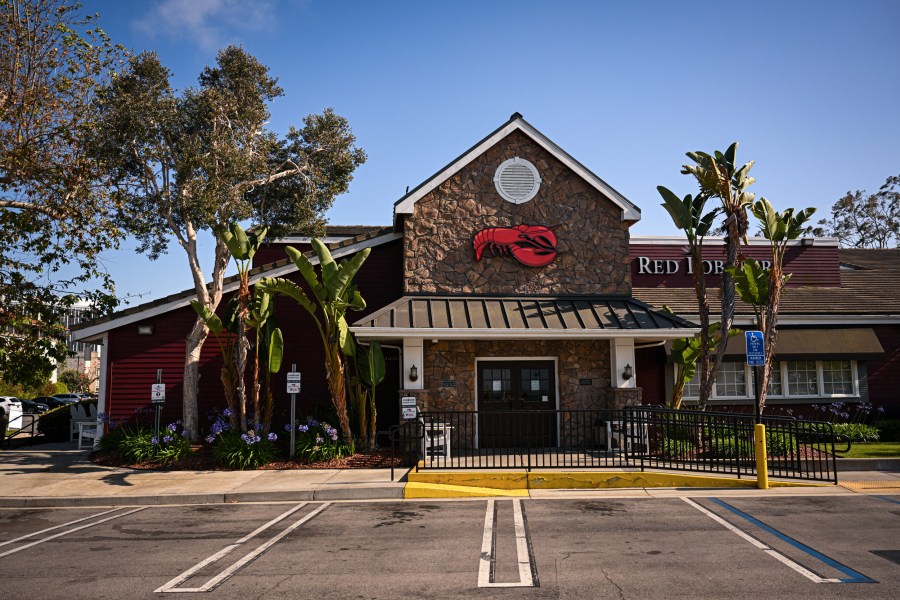
A recent announcement that nearly 100 Red Lobster locations are scheduled to close as part of bankruptcy proceedings is likely to hit Black communities differently — and not just because we consume more fish than any other group in the U.S. Bill Darden opened the first Red Lobster restaurant south of Orlando, Florida, in 1968 just a few weeks before Martin Luther King Jr. was assassinated. As he’d done with the first restaurant he’d opened during the height of Jim Crow racial segregation in Georgia, Darden insisted that Red Lobster be fully integrated. Customers would enter and exit the same doors; sit wherever they chose to sit and receive the same food and the same service. This should not have been a radical proposition but it was, and it mattered greatly to Black people eating out.
As he’d done with the first restaurant he’d opened during the height of Jim Crow racial segregation in Georgia, Darden insisted that Red Lobster be fully integrated.
Clarence Otis Jr., who in 2004 became the CEO of the restaurant’s parent company Darden Corp. and thus one of a small group of Black Fortune 500 leaders, was later interviewed by NPR’s Ed Gordon, who said, “Two of your restaurants, one that’s been around for a mighty long time, Red Lobster and Olive Garden, are favorites of the minority community.”
Otis replied, “We look at the demographics of our consumer base all the time, and we know that in the African-American community, in the Latino community, both Olive Garden and Red Lobster are very strong.” He thought both Red Lobster and Olive Garden were favorites in Black communities not just because of the food, but because of “our entire history; going back to our founder [who] believed in hiring people of all genders, all ethnicities, back at a time when that was not popular.”
That’s the sort of history that becomes a sort of collective memory that manifests as a habit over time, considering that, according to some surveys, Black consumers are among the most loyal. Sure, we like fish and a good deal — Red Lobster represented something like the strip mall version of the beloved fish fry — but we like being treated equally even more.

Darden’s approach to an inclusive casual dining became the model nationwide.
Black Americans’ taste for Red Lobster followed economic trends, as working- and middle-class diners opted for the pricier $25-$30-per-person casual dining experience over fast-food seafood options like Captain D’s and Long John Silver’s. The restaurant became strongly associated with Black people celebrating special occasions, but even when it was the place for a more regular night out, the chain became one of those Black culture things that people could relate to as it expanded to eventually include over 700 locations in the U.S. and Canada.
CNBC reported in April that Red Lobster was seeking a buyer as it looked to avoid a bankruptcy filing. Thai Union, the restaurant’s largest investor, is cutting its ties. Many are left wondering how the national seafood chain has come on such hard times. The answer has to do with ongoing executive turnover, mismanagement, bad real estate leasing agreements, and ill-advised promotions like “endless shrimp.” Other factors like Covid’s blow to the restaurant industry and the changing tastes of younger generations have worsened the chain’s financial outlook. The rise and slide of Red Lobster, and all the stumbles along the way, parallels a rise and backslide of Black working- and middle-class gains The rise and slide of Red Lobster, and all the stumbles along the way, parallels a rise and backslide of Black working- and middle-class gains. The sort of economic mobility we associate with the 1970s and 1980s, when Red Lobsters were being built, has slowed for many Americans and even reversed for many Black Americans. Black children raised in middle-class households are less likely than ever, and significantly less likely than white children, to remain in the middle class (or ascend) as adults. This is a more acute aspect of the wider “hollowing out” of the middle class: The cost of living outpaces wages, all while bad debt like credit cards, medical bills and student loans grows. It is in this shaky post-pandemic consumer climate that Red Lobster has stumbled the most. It has sought to diversify its offerings with menu items including mozzarella sticks and linguini alfredo. It has tried slashing prices and offering more specials alongside its long-standing “signature feasts.” A partnership with investor Thai Union yielded a plan to increase traffic into restaurants and offload surplus shrimp for its fishers in Thailand. It made what had been a limited-time all-you-can-eat shrimp special into a daily menu item and charged only $20. Red Lobster eventually raised the price to $25 before ending the promotion, but it reported a $25 million loss because of that menu item. Perhaps the big lesson there is that there’s such a thing as too much of a good thing. Or at least giving away too much of a good thing. But the message that Darden sent while opening the first Red Lobster in the South — that it wouldn’t operate as so many Southern institutions had — is a good thing that has kept Black Americans coming back, even if they don’t fully know why.
Robyn Autry
Robyn Autry is a sociology professor and director of the Center for the Study of Public Life at Wesleyan University. She is the author of “Desegregating the Past: The Public Life of Memory in the U.S. and South Africa.”