









The third massive celebration of Queen Elizabeth II’s lengthy rule that the United Kingdom of Great Britain and Northern Island has held in the last 30 years began on Thursday. It’s set to be a lovely jubilee — that is, if you’re into that sort of thing.
Elizabeth’s Silver Jubilee in 1977, which marked her 25 years on the throne, was the first major anniversary event held for a British monarch since her grandfather, George V, celebrated his Silver Jubilee in 1935. Her Gold and Diamond Jubilees, marking the 50th and 60th anniversaries of her coronation, were the first since Queen Victoria was the empress of territories that stretched from the North Atlantic to the Indian Ocean. There has never before been a Platinum Jubilee in the U.K., as no king or queen before her ever reigned 70 years.
Nor is it likely that any monarch’s reign will ever surpass it. The four-day celebration that launched on Thursday may wind up being the last jubilee that the kingdom holds in my lifetime. And we have to consider the possibility there may not be a kingdom for much longer after the crown passes from Elizabeth to her son Prince Charles, meaning this jubilee may also be the last the United Kingdom ever holds.
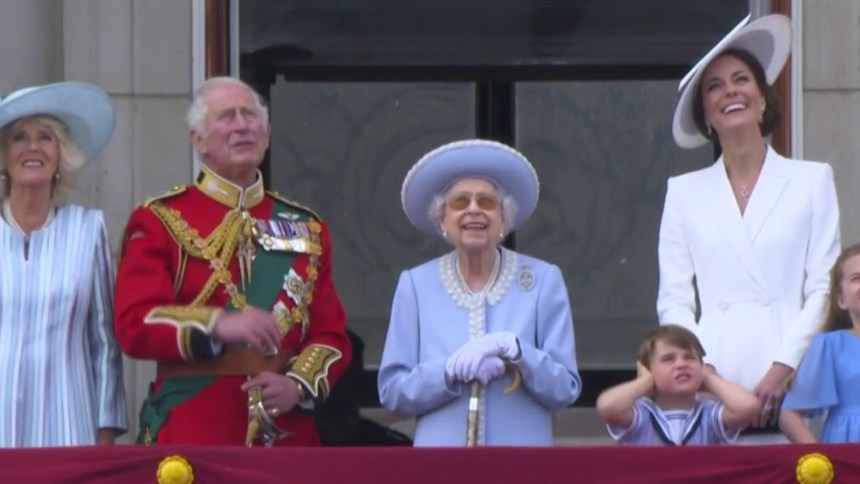
The power concentrated in the British crown began diminishing in the 19th century, and it has continued to shrink during Elizabeth II’s time as queen. Under Britain’s unwritten constitution, all executive and judiciary power still flows through her and is carried out in her name, but in practice, it is the Parliament, not the Queen’s Privy Council, that sets the laws and carries them out.
Even as the leader of the majority party goes to the queen to ask permission to form a government, it is a pro forma act; there has been no example of her ever rejecting that request. After the Fixed-term Parliaments Act passed in 2011, she no longer has the ability to dissolve parliaments at her whim, one of the greatest powers that the crown had managed to retain. In 2019, when Prime Minister Boris Johnson attempted to suspend parliament, observers were left wondering whether Elizabeth could fire him should she so choose.
We have to consider the possibility there may not be a kingdom for much longer after the crown passes from Elizabeth to her son, Prince Charles.
Since Elizabeth became monarch in 1952, the British Empire has dissolved as colonial states gained their independence. While she remains head of state in 14 Commonwealth Realm countries, that arrangement is not guaranteed to last forever. As it stands, her role is that of a figurehead, a symbol, with no real part in ruling the countries that feature her face on its currency.
And yet Elizabeth remains intensely popular among her remaining subjects — which is not necessarily the case for the rest of the royal family, according to YouGov polling. The queen is held in a positive view among 81 percent of the 1,692 British adults asked for their opinions, while only 12 percent held a negative stance toward her. Meanwhile, 58 percent of people surveyed recently had a positive opinion of Charles — but 37 percent see the heir to the throne in a negative light. His son, Prince William, fares much better with 77 percent of those polled seeing him in a positive light, but even he still fades in comparison to Elizabeth.
Meanwhile, another YouGov poll has found support for the monarchy as an institution is slipping, especially among the young. Elizabeth may be the last British monarch to have the level of public support she has. Declining support for a monarchy could provide the opportunity for a reform-minded parliament to completely remove the crown from the flow of power.
But the actuary tables are a bigger threat to future jubilees. If Charles should ever take the throne, the odds are long that he would see a Silver Jubilee. If Charles were to ascend this year and be coronated at 73, he’d be 98 before such a celebration could occur. (Given that his father, Prince Philip, lived to the age of 99, this does not seem impossible.) There is, of course, the chance that Charles allows the Crown to pass on to William, skipping over his birthright. This would provide William with a longer opportunity to rule, but history doesn’t exactly offer many examples of this sort of paternal selflessness, not when it comes to kingship. We are then faced with the question of whether the monarchy, which has held out even as many of the other thrones of Europe have been toppled or left by the wayside, will have seen its last coronation before William’s son, Prince George, has his turn to be consecrated at Westminster Abbey. The actuary tables are a bigger threat to future jubilees. Whatever the path the succession takes, Elizabeth’s reign lasting so long means all the closest heirs to the throne are far older than she was when she was coronated at 26, which makes Silver, Gold and Diamond Jubilees seem out of reach. In any case, the British won’t be holding another jubilee for decades yet. If this is the last time that we see the British put on such a spectacle, so be it. I’ll shed no tears if this lingering vestige of a bygone era of monarchs and empire fades into oblivion. But it is entirely possible that, given the nearly unbroken 1,000-year stretch of monarchy (save for the Oliver Cromwell-led blip in the 17th century), the United Kingdom marches onward with its devotion to the future monarchs undiminished. That’s entirely up to them — which is ironic in a sense. Through inertia and a shared reverence for tradition, the people of Great Britain may wind up allowing their undemocratic figurehead to stay in place. Maybe enough Brits will fondly look back on this weekend’s hullabaloo and hope for yet another monarch gazing upon them from the balcony at Buckingham Palace. Nostalgia may wind up holding more power over the British people than the crown itself.
Hayes Brown is a writer and editor for MS NOW Daily. 


