








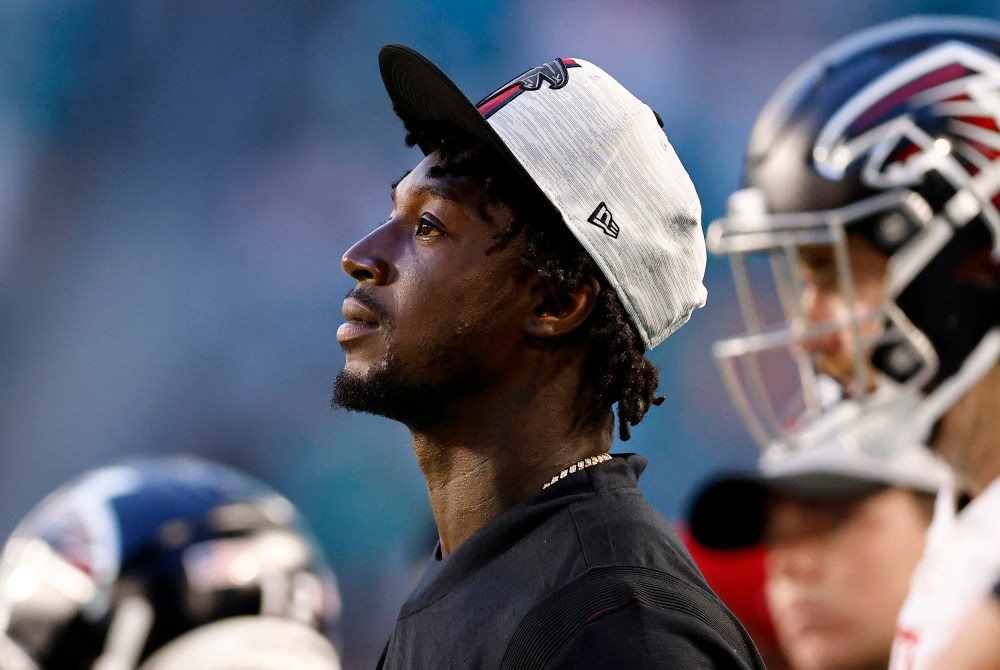
The National Football League braced for another scandal when it announced Monday that star Atlanta Falcons wide receiver Calvin Ridley is suspended for the entire 2022 season, and fined $11.5 million, after betting a relatively small amount (Ridley claimed it was $1,500) involving his team.
The message is clear: There is one set of rules for ownership and another for players.
With all the sanctimony he could muster, NFL Commissioner Roger Goodell wrote in a statement to Ridley: “There is nothing more fundamental to the NFL’s success — and to the reputation of everyone associated with our league — than upholding the integrity of the game. This is the responsibility of every player, coach, owner, game official, and anyone else employed in the league. Your actions put the integrity of the game at risk, threatened to damage public confidence in professional football, and potentially undermined the reputations of your fellow players throughout the NFL.”
The NFL has also gone out of its way to make clear to the news media that Ridley, who was out for most of the 2021 season, did not use inside information and that no one in the organization knew he was placing these small-time bets.
The suspension is understandable, because the collective bargaining agreement between the players union and the league forbids players from betting on games. But it is also profoundly longer than similar penalties handed out for issues ranging from a driving under the influence charge to violence against women.

The NFL, as anyone who watched the Super Bowl in February can tell you, has embraced gambling as a critical economic pillar. Long gone are the days when gambling was portrayed as a vile threat to the sanctity of the sport. Now DraftKings and FanDuel rule the roost. Members of the media now do betting commercials on the same set where they deliver the news. The league even has a team in Las Vegas, something it swore for decades could never happen because of the city’s gambling industry. Any sort of wall the NFL may have once upheld between gambling and the product on the field is now a revolving door, and it’s always spinning. So, while recently retired NFL quarterback Drew Brees tells the public to “live your bet life,” Ridley is fined millions and publicly humiliated for taking his advice.
This crackdown by Goodell and the NFL is justified to the public with carefully crafted buzzwords like “integrity.” But given what we know, it feels awfully like the league wants a setup where everyone except the players can bet on games. In spite of the perils of gambling addiction, or the possibility of working-class fans losing their paychecks on the advice of the Manning family, the league is focused on making sure these same fans don’t see the games as tainted or fixed.
And with good reason, economically speaking. If the culture of the league becomes one of permanent doubt, then the NFL runs the risk of becoming like baseball, where towering home runs are greeted less with oohs and aahs and more with conjecture about steroids, or where the cheating Houston Astros’ 2017 World Series title still casts a pall. If that happens — if people start thinking that professional football is more pro wrestling than honest contest — then that gambling revenue stream could quickly dry up, rendering the league’s economic tentpole as rickety as a veteran offensive lineman’s knees.
The sport needs gambling on its games. It also needs its players to stay as far away from the very culture that it’s building as possible. While recently retired NFL quarterback Drew Brees tells the public to “live your bet life,” Ridley is fined millions and publicly humiliated for taking his advice. Miami Dolphins franchise owner Stephen Ross has been accused of trying to affect the outcome of games. Former Dolphins head coach Brian Flores said in his racial discrimination lawsuit that Ross offered him $100,000 for every game Flores could lose, so they could secure a high draft pick. Is that not an affront to the integrity of the game? When these allegations surfaced before the Super Bowl, Ross denied them, and Goodell said an independent investigation would be conducted to look into the matter. It’s been over a month, and we haven’t received any updates whatsoever on said investigation. Meanwhile, Ridley just may have had his career destroyed in an instant. The message is clear: There is one set of rules for ownership and another for players. This is the NFL, and you can bet — in fact, Goodell would encourage you to make a bet — that the players will pay the price for messing with the league’s bottom line.
Dave Zirin
Dave Zirin is sports editor of The Nation. He is the author of 11 books on the politics of sports, including "The Kaepernick Effect." He is also the host of the "Edge of Sports" podcast. 

