This week, the Fourth Circuit Court of Appeals concluded that Rep. Madison Cawthorn, R-N.C., and indeed anyone alive can be barred from holding certain public offices if they tried to overthrow the U.S. government.
That a person looking to become a federal representative might have tried to incite an insurrection against our country should be considered disqualifying by voters.
This may fall under the category of “We shouldn’t need a court ruling to tell us this.” The possibility that a person looking to become a federal representative might have tried to incite an insurrection against our country should be considered disqualifying by voters. And yet, that might not always be the case. So here we are instead arguing about whether the law disqualifies them.
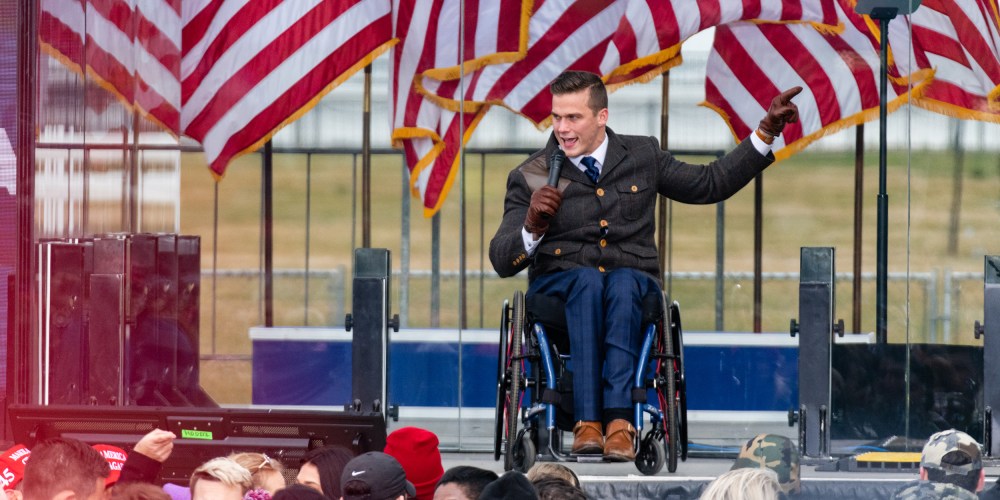
Cawthorn spoke at the rally near the U.S. Capitol on Jan. 6, 2021, the rally that directly preceded the insurrection at that Capitol, where Congress had convened to certify Joe Biden’s win over then-President Donald Trump. Cawthorn lied to the crowds, telling them there’d been election fraud and that Democrats were trying to silence them.
In response to Cawthorn’s Jan. 6 advocacy, a group of voters and activists argued that under the Constitution, Cawthorn’s actions made him legally ineligible for office. Cawthorn clapped back, suing to get himself on the ballot. He lost in a Republican primary election Tuesday, but that doesn’t make the appellate court’s ruling any less significant. Cawthorn wasn’t the only congressional candidate this cycle whose eligibility was challenged on the grounds that he’d supported the insurrection; there may be pro-insurrectionists considering future runs.
In 1868, in the wake of the Civil War, the United States added the Fourteenth Amendment to our Constitution. Most famous for including the Equal Protection and Due Process Clauses, a lesser-known provision obviously aimed at preventing members of the Confederacy from holding certain public offices, it provides that some public officials who “…engaged in insurrection or rebellion” against our country or who gave “aid and comfort to the enemies” of our country were disqualified from holding certain offices.
The Constitution provided that two-thirds of the House and the Senate could vote to remove this eligibility bar. But four years later, Congress passed the Amnesty Act of 1872, which stated that the disqualification provision of the Fourteenth Amendment no longer applied to people who might have engaged in an insurrection before the law passed.
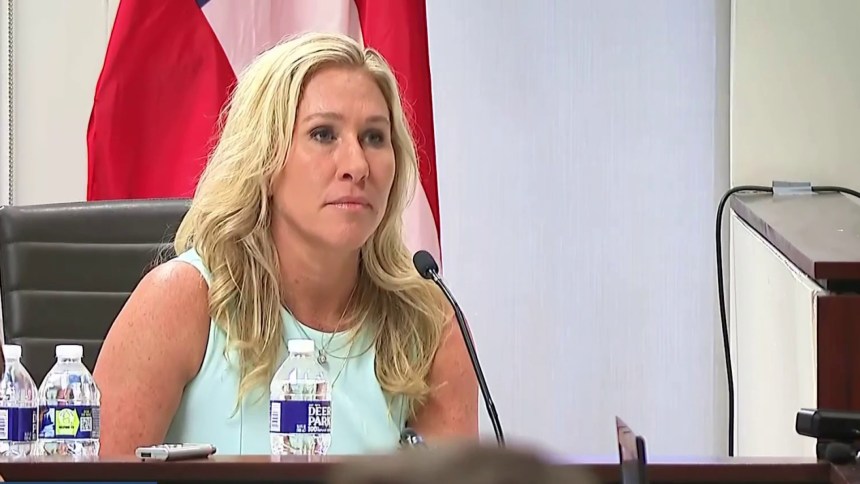
Cawthorn argued, illogically, that the 1872 law lifted the eligibility bar for any person who, anytime in the future, might engage in an insurrection or rebellion and then run for public office. It’s an argument that claims the the Amnesty Act of 1872 repealed the disqualification clause of the Fourteenth Amendment, and, unfortunately, in March a federal trial court judge agreed. That judge incorrectly concluded that despite the plain language of the Constitution and the plain language of the 1872 federal law that anyone who attempted to overthrow the government after 1872 could still qualify as a a candidate for higher office. A three-judge panel of the Fourth Circuit just corrected his error. The key portion of the majority’s opinion makes clear that the Fourteenth Amendment’s disqualification clause still has force today. “Consistent with the statutory text and context, we hold that the 1872 Amnesty Act removed the Fourteenth Amendment’s eligibility bar only for those whose constitutionally wrongful acts occurred before its enactment.” This isn’t just about Cawthorn, who recently lost his primary election for re-election to Congress and, thus, won’t be on the ballot in November. Nor is it just about Rep. Marjorie Taylor Greene, R-Ga., who made similar arguments that the 1872 law meant nothing she may have done on or about Jan. 6 meant she could be disqualified from running for office. In Greene’s case, a judge didn’t say the 1872 law invalidated the anti-insurrectionist clause in the Fourteenth Amendment. He ruled that those challenging her candidacy did not prove that Greene “engaged in insurrection or rebellion … or [gave] aid or comfort to the enemies.” Instead, this ruling is about whether our Constitution allows us to say that people who seek to undermine or even overthrow our government are barred from serving representatives in that government. Put another way, this ruling confirms what the country decided in 1868, that if you seek to set our Constitution on fire, we will bar you from a job that requires you taking an oath to uphold the Constitution.
Jessica Levinson is a Loyola Law School professor and MS NOW columnist.