








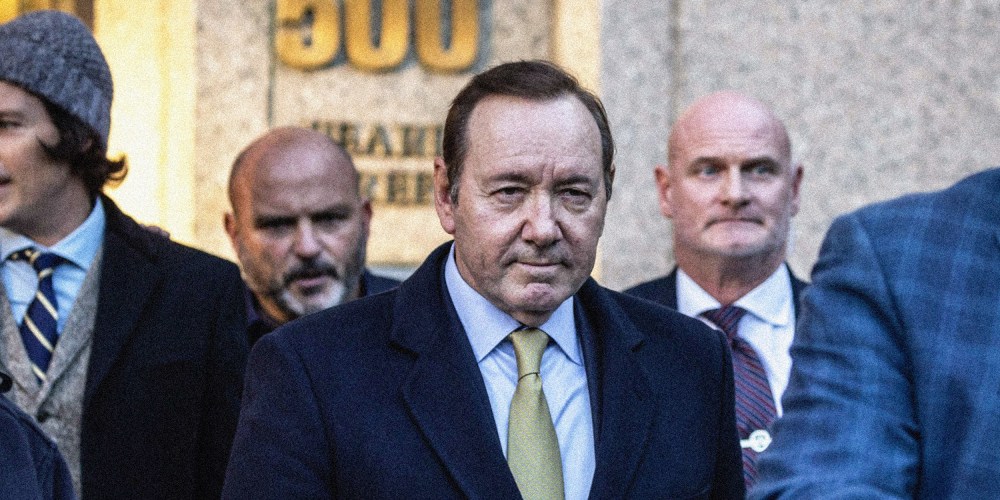
Another day, another high-profile trial reveals the seeming disregard our court system has for sexual assault survivors. On Wednesday, after hearing two weeks worth of evidence in a civil trial, a federal jury in New York found Kevin Spacey not liable for battery against actor Anthony Rapp. Rapp had accused Spacey of picking him up, putting him in a bed and inappropriately touching him during a party in 1986. At the time, according to Rapp, Spacey was 26, and he was 14. After more than two weeks of testimony, the jury deliberated for 90 minutes before returning its verdict.
Another high-profile trial reveals the seeming disregard our court system has for sexual assault survivors.
“Bringing this lawsuit was always about shining a light, as part of the larger movement to stand up against all forms of sexual violence,” Rapp tweeted after the verdict, and said he’d keep pushing for “a world that is free from sexual violence of any kind.” Rapp’s attorney, Richard Steigman, said in a statement: “Anthony told his truth in court. While we respect the jury’s verdict, nothing changes that.”
Spacey didn’t speak or release a statement after the verdict, but his attorney, Jennifer Keller, said, “I’m very grateful to the jury for seeing through these false allegations.” This month, three other powerful players in Hollywood — director Paul Haggis, actor Danny Masterson and producer Harvey Weinstein — are facing civil or criminal trials for sexual assault. Haggis is on trial in New York and Masterson and Weinstein are on trial in Los Angeles. They all claim they’re innocent of the charges against them. Spacey’s win in court at the same time seems like just another disappointing installment in the #MeToo saga. That hashtag and the message it conveyed exploded into our public consciousness five years ago this month after it was ushered in by women in Hollywood who’d grown tired of being mistreated, abused and assaulted by men within the industry.

Rapp’s allegation offered another dimension to the conversation: People of all genders are sexually assaulted: in Hollywood and outside of it. As the Rape, Abuse & Incest National Network (RAINN) notes, one in 10 of all rape victims are men, while more than 2 million men in the United States have experienced either a rape or attempted rape. And yet, there’s little attention paid to male survivors of sexual assault, even within the #MeToo movement. There are reasons for this: According to RAINN, men who are assaulted can sometimes experience shame and self-doubt, especially around the idea that they weren’t “strong enough” to ward off the attack. As a result, coming forward can be difficult for male survivors.
In that way, Rapp accusing Spacey in a 2017 interview with BuzzFeed News was a watershed moment. In response to the BuzzFeed News report, Spacey tweeted, “If I did behave then as he describes, I owe him the sincerest apology for what would have been deeply inappropriate drunken behavior.” He later called that apology a mistake.
Rapp accusing Spacey in a 2017 interview with BuzzFeed News was a watershed moment.
Rapp accused Spacey during what seemed to be a tidal wave of investigative reporting about those allegedly causing harm in Hollywood. Those allegations existed on a wide spectrum, from comedian Louis C.K. being accused of masturbating in front of women without their consent to Weinstein and Bill Cosby being accused of sexually assaulting multiple women over decades. #MeToo connected all those alleged indignities and called out the power imbalances, violence, coercion, and control that, unfortunately, too many people are familiar with.
The movement finally caused the public to take seriously and question some of the abusive dynamics operating in Hollywood, and it opened the floodgates for those causing harm to be held accountable. At first, there was triumph. Weinstein was convicted in New York. Louis C.K. admitted in a statement, “These stories are true. I have been remorseful of my actions. And I’ve tried to learn from them. And run from them. Now I’m aware of the extent of the impact of my actions.”
And then, the tide shifted. Bill Cosby, who’d been convicted in Pennsylvania of indecent assault, had his conviction thrown out after that state’s Supreme Court ruled that his admission in a civil lawsuit that he’d given a woman a sedative before having sex with her was wrongly used in a criminal prosecution against him. Weinstein has been granted an appeal in the New York case. Louis C.K. won a Grammy for his comedy album. It’s like blow after blow after blow with little respite in sight. In the face of these odds, it can become easy to feel disillusioned, numb even, about the state of the movement. However, we should be encouraged by the courage of those such as Rapp, who’ve been willing to sacrifice their privacy to tell their stories and expand our cultural understanding of what constitutes assault. Even if they lose their cases, the impact of their coming forward remains. It creates a small stepping stone toward reckoning with the prevalence of sexual violence in our culture, which is the actual point of #MeToo—not grading the movement based on who’s been convicted or acquitted. “People are like, ‘Oh, the #MeToo movement has failed.’ It’s not about the failure of the movement; it’s the failure of the systems,” activist Tarana Burke, who coined the term #MeToo in 2006, told The 19th last week. “These systems are not designed to help survivors, they’re not designed to give us justice, they’re not designed to end sexual violence.” It’s too hard to win in a system that is intentionally set up to fail survivors. Whether it’s the rape backlog preventing survivors from identifying their perpetrators or the judge overseeing Rapp’s case dismissing his claim of assault before the trial began (on the grounds that it was filed too late) and dismissing his claim of emotional distress after his attorneys rested their case, it’s too hard to win in a system that is intentionally set up to fail survivors. As Burke told Insider last week, “#MeToo is essentially about survivors supporting survivors. And it’s really about community healing and community action.” Yes, Rapp lost his civil case, he still raised awareness about the impact of sexual violence, particularly on boys and men. Yes, if Spacey did what Rapp says he did, then he should have been punished. But a jury found that he didn’t. So how should we respond? If we are operating in the true spirit of #MeToo, then we will surround Rapp with love, connect him with others who have stories like his and continue fighting for policies that benefit survivors. In other words, it’s not about the outcome of this specific case or any others that will be litigated in the coming months and years. Instead, we should treat it all as fuel to continue this fight — every generation of survivors, those who’ve come forward and those who haven’t, is depending on it.


