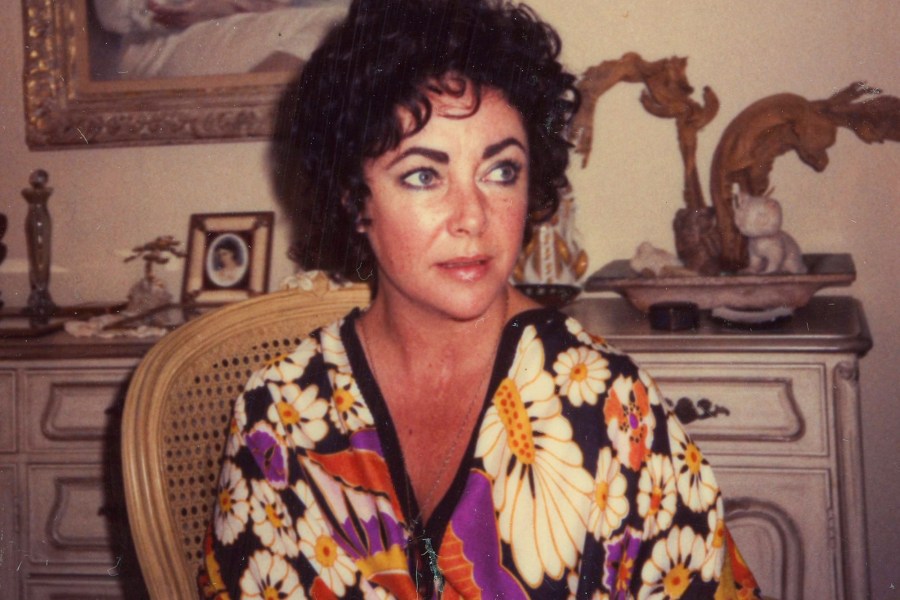
Two years after igniting a global scandal of such seismic proportions it was said to have knocked NASA’s first orbit of the Earth off the front pages, 32-year-old Elizabeth Taylor sat down with Life magazine’s Richard Meryman to tell her side of the story. The 40 hours of audio recordings from these interviews constitute the bulk of HBO Max’s new documentary “Elizabeth Taylor: The Lost Tapes,” which brings the late actress’s story to life in her own words.
The documentary humanizes the two-time Oscar winner, exhibiting her personality, humor and the obstacles she faced both personally and professionally as she scaled the behemoth of midcentury Hollywood misogyny. In doing so, the film paints a three-dimensional picture of the complex woman behind the eight marriages, bewitching eyes and incessant gossip headlines that later dominated the Elizabeth Taylor mystique.
Taylor’s public image was artificially imposed on her for years by the Hollywood studio system, which manufactured her into a ‘sex symbol’ as young as 16.
For many years, this half-mythical caricature of Taylor distracted from the transformative impact she had on society and culture. Only recently, for example, has she been given credit — including by the likes of Katy Perry and Kim Kardashian — for inventing the prototype of the modern celebrity. In the podcast series “Elizabeth the First,” Perry labels Taylor the “first true influencer” for pioneering the concept of a public figure as their own brand long before it was fashionable.
Taylor debuts this shrewd understanding of her “public” versus “private” self throughout the tapes, creating distance from what she calls “Elizabeth Taylor, the commodity.” Refusing to apologize or justify herself, she instead muses over her so-called “immoral” reputation with stone-cold detachment. “There is a private Elizabeth,” she tells Meryman. “The other Elizabeth, the famous one, really has no depth or meaning to me. It is a commodity that makes money.”
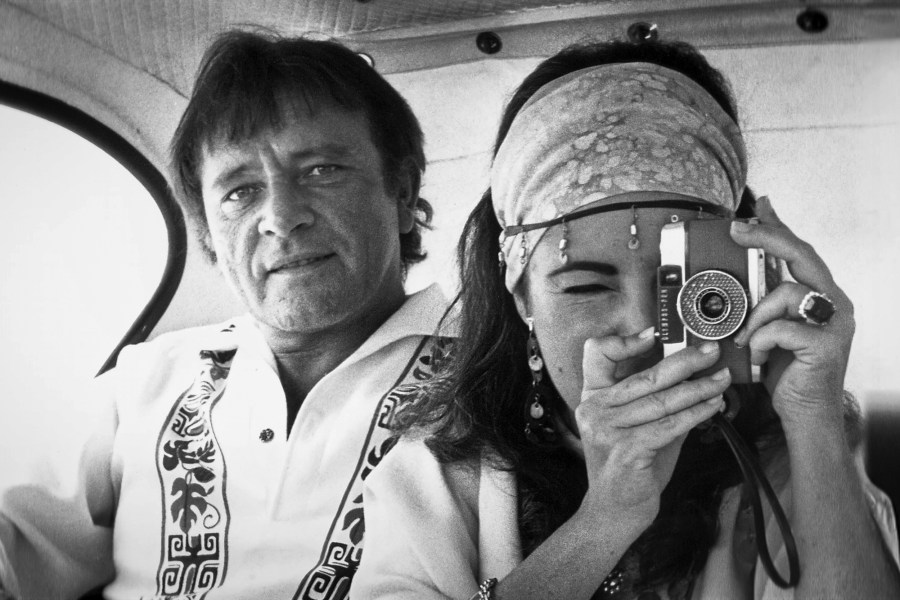
Her cynicism is understandable. As the tapes reveal, Taylor’s public image was artificially imposed on her for years by the Hollywood studio system, which manufactured her into a “sex symbol” as young as 16, while also confining her to low-paying, often low-quality pictures. “I was forced to do things that I hated,” she tells Meryman. “I was given such s—- that you should choke on.”
But over time, “a kind of rebellion started within me,” Taylor recalls. After her seven-year contract ended, the then-30-year-old was free to choose her own films and set her price tag. “I was quite the businesswoman,” she laughs, recounting how she became the first actress to negotiate a $1 million salary ($10 million today) for what she called the “ridiculous” idea of casting her as Cleopatra.
Taylor shows a sense of humor, and at times outright contempt, for the production, which overthrew two dynasties of Fox leadership, gutted directors’ careers, ended two marriages, nearly bankrupted Twentieth Century Fox (at a staggering $450 million in today’s dollars), launched an FBI investigation and even damaged U.S. foreign relations abroad, according to damning remarks immortalized in the U.S. Congressional Record.
At the same time, the tumultuous production marked a transformative moment in Taylor’s career, when she began to use her fame and notoriety as a weapon against the patriarchal culture that had long dictated and profited off her image.

After years of genuflecting before patronizing executives, producers and directors — whom she bitterly recalls dismissing her as a “movie star, not an actress” — the then-four-times-married mother of three discovered she could beat them at their own game. By leaving what she reveals to be an unhappy and at times abusive marriage to Eddie Fisher and having a very public affair — and worse still, refusing to apologize for it — Taylor took a gamble with the public that paid off.
Whether by accident or design, Taylor’s “breaking of conventions,” as she described her and Richard Burton’s affair, coincided with a slow-rolling spirit of rebellion taking place across America in the 1960s. She not only rose from the ashes of moral indignation unscathed, but also saw her notoriety skyrocket to levels never seen before, and possibly since.
It could be argued that there are two Hollywood’s: one before Elizabeth Taylor and one after. During and after the film, Taylor’s private life garnered such ferocious public interest that an entire industry — the paparazzi — stepped in to satisfy the demand. While Taylor resents their intrusive presence in the tapes, they also, inadvertently, helped further liberate her from the overbearing grip of the studio, inviting the public in to make their own decisions about her. By tearing down the barrier between the star and the public, Taylor’s act of “rebellion” not only weakened one of the few levers of power the studio regime still wielded, but also allowed her to engineer a new playbook for modern stardom entirely from scratch. In it, she portrayed a version of herself to the public that didn’t conceal her flaws, but embraced them. It could be argued that there are two Hollywoods: one before Elizabeth Taylor and one after. Today, fans want and expect truth, vulnerability and controversy from celebrities. Scandals are no longer liabilities, but assets. From Taylor Swift to Kim Kardashian, there is no such thing as either a “perfect” star or a “private” one. In giving celebrities the power to be themselves, Taylor’s model transformed the public into consumers of their public lives, rather than just observers, in a way that forever altered what it means to be famous. While it’s arguable whether this new model has been good or bad, the documentary is a fascinating reminder of where the debate over the private lives of public figures first began. Taylor’s greatest legacy was bringing honesty and candor to stardom in a way that forever transformed the relationship between celebrities and the public — and freed Hollywood stars to be, for better or worse, themselves. By using her fame to push boundaries, Taylor chipped away at the oppressive outerwear of an antiquated, patriarchal system, exposing its vulnerabilities and at the same time bringing contentious issues to the forefront of public awareness throughout her career. By giving new context to a woman who was, in many ways, too modern for her time, the film cements Taylor’s legacy not as a sex symbol, but as the trailblazing actress, feminist, philanthropist, entrepreneur and activist who played a central role in shaping the world of fame as we know it today.
Kara Schindler
Kara Schindler is a digital platform producer at MSNBC.