








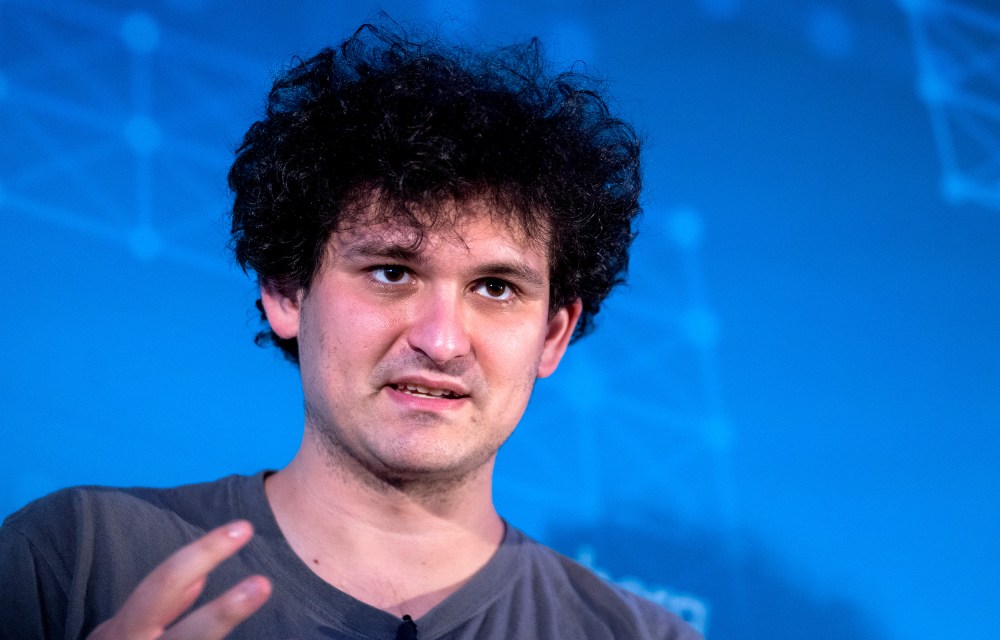
Alongside the failure of a red wave to materialize in the midterm elections, the other surprising news of last week was the overnight collapse of FTX, the huge — and now bankrupt — cryptocurrency exchange where people bought and sold crypto assets like bitcoin, and the astonishing disappearance of the wealth of its ultra-rich founder, Sam Bankman-Fried.
Crypto has had a rough year, with many currencies plummeting in value and exchange platforms collapsing. But FTX had, until last week, seemed like an exception, both in its stability and in Bankman-Fried’s reputation as an honest player.
But after reporting alleging that Bankman-Fried had covertly and inappropriately used funds from FTX customers to make risky bets for a hedge fund he also ran, a huge number of customers rushed to withdraw their money from the platform quickly, causing the exchange to implode.
A great deal of the buzz surrounding this massive vanishing of wealth is tied up in Bankman-Fried’s public persona. He had accumulated a fortune of over $20 billion by the age of 30 and he was predicted to be the world’s next trillionaire because of his financial wizardry in the crypto space. He also earned countless glowing profiles and admiration from the public for his alleged commitment to giving away his fortune and effective altruism, a hotly debated (and in my view, highly questionable) moral philosophy that calls on people to think rigorously about maximizing human welfare through often-counterintuitive modes of philanthropy. Those narratives have now crumbled and been instantly replaced with that of a reckless gambler willing to take other people’s money to get his fix.
To better understand the complex story of how we got here, I reached out to a leading critic of the cryptocurrency industry, Stephen Diehl, co-founder of the Center for Emerging Technology Policy and co-author of the new book “Popping the Crypto Bubble.” We discussed what exactly went wrong with FTX, why people fell for Bankman-Fried’s shady practices, and how this collapse is going to rattle the already-beleaguered crypto world.
Our conversation, edited for length and clarity, follows.
Zeeshan Aleem: What was FTX and how did it make money?
Stephen Diehl: FTX was a cryptocurrency exchange. It’s a website where you can create an account, show up with your credit card or your bank account, and use it to buy crypto assets. Crypto assets are effectively digital financial assets which people buy and they speculate on.
In some ways, it looks a lot like a traditional brokerage, like a Fidelity, or Charles Schwab, or Robin Hood. But crypto exchanges don’t trade regulated financial products like stocks or bonds; they trade unregulated financial assets, which are crypto tokens. And these tokens are not subject to the same level of regulation as most other products in the market. A lot of the problems that arose out of the recent catastrophe are due to the lack of regulation of these products.
Why was FTX’s reputation different from competitors?
Diehl: FTX fancied itself as a respectable platform. They really wanted to be perceived as being like a safe place to put your money and as more reputable. They’re in a space — the cryptocurrency space — where a lot of these platforms have no pretense toward being respectable. They are set up in offshore tax shelters, usually in the Caribbean; they often have very shady reputations about them.
And at least in the marketing, FTX wanted to present itself as being this new tech startup, like they’re the next generation of the broker dealer business, but for crypto. They spent massive amounts of money on Super Bowl advertisements. They papered the London underground with advertisements. They promoted themselves as being the future of finance, and at the head of this was this very charismatic leader named Sam Bankman-Fried.
Now, beneath the marketing and the veneer of credibility, what was actually going on is that FTX was set up in the Bahamas, which is a jurisdiction with extremely loose financial regulation. And they would have people from the United States log in to this platform, and give them their money.

But the laws of the United States and the laws of the Bahamas are two different worlds. And unfortunately, the Bahamas is not subject to the same level of regulatory oversight that the United States is. And this structure was set up in a way such that the customers of FTX actually have no claim on any of the tokens that they bought from FTX, because of the way the law works across borders. And they had a catastrophe inside of it recently, which left most people without access to the things that they purchased on the platform. And a lot of that was because of how the company was set up — because it was set up to avoid regulation entirely.
How did FTX go from seemingly untouchable to filing for bankruptcy seemingly overnight?
Diehl: It’s important to note that because FTX was set up in a tax haven, it had no reporting obligations to anybody. They were a completely opaque financial black box, through which billions of U.S. dollars were flowing. But they had no accountability to any regulator. They had no shareholder visibility. They didn’t even have a board of directors. And they weren’t under the oversight of any of the American regulators like the SEC or the CFTC. So you had this black box run by, apparently, a bunch of 20-somethings in the Bahamas, with billions of dollars sloshing around in it and nobody looking into it. This creates a sort of criminogenic context in which a lot of things that are not allowed in normal markets could happen. And that’s exactly what did happen. It turns out this company was running another company, which acts like a hedge fund.
So let’s step back. FTX is the exchange: They take customer funds and allow them to buy crypto assets. They also hold the customer funds on their behalf with no actual claim to return them, because of their legal structure.
But some of the people who ran FTX — including Bankman-Fried — also ran this other entity called Alameda Research, which was a hedge fund. Alameda Research existed to make profit for the owners of the hedge fund. That’s a conflict of interest. One exists to provide a service for customers, the other exists to make a profit. So what happened, allegedly, is that some of the executives between the two entities were commingling the funds. So they were taking money from their FTX customers and using it to invest in extremely risky crypto assets for their own profit. And what happened was that the press found out that this was happening, or they made some allegations that it was happening. And this triggered what looked like a bank run.
If everybody wants all their money at one point in time, you can have what’s called a liquidity crunch, which means that the liabilities of the company — what they owe to their customers — exceed the actual assets that they have. And there’s no money to go around for everybody. That’s exactly what happened, it happened in about 48 hours. And now FTX had a liquidity crisis, which led to them effectively becoming insolvent. They filed for bankruptcy last week.
What happens to customers seeking recourse? On one hand, this company is Bahamas-based, on the other hand, lawsuits are being filed.
Diehl: What’s going to happen for customers that have lost their money is that there’s going to be a bankruptcy hearing. The courts in Delaware are going to liquidate all of the assets of the holding company across a couple jurisdictions. And then there’s going to be hearings to determine how those assets are going to be divvied up, that’s going to take about four or five years. Then for every $1 that people had, as an alleged creditor of FTX, they’re going to get a couple cents back. And most of that money is gone.
What are the broader effects of the FTX collapse? Diehl: This was one of the most credible entities in the entire crypto space. It exploded in 48 hours. I’ve never seen a week like this in markets and I look at this stuff all the time. The only comparable thing would be Bear Stearns collapsing back in 2008. That took about 72 hours. And that was a major event. This has shaken the entire industry to its core, if a seemingly or aspiringly respectable company was engaged, allegedly, in this level of fraud, then a lot of the other players which are far less respectable and far less credible, could be engaged in far worse things, and probably are. So when you’re going to Congress to try to get regulation passed to create a safe haven for crypto assets in the United States, having the most respectable player, with a million creditors, violently implode, it’s going to be hard to tell your average senator why they should respect this as an institution. There are plenty of problems in the financial system, there are plenty of problems with Wall Street. But we haven’t had a bank run in 100 years in the United States; they don’t happen anymore. Because we put in a framework by which depositors are protected — they have deposit insurance. There are bank examiners, banks are public companies, and they have to report their finances publicly. So the kind of fraud that happened allegedly at FTX simply could not happen with a normal bank. And that simply couldn’t happen with a normal broker dealer, because of the regulation. It hasn’t happened since the Great Depression. That’s the big takeaway here: This was very preventable. Is there such thing as an unshady and regulatable cryptocurrency exchange? Diehl: I’m a crypto skeptic. So let me first caveat this by saying I’ll repeat [economist and current U.S. Treasury Secretary] Janet Yellen and Andrew Bailey from the Bank of England: These are assets; they have no intrinsic value; they trade purely on faith that there is somebody else who will buy them from you. They are effectively a greater fool scheme, which looks a lot like a Ponzi scheme in many ways. That said, I think most of the problems around that would be solved by simply regulating them exactly the same way you regulate every other intangible financial asset, like stocks and bonds. There’s a set of laws called the Securities Act that were put in place after the Great Depression in 1929. They have worked very, very well for the last 100 years. In fact, U.S. markets have grown after we put regulation into them that made them become more secure. Americans have become more wealthy, our markets are robust, they’re solid, people have faith in them, and that’s because of regulation. Because if people don’t have faith in markets, they’re not going to put their capital toward it. How much of Bankman-Fried’s success and failure is tied to his persona as a boy wonder and effective altruist, a guy who presented as in it for putatively good reasons, for the intellectual challenge of making tons of money just to give it away? Diehl: If there’s one thing the media likes, it’s a good story. And he gave them a really great story. We see this all the time in Silicon Valley. There are these cult of personalities that form around people, you saw this with Adam Neumann with WeWork, Elizabeth Holmes with Theranos. … The industry loves elevating people to secular saint status. A lot of people are very credulous, they want to cover this genius that’s going to transform the world. With Elizabeth Holmes, it was that she was going to revolutionize the health care industry. The story the media latched on to with Sam was that he believes in this movement called effective altruism, which is this ethical utilitarian belief that we should maximize the happiness of not just people around us but people in the future. And that we should inform our actions based on what will maximize the number of people in the future and their potential happiness. Baked into that is the assumption that these people who are effective altruists can shape the future, and that they know how to do it. It’s a movement that’s very popular in Silicon Valley. I would say it’s not very popular among some philosophers, it has some problems. But it’s a really great story, it sympathizes with this sort of techno-solutionism — Sam is building a new financial system, and he’s going to save the world. How much was Bankman-Fried deceiving himself versus deceiving other people? Which is a sort of way of trying to get at the question of how much of this was originally well-intentioned incompetence and hubris versus outright malicious? Diehl: As a parallel, consider a thought experiment. Imagine a doctor, and they sell homeopathic cures. Homeopathy does not work, water does not cure cancer. But if the doctor deluded themselves into thinking the homeopathic cure can cure cancer, does that indemnify them from malpractice? The answer from our legal system is no, it does not. You have a professional obligation to treat your patients to the best of your capacity and your personal beliefs do not affect that. The professional responsibility also extends to other professions like law, and to things like financial advising in running financial firms. So the fact that Sam believes all of these economic absurdities, that he can just keep rehypothecating customer money and investing in coins that are talking dogs and generate money from it does not indemnify him from the fact that he lost their money on a bunch of really risky bets on a structure which is probably illegal — or should be illegal.
Zeeshan Aleem is a writer for MS NOW. Sign up for his newsletter. 


