








I was at home when the news came.
It was Saturday, Oct. 6, 2018, and I was an editor at The Washington Post. For several days, we had been waiting for news about our columnist Jamal Khashoggi, a U.S. resident and prominent critic of the Saudi government who had gone missing earlier in the week after entering the country’s consulate in Turkey.
I believed — foolishly — that the Saudi state had “merely” kidnapped him to imprison and silence him. At the time, we didn’t know that the men who met Khashoggi when he entered the consulate had brought a bonesaw. Kidnapping was never the plan.
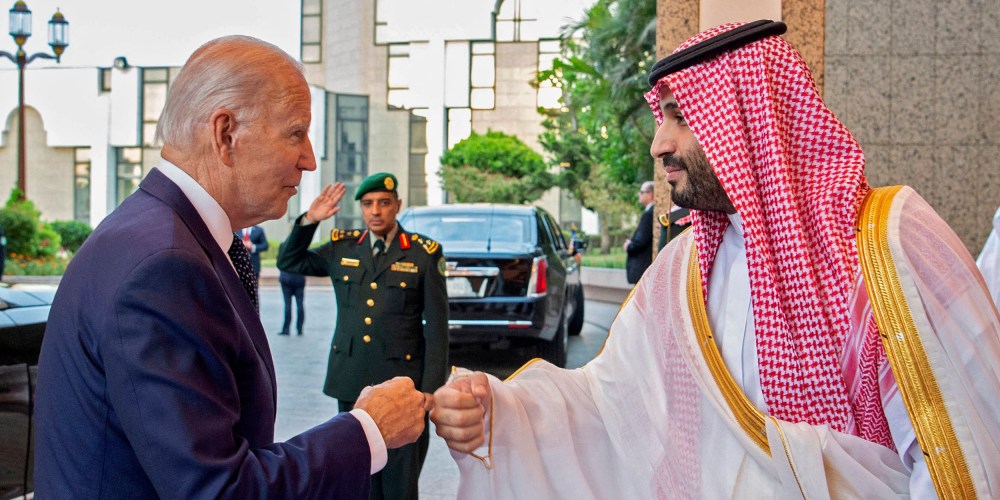
Last week, I was reminded of the shock and pain I felt learning of Khashoggi’s death that Saturday four years ago. On Thursday, President Joe Biden’s administration advised a judge to declare Saudi Crown Prince Mohammed bin Salman immune from a lawsuit over his role in Khashoggi’s assassination. It is, without a doubt, one of the most cowardly decisions of Biden’s political career.
Soon after Khashoggi’s death, reports emerged that the crown prince had ordered the assassination — a conclusion later endorsed by U.S. intelligence. Then-President Donald Trump unsurprisingly downplayed the accusations against his authoritarian friend, and during his administration there was little hope that there would be justice for Khashoggi’s family.
Nevertheless, in October 2020, Khashoggi’s fiancee Hatice Cengiz sued bin Salman and other Saudi officials for their roles in the killing. Biden’s election the following month offered some hope. After all, as a candidate he correctly described Khashoggi’s killing as “flat out murder.” Recent spats between the U.S. and Saudi governments seemingly increased the chances, though slim, that American deference to Saudi Arabia’s worst actions was coming to a long-overdue end.
The Saudi government was worried enough about the case that in late September, the crown prince was named prime minister, a title usually held by the king. The promotion came just days before the deadline the judge in the case had set for the U.S. government’s view on whether bin Salman could be subject to the lawsuit. Observers predicted the move would strengthen his case for sovereign immunity, which typically applies to heads of state, heads of government and foreign ministers.
That prediction came true; the Saudis got what they wanted. Defenders of the administration have argued that the White House was bound by international law. But Biden and his administration could have argued that existing U.S. laws provide an exception in this case, or at least refused to affirm bin Salman’s claim of immunity, and leave the decision to the court.
Yet affirm it they did. And on Monday, The Wall Street Journal reported that “Saudi Arabia and other OPEC oil producers are discussing an output increase, the group’s delegates said, a move that could help heal a rift with the Biden administration.” The quid pro quo couldn’t be more obvious.
Which brings me to a few questions for Biden:
Mr. President, the average price of a gallon of gas is currently $3.70. How much cheaper would gas have to be for you to hold bin Salman accountable? $3.50? $3.25? Would $3.00 buy a gallon of justice? What if your re-election campaign was still four years away? What if your approval rating was still in the 50s? Would that be enough political cushion to do what’s right? Perhaps the president and his staff would insist they have no choice. International law is international law, and no matter the politics or the price of gas, Saudi Arabia is too valuable an ally. So let me ask a different question then: How many American citizens or residents can bin Salman order the deaths of? Would his immunity extend to those who worked with Khashoggi — my friends and former colleagues? Because, with all due respect, Mr. President, it sure seems like you wouldn’t lift a finger to protect them. Those final questions are particularly important because Saudi Arabia still holds a number of American citizens and permanent residents hostage — either in prison or under a travel ban that prevents them from leaving the country. Last year, the Post’s Josh Rogin reported, the Saudi government arrested 72-year-old Saad Ibrahim Almadi, a U.S. citizen, at an airport in Riyadh. Almadi’s crime? Fourteen tweets posted over seven years that were critical of the Saudi government. For this grave offense, last month Almadi was sentenced to 16 years in prison and a 16-year travel ban. That any country — especially a U.S. ally — can mock America’s laws, values and citizens so openly is disgraceful enough. That Biden has given the man who ordered Khashoggi’s murder immunity that even Trump never offered is worse. It sends a chilling message to any American traveling or living abroad about this White House’s self-imposed limits in defending their rights and lives. The president has had some true highs in his career. But there are lows as well — and this is among the lowest.
James Downie is an opinion editor for MS NOW Daily. 

