








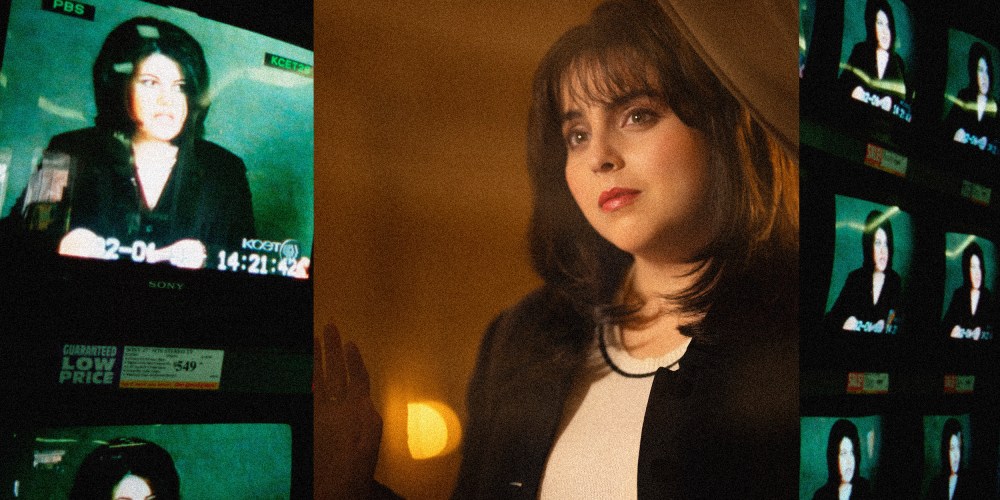
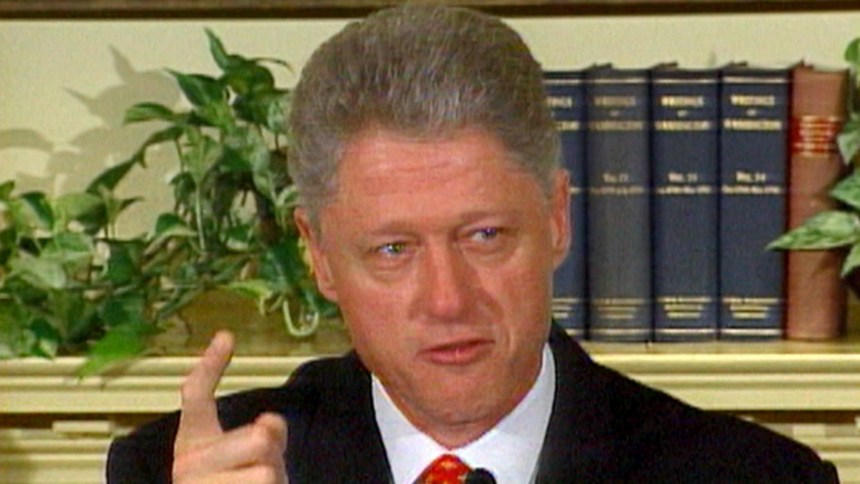
I was in fifth grade in January 1998 when then-President Bill Clinton appeared on national television and declared that he “did not have sexual relations with that woman.” “That woman” was, of course, Monica Lewinsky, a former White House intern who would quickly become shorthand for “cautionary tale.” Weeks after I entered middle school, on Sept. 11, 1998, the Starr Report was released, solidifying Lewinsky as a national object of scorn and a late-night punchline.
“That woman” was, of course, Monica Lewinsky, a former White House intern who would quickly become shorthand for “cautionary tale.”
What a weird and unsettling time to come of age. It’s no wonder that more than 20 years later, we are still unpacking the damage
When I was a 10-year-old girl, Lewinsky’s life experiences seemed light years away from my own. But I knew enough to understand that she was not to be admired.. Her shame and humiliation, her pain after being betrayed and used as a pawn by a dear friend and her denigration at the hands of some of the most powerful people in the world became little more than tabloid fodder. Her humanity barely registered.
But it’s that humanity which is front and center in Ryan Murphy’s new mini-series, “American Crime Story: Impeachment,” which premieres Tuesday on FX. The series tells the story of the events leading up to Clinton’s impeachment through the eyes of Lewinsky (Beanie Feldstein), Linda Tripp (Sarah Paulson) and Paula Jones (Annaleigh Ashford). And this time, the story isn’t just being told about Lewinsky, but by her. (This is literally and figuratively true; Lewinsky is a producer on the series.)
I bring up my age during the impeachment saga because of one of my most visceral reactions to Murphy’s re-enactment. I found myself staring at Feldstein’s cherubic, wide-eyed face, her performance leaning into all of the wonder and promise and guile and inevitable naivete that accompanies youth.
She looks so young, I thought.
She is so young.
She was so young.
Feldstein is 28. When Lewinsky’s sexual relationship with Clinton began, she was just 21. When the relationship became public, she was 24.
At the time, I thought of Lewinsky as more of a symbol than a human being; she was an idiot girl whose questionable sexual obsessions and irresponsible confessions, taped secretly by her much-older friend Tripp, had inadvertently threatened to take down a president. I knew about the blue dress and the cigar and the oral sex — details that would kick off years of hand-wringing about the lessons us tweens were absorbing about blow jobs — and I knew, implicitly, that Lewinsky wasn’t supposed to be interpreted as a sympathetic figure. This was not because my parents were walking around our home denigrating her — “Republicans want to impeach the president for getting a blow job,” was the overarching sentiment I remember most from that time — but rather because a but rather because a disdain for Lewinsky became a ubiquitous cultural staple of the late ‘90s.”
Disdain for Lewinsky became a ubiquitous cultural staple of the late ‘90s.
She was the butt of cruel, body-shaming, sexually explicit, misogynist jokes on “Saturday Night Live” and by late-night hosts Jay Leno and David Letterman.” (“American Crime Story” deploys original footage of these events to great and disturbing effect.) In 1998, New York Times columnist Maureen Dowd referred to (extremely tame, fully-clothed) photos taken of Lewinsky for Vanity Fair as “pornography,” accusing Lewinsky of being “so eager to get her scandal trophy that she didn’t stop to consider that these photographs shriek ‘’I’m not a serious person’’ and brag ‘I was the President’s sex kitten.’” A 1999 episode of “Law & Order: SVU” featured a character referring to oral sex as “getting a Lewinsky.” A former high school drama teacher of Lewinsky’s who had been involved in a sexual relationship with his former student, went on TV to proclaim Lewinsky as a person “obsessed with sex,” and the media painted him as a victim of her seduction. Meanwhile prominent feminists failed to come to Lewinsky’s defense despite the vast power differential that existed between an intern and the president of the United States.
“It’s like every girl’s dream,” author Elizabeth Benedict said during a roundtable discussion printed in The Observer in February 1998. “You can be the president, but you can f— the president, too.”
As a girl whose understanding of my own burgeoning sexuality was inevitably impacted by the whole affair, I don’t exactly remember this scenario being the dream. Most of us absorbed the media frenzy surrounding the Clinton impeachment as a guide to what not to do; we laughed along with the masses at Lewinsky and sought to avoid becoming her. In the years following the Starr Report, when she was trying to make money to pay her exorbitant legal fees by selling handbags and partnering with Jenny Craig, we rolled our eyes. Everything about her was treated as fair game: her weight, her beret, her sexual desire. The truth is we didn’t want to look too carefully, because Lewinsky’s fate highlighted the end result of patriarchy — a culture that would chew us up and spit us out if we failed to conform. In some ways, we just wanted her to go away. And she did, for nearly a decade. One of the most striking things about how “American Crime Story” treats the impeachment is its emphasis on the complicated people and events surrounding Lewinsky. A combination of Clinton’s alleged serial predatory behavior (which, to be clear, I believe likely occurred), cynical political plotting and plain ol’ bad luck conspired to place a young woman in her early 20s in the middle of a national firestorm that would fully subsume the following two decades of her life. It is only in the last handful of years that we have begun to step back and collectively re-examine the many ways in which Lewinsky was wronged. In a searing 2014 essay for Vanity Fair, Lewinsky wrote: “It’s time to burn the beret and bury the blue dress. I am determined to have a different ending to my story. I’ve decided, finally, to stick my head above the parapet so that I can take back my narrative and give a purpose to my past.” The Me Too movement erupted and a dam broke, releasing a flood of stories about sexual assault, misconduct and abuses of power. Years later, the #MeToo movement erupted and a dam broke, releasing a flood of stories about sexual assault, misconduct and abuses of power. Other maligned women of the late ‘90s and early ‘00s — Lorena Bobbitt, Paris Hilton, Britney Spears, Marcia Clark, Tonya Harding — were the subjects of films, TV shows and documentaries which asked viewers to at least reconsider the way they had been viewed and treated. And Lewinsky began taking baby steps into the public sphere , talking about public shame and becoming an advocate for anti-bullying efforts. She has also been honest about the nonlinear path to healing; The New York Times reported she had to work with her trauma therapist throughout the making of “American Crime Story” because of her post-traumatic stress disorder. Maybe “American Crime Story” can serve as a bookend: a way for Lewinsky, and the rest of us, to put a period at the end of a very long cultural chapter. If nothing else, it is an important reminder to resist reducing women to proverbial punching bags. “When you have made a colossal mistake like I did so early in your life, and lost so much because of it, the idea of making a mistake is catastrophic,” Lewinsky told the New York Times’ Jessica Bennett during a recent interview. “And yet in order to move forward, I have to take risks. I have to try things. I have to continue to define who I am.”
Emma Gray
Emma Gray, a freelance journalist focused on the intersection of gender, culture and politics, is the author of "A Girl's Guide to Joining the Resistance." She is a co-host of the podcast “Love to See It” and a co-author of the newsletter “Rich Text,” and she has spent the last 10 years as a senior reporter and editor at HuffPost. 


