








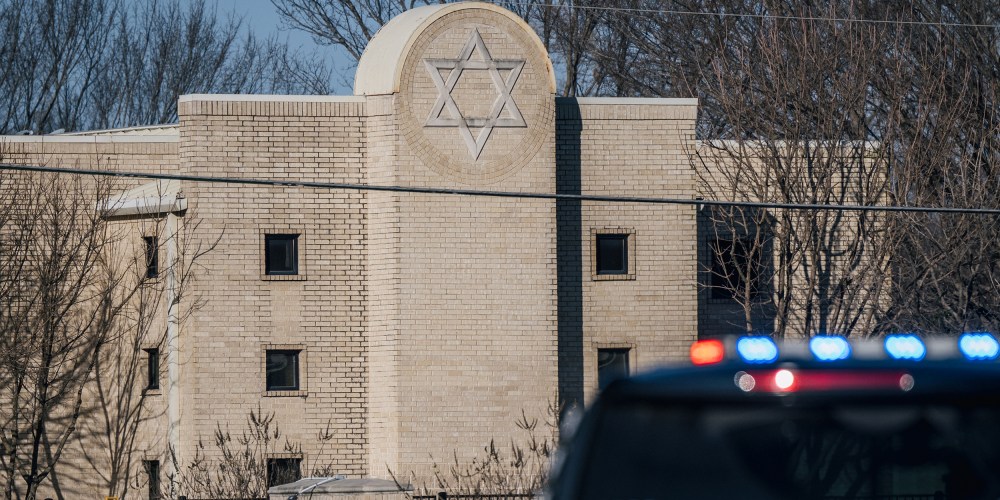
Just before New Year’s Day, Malik Faisal Akram flew from England to John F. Kennedy Airport in New York. He had a criminal record in the United Kingdom and a reported history of mental health issues. Akram had been banned from a U.K. magistrate’s court in 2001 because he wished aloud that the court usher had been killed in a mass casualty flight attack a la 9/11. In 2020, Akram was investigated by British intelligence as a possible violent Islamist threat. Yet, he was permitted entry into the United States – seemingly within the law. Soon after arriving in New York, he flew to Texas where, about two weeks later, he took hostages at the Congregation Beth Israel synagogue in Colleyville, before the FBI’s Hostage Rescue Team killed him.
Where Akram’s gun came from continues to confound.
There are some unique aspects to Akram’s case. It’s not every day that someone travels here, holds hostages and demands the release of an Al Qaeda-linked federal prisoner. But there is also a common element to Akram’s tale . He bought a gun — according to President Joe Biden “on the street” — likely in Texas. By now, investigators know which flights Akram took, where he bought his cellphone, the people he called, the Queens hotel where he spent a night and the Texas homeless shelter that took him in.
But not where he got his gun.
Despite all the ascertainable data mentioned above, where Akram’s gun came from continues to confound.
If you’re wondering how a recently arrived foreign national, planning a terrorist-related synagogue takeover, can get his hands on a gun, then let me explain. Investigators think Akram bought his gun in a “private sale,” and they have traced that weapon’s last recorded purchase to 2020. But tracing a gun after its last recorded sale is like searching for the proverbial needle in the haystack. In America, private individuals are free to sell guns without a background check. While 22 states and the District of Columbia have moved to close this gap in the law, most states don’t require background checks for private sales. If Akram acquired his gun on the street, there’s an increased likelihood that it was stolen at some point and, therefore, would be even harder to trace. According to the Bureau of Alcohol, Tobacco, Firearms and Explosives, and as reported by the Center for American Progress, gun diversion — the transfer of a gun to someone other than the owner on record — often occurs through theft:
“An estimated 300,000 guns are stolen from gun dealers and private gun owners every year and are then frequently used in the commission of violent crimes. From 2012 to 2019, more than 17,000 firearms recovered and traced after use in a crime had been reported stolen or missing by licensed gun dealers.”
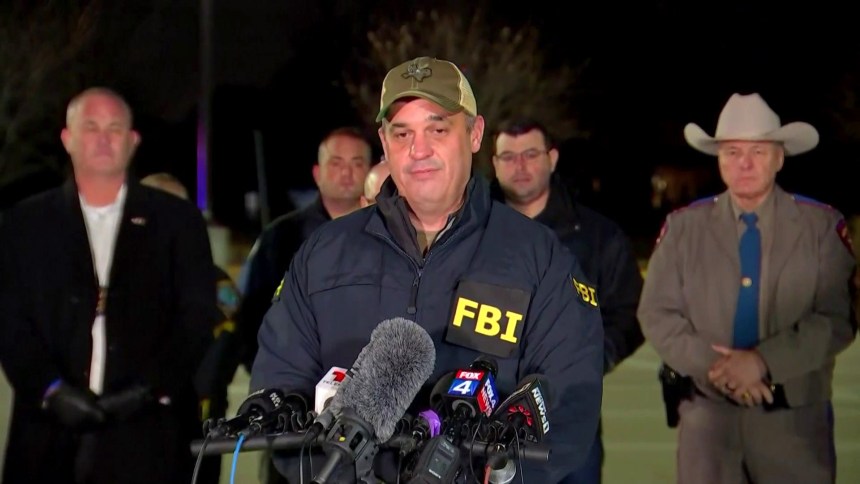
When law enforcement does recover a gun in connection with a violent crime — as investigators have in the Akram case — the ATF is noticing a rapidly reducing amount of “‘time to crime’” — the time that elapses between when a gun is first purchased at retail and when it is used in connection with a crime. Nationally, 110,700 recovered crime guns had a short time to crime in 2019, compared with 46,755 in 2012 — a 137 percent increase.”
You might think it sensible to fund more ATF agents to help recover stolen guns and reduce street level purchases before guns are used to commit crimes. That might make sense, but it won’t happen anytime soon. The ATF, a small federal agency with fewer than 3,000 special agents, hasn’t even had a Senate-approved director since 2015. It seems a divided Senate can’t decide if it wants an ATF director who enforces gun laws and takes violent crime seriously.
A divided Senate can’t decide if it wants an ATF director who enforces gun laws and takes violent crime seriously. Akram was carrying a handgun when he took his hostages Saturday. We don’t yet know if Akram realized that Texas (as of Sept. 1, 2021) no longer requires a license or training to purchase a handgun. That law was opposed by the largest law enforcement association in the state, the Texas Municipal Police Association (TMPA), in part because the law makes it harder to determine who is in lawful or unlawful possession of a weapon. We don’t know if Akram knew that in Texas, even if he had been pulled over for speeding on his way to the synagogue, that it’s unlikely a police officer would have been able to legally even ask him about a gun — even if he had volunteered that he was carrying one. Kevin Lawrence, executive director of the TMPA, told me that police there “can’t inquire if someone in a traffic stop has a gun and can’t temporarily detain someone merely because they possess a gun — unless they are a known gang member.” The lack of adequate gun laws in America makes all of us, including police officers, less safe from violent crime — and even terrorism-related acts like the one in Colleyville. A bill passed by the House of Representatives would require background checks for all gun purchases — including private sales — but it’s languishing in the Senate along with the appointment of an ATF director. If the feds find the person who sold Akram the pistol he used to terrorize his hostages, rest assured that every possible criminal charge will be considered. Such charges might include stealing the weapon or selling a firearm to a nonimmigrant alien. But whatever the charge, it will be too little, too late, especially for the synagogue hostages terrorized in the ordeal. We need enhanced laws to regulate private gun sales and an enhanced ATF to be able to enforce gun laws already on the books. The new law in Texas makes it easier for bad guys to get guns — and harder for the good guys to track them.


