








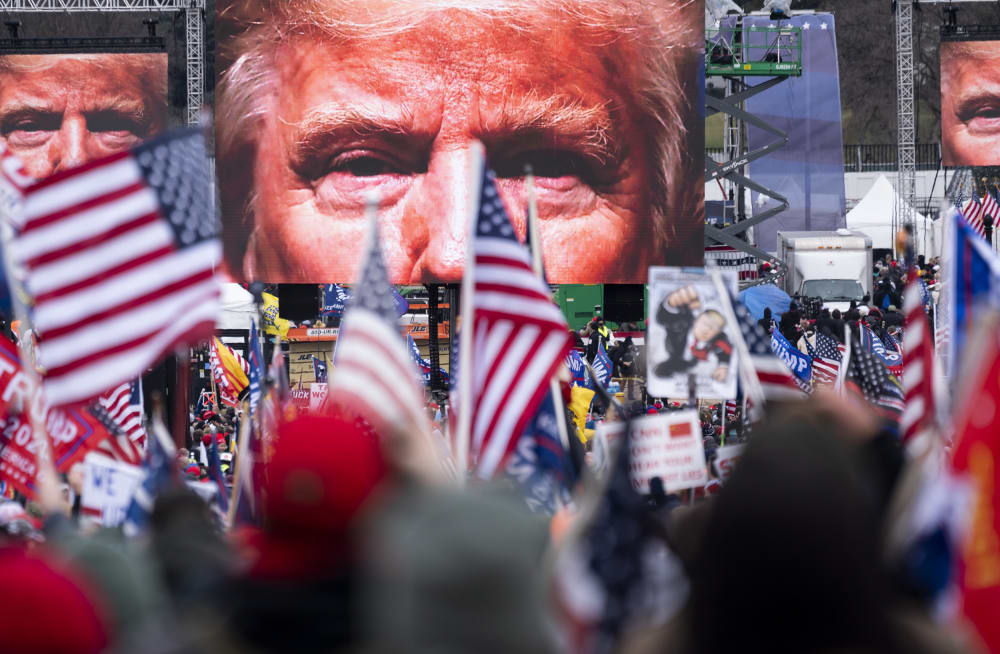
Every January, the same question comes up: Why are we still talking about Jan. 6?
It’s been five years. The country has moved through elections, indictments, wars and various crises that compete for attention. For many Americans, the attack on the Capitol feels like a part of history now.
But Jan. 6 was never just one day. It was a strategy.
The last time Donald Trump did not get the electoral outcome he wanted, he told his supporters the election was rigged. He said it was stolen. He pressured state officials to change results. He promoted legal theories with no basis in law. He leaned on members of Congress. And when all of that failed, he encouraged his supporters to go to the Capitol, where they attempted to disrupt the process of certifying the election.
The goal was to to buy time. Time to pressure state lawmakers. Time to draw up alternate slates of electors. Time for his scheme to work.
The violence of that day was not spontaneous. It was the predictable outcome of sustained lies about a stolen election and the deliberate erosion of trust in democracy itself.
Trump actively participated in efforts to overturn the election. He was willing to tolerate violence if it produced the outcome he wanted. The only reason the effort failed is because a small number of people refused to go along with it. His own vice president said no. State and local election officials said no. Career public servants said no.
But that is not reassuring. He replaced his vice president, and many of the others who stood up to him are no longer in the same positions. Democracy won a fragile victory.
Jan. 6 still matters because the same man who tested those limits once is again using familiar language about rigged elections and corrupt systems as we head toward the fall midterms. It also matters because Trump himself has claimed Jan. 6 was a “day of love” and labeled people convicted in connection with it “political prisoners” and “hostages.”
That is not revisionism from some fringe character. That is power attempting to rewrite reality.
I think about Jan. 6 not only as a political analyst, but also as someone who experienced a part of it most Americans never saw.
I think about Jan. 6 not only as a political analyst, but also as someone who experienced a part of it most Americans never saw.
On that day, I was at the Democratic National Committee with then-Vice President-elect Kamala Harris. We were there to conduct political business. But before we got started, she wanted to watch the certification process begin. She wanted to see the Electoral College ballots carried onto the House floor. She wanted to witness history because those ballots would cement Joe Biden as the 46th president of the United States and her as the 49th vice president and the first woman to hold that office.
We were sitting in a conference room when the Secret Service burst in. We were told there was a bomb outside the building and we had to leave immediately.
That contrast stays with me. Inside, the orderly execution of constitutional democracy. Outside, an effort to stop it by force.
The bombs outside both the Democratic and Republican National Committee buildings were real. They were functional. People were working in those offices. The intent was to cause harm and potentially to maim or kill. It is not far-fetched to say that the vice president-elect herself could have been injured or killed as a result. We do not talk about that Jan. 6 plainly enough.
We focus on broken windows and violent images, but we too often sanitize the reality that this was an assault on the government, with multiple threats and real explosives aimed at derailing a constitutional process. That is why conspiracy theories matter. That is why lies matter. It matters that Trump nominated figures such as Dan Bongino — who claimed the pipe bombs on Jan. 6 were an “inside job” — to work at the FBI or Pam Bondi — who said the investigation into the attacks was a “historic betrayal of public trust” — to serve as attorney general. And it matters that on his first day back in office, Trump pardoned people convicted of crimes committed on Jan. 6. That decision rewrote accountability, but more importantly, it changed the incentives for future misbehavior. People who were willing to use violence in Trump’s name were told that loyalty would be rewarded and that the president would protect them. That is not about rewriting the past. That is about planning the future. That is not about rewriting the past. That is about planning the future. Jan. 6 was what happened when lies met institutional vulnerability. The question now is whether we recognize the warning signs the second time around. Democracy does not collapse all at once. It erodes. It is tested repeatedly until the institutional guardrails don’t hold anymore. Jan. 6 will be remembered as a failed attempt to overturn American democracy. How the next attempt will be remembered depends on what we do next. For more thought-provoking insights from Michael Steele, Alicia Menendez and Symone Sanders-Townsend, watch “The Weeknight” every Monday to Friday at 7 p.m. ET on MS NOW.
Symone D. Sanders Townsend is an author and a co-host of "The Weeknight." 

