








On Tuesday, the Food and Drug Administration recommended that medical providers “pause” administering the Johnson & Johnson Covid-19 vaccine after six women ages 18 to 48 — out of the 6.8 million people who have received the J&J vaccine — were reported to have developed blood clots within two weeks of getting the shot. According to the FDA, one woman died as a result of the clots, and another is in critical condition.
If anything, seeing the FDA act out of an abundance of caution is a sign that systems can work.
This still means that there have been fewer than 1 in 1 million reports of blood clotting post-vaccination, and many have pointed out that Covid-19 itself carries a risk of increased blood clotting. But for obvious reasons, this news still feels big — and scary.
When the story broke Tuesday morning, people wondered whether they were in danger if they had received the J&J vaccine. Memes abounded depicting the Moderna and Pfizer vaccines as popular girls lording their superior efficacy over poor, nerdy J&J.

And both depressingly and predictably, segments of the American population that were predisposed to believe anti-vaccine conspiracy theories jumped on the news as proof that vaccines are outright dangerous. (I won’t link to them, but a simple search of Twitter turns up a host of scientifically inaccurate claims about Covid-19 vaccines, J&J or otherwise.)
“I’ve already heard from dozens of people this morning who all said, ‘See, you can’t trust these vaccines,’” former conservative radio host Joe Walsh, who is not an anti-vaxxer, tweeted just before 11 a.m.
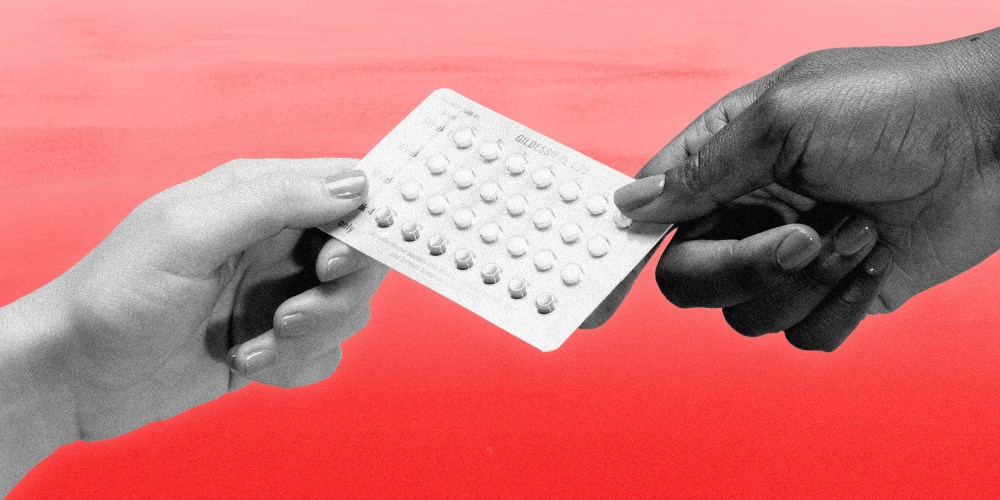
In 2012, the FDA officially added a warning label to Yaz and other drospirenone-containing birth control pills.
When I first read the J&J news, one of the first things I thought of was Yaz, a birth control pill that reached the height of its popularity in the late aughts before it was embroiled in lawsuits over claims that it caused increased risk of blood clots. In 2012, the FDA officially added a warning label to Yaz and other drospirenone-containing birth control pills.
This was also big, scary news at the time — again, for good reason. Lots of people, me included, ended up going off Yaz. But many more didn’t. The risks became known. As with any medication, people were given the opportunity to weigh the risks and the rewards with their physicians and make a (hopefully as informed as possible) choice.

I wasn’t the only person on the internet who made the connection between the J&J vaccine and the birth control pill.
“The risk of blood clot on the birth control pill … is far higher than 6 in 7 million,” tweeted journalist Leah Fessler. “Not a doctor but just providing some context because I got J&J, this news freaked me out a bit, then I realized I’ve been on the pill since 16, including Yaz. Context matters.”
Context does matter. In fact, it is essential, especially when having a national dialogue about something as complex as mass worldwide vaccination efforts within the context of a pandemic that continues to devastate communities.
To be clear: I am not a medical professional, and thus I am making no judgments about the FDA’s decision to pause administering the J&J vaccine. I also am not making the claim that the blood clots the six women developed in the wake of receiving the J&J vaccine are the same as the clots that those who take oral contraceptives might be at higher risk of developing. (They are not.) Informed risk is an inherent part of modern medicine. But the comparison still feels apt. Not because the cases are one-to-one or because the FDA made the wrong call, but because risks and potential side effects — from increased risk of blood clotting to migraines to intense mood changes to slightly increased risk of breast cancer — are part and parcel of preventing unwanted pregnancy. The side effects of hormonal birth control hardly feel notable, and yet many thousands of women experience them to varying degrees. Informed risk is an inherent part of modern medicine. Making informed decisions and weighing the risks of some potentially very scary side effects are things we routinely ask of people who regulate medical conditions — or who, in the case of the pill, can get pregnant. If anything, seeing the FDA act out of an abundance of caution is a sign that systems can work. A small but dangerous potentially causal pattern was identified, and action was taken to allow medical professionals to review the data. Pfizer announced that it would step up to help fill the potential gap in vaccinations. And millions — literally millions — of Americans have received the Johnson & Johnson Covid-19 vaccine and remain perfectly healthy. Just as it would have been absurd to suggest that everyone stop taking oral contraceptives in the wake of concerns over blood clots in 2010, it is absurd to suggest that vaccines are unsafe in the wake of FDA caution surrounding J&J. As virologist Angela Rasmussen put it on Twitter: “As someone who got the J&J vaccine 8 days ago and who took oral contraceptives for 20 years, I’ll take these odds.”
Emma Gray
Emma Gray, a freelance journalist focused on the intersection of gender, culture and politics, is the author of "A Girl's Guide to Joining the Resistance." She is a co-host of the podcast “Love to See It” and a co-author of the newsletter “Rich Text,” and she has spent the last 10 years as a senior reporter and editor at HuffPost. 

