








After the terrorist attacks of Sept. 11, 2001, a New York advertising executive conceived of a slogan that was eventually adopted by the newly formed Department of Homeland Security: “See something, say something.” It was a plea for hypervigilance against another terrorist attack, asking the public to report anything — or anyone — suspicious. The slogan’s creator, Allen Kay, told The New York Times that he based the phrase on the World War II mantra “loose lips sink ships,” used as a reminder to everyone that speaking about troop or ship movements could have deadly consequences.
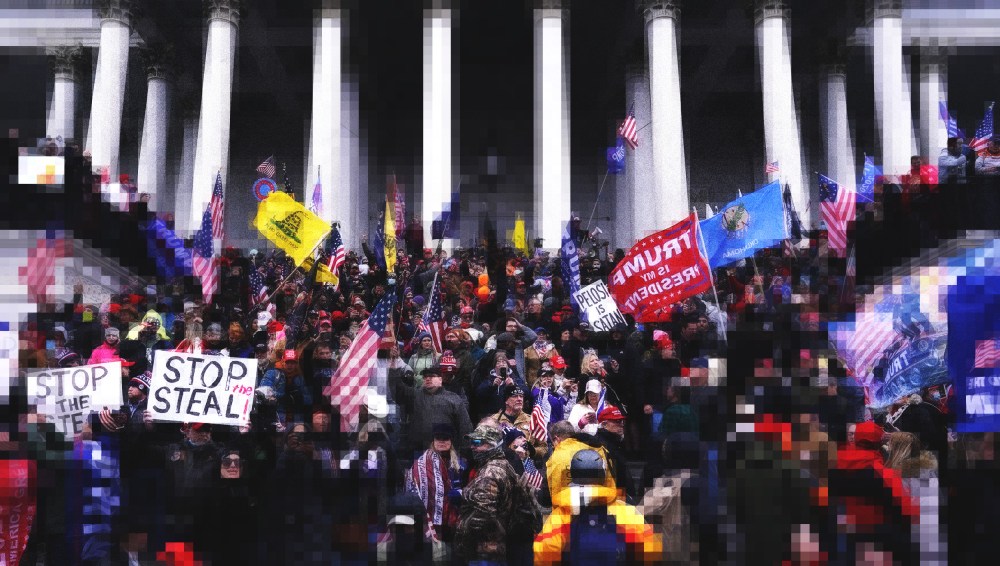
After the Jan. 6 Capitol riot, public tips about the identities of the rioters continue to stream into the FBI. They’re part of a natural evolution in the average Joe’s role in securing our democracy — we’ve moved from “keep your mouth shut” to “keep your eyes open” to a play-at-home variation of Call of Duty in which everyone can become a virtual bounty hunter. And so far, it’s working — with certain caveats.

David Yaffe-Bellany details just how big a role these “sedition hunters” have played in identifying rioters in a recent piece for Bloomberg:
Five months on from Jan. 6, the authorities have brought charges against more than 400 rioters, often using the traditional tools of law enforcement, such as search warrants and confidential informants. But they’ve also relied on the crowdsourcing efforts of sedition hunters. In the days after the riot, the FBI saw a 750 percent increase in daily calls and electronic tips to its main hotline. The bureau still receives twice the normal volume of alerts. Such tips have proved helpful in “dozens of cases,” says Samantha Shero, an FBI spokeswoman. “The public has provided tremendous assistance to this investigation, and we are asking for continued help to identify other individuals.”
This impressive public response wasn’t simply spontaneous. It was prompted by the FBI’s repeated, daily sharing of digital wanted posters, made up of still images and videos of unidentified participants at the Capitol riot. This unprecedented crowdsourcing of crime solving is the result of three factors.
Deputizing the public for digital detective work isn’t without its problems
First, the overall numbers: The FBI’s investigation of violence at the Capitol involves several hundreds of suspects who were digitally captured in images and videos from security surveillance, license plate readers, police officer body cameras, facial recognition technology, media coverage and — in a sign of the ubiquitous smartphone — the rioters themselves. In just one suspect’s cellphone, the FBI recovered over 12,000 pages of digital evidence. The sheer number of suspects and the daunting amount of evidence to comb through meant the FBI needed the public’s help.
Second is the good news part of this story: The concerted public effort to help the investigation reflects a recognition of the threat to democracy posed by those who breached the Capitol. The sentiments expressed by one “sedition hunter” in the Bloomberg piece seem to mirror the motivation of many:
“We want these people brought to justice,” says Forrest Rogers, a German-American business consultant who helps run a sedition-hunting group called Deep State Dogs. “And we don’t want a random sampling of them, a token group.” Third, Americans are spending more time than ever before on their devices, even before the pandemic. That’s both good news and bad news for investigators. It means people will continue to produce mountains of digital evidence that will have to be painstakingly processed for almost any criminal investigation. But it also means law enforcement will increasingly parlay American’s collective online search skills into a mobilized army capable of a nationwide manhunt. But deputizing the public for digital detective work isn’t without its problems. Things can go wrong when even well-meaning people skip the part where they’re supposed to report their findings to law enforcement. Misidentifications can lead to wrongful accusations, and exposure of personal information could result in vigilantism and violence — the very thing that sedition hunters are trying to thwart. As described in Bloomberg, “A retired Chicago firefighter was falsely accused of participating in the riot after footage surfaced showing a lookalike hitting police with a fire extinguisher.” I reached out to Chris Sampson, chief of research for TAPSTRI, The Terror Asymmetrics Project on Strategies, Tactics and Radical Ideology, to get his thoughts about the work these digital detectives are performing: The need for crowdsourced examination of available media from the Capitol insurrectionists is abundantly clear. Online sleuths are certainly contributing positively to the effort. However, there is no room for error in accusing people of a crime. The consequences to innocent people from misidentification are too steep to risk mistakes. It is still best to take available information and send it to legal authorities who have the proper legal power and forensic tools to follow up on those leads. But, we most certainly have found a better than average accuracy and caution in the work of the “sedition hunters” when compared to past efforts at online identification. As Sampson alluded to, when it comes to an assault on our democracy, an all-hands-on-deck strategy is needed — but everyone needs to be rowing in the same direction. Crowdsourced solutions to crime are as old as the wanted posters in Wild West post offices and as contemporary as Amber Alerts for missing children. Now, instead of cattle rustlers or kidnappers, we’re being asked to help identify a different kind of outlaw — the kind who tries to steal our democracy. Those outlaws won’t stop their efforts just because some of them have been captured; neither should we.


