








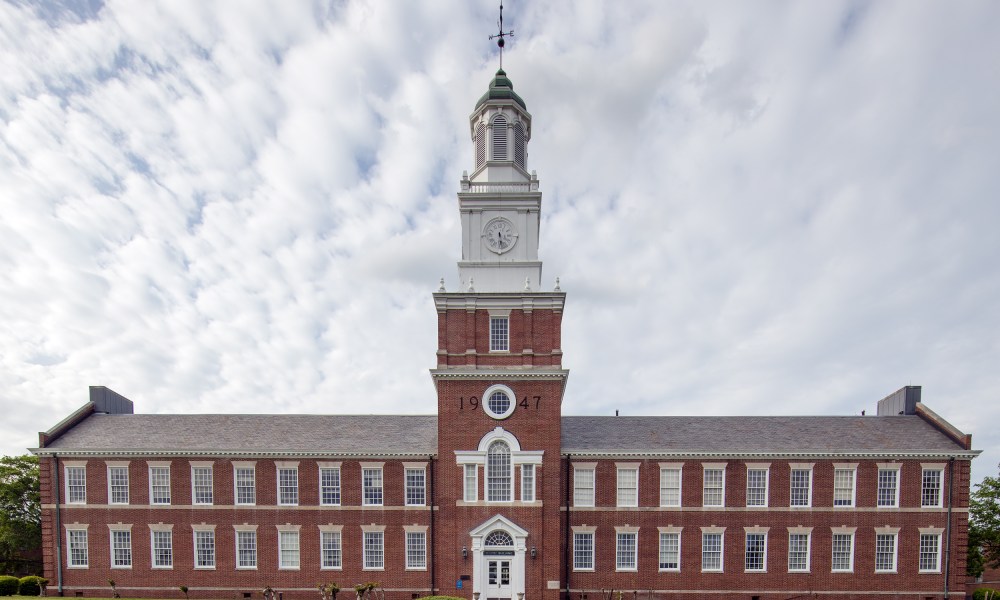
Tuesday’s bomb threats targeting 14 historically Black colleges and universities illustrate how resentful racists are of Black achievement, especially that which occurs in spaces white people don’t control. The threats also seem to illustrate how early such resentment can begin because, according to the FBI, they appear to have been made by six “tech savvy juveniles.”
Though the number of targeted schools was especially high Tuesday, that wasn’t the first time this year HBCUs have been threatened. At least six schools received threats Monday, and eight schools were threatened Jan. 5.
What offends, it seems, is the mere fact of Black people obtaining an education.
When the Supreme Court agreed last week to hear a challenge to college admissions policies that consider applicants’ race, it telegraphed a victory for white people angry at policies they believe give Black students slots they assume white people deserve. This week, though, we see that same white grievance playing out in the form of threats on Black students who, by choosing to attend HBCUs, could never even be accused of bumping out a white person.
What offends, it seems, is the mere fact of Black people obtaining an education.
Given the spread of noxious laws that seek to ban the teaching of any history that doesn’t valorize white people and the similarly noxious removal of library books that don’t sanitize things, we should have seen this attack on HBCUs coming. Even without the new laws, Americans’ grasp of history is already shockingly poor, which explains why there are folks who think racism works both ways and why they commonly mischaracterize HBCUs, or suggestions that students attend them, as anti-white.
HBCUs were founded — sometimes by white people — because most white schools wouldn’t admit Black people. Sometimes they were founded by states to maintain segregation — that is, to keep their white schools white. A basic understanding of American history should make that clear, but that didn’t stop my white high school classmate with top-percentile test scores from asking if a nearby public HBCU would let him in. With that question, he revealed a belief that predominantly Black spaces operate like predominantly white ones so often do: to keep the other out.

“For some reason in some quarters, there’s some sort of resentment of African Americans having a space that’s, you know, special to us,” Ivy Taylor, president of Rust College — an HBCU in Holly Springs, Mississippi, that was threatened Tuesday — told me Wednesday. “Not necessarily separate, but focused on us or dedicated to us or where we’re prioritized. Some folks aren’t comfortable with that.”
“About 4 a.m. on yesterday morning, we got a call that said there was a bomb planted on the campus,” Taylor said. “I think specifically the N-word was used.”
Administration officials took the threat seriously, she said, summoning the police and bringing in bomb-sniffing dogs. They ordered students on campus to stay in their dorms and everybody who might be commuting to stay away.
“I also was in contact with the FBI and learned from them that they had already identified the source of the threat and that it was not likely that there really was any explosive device,” Taylor said, “but still, you know, with us being in rural Mississippi, I wanted to make sure we weren’t the one where there was something.” Thus, Rust’s campus remained on high alert until “we got an all-clear from the law enforcement officials who were on campus.”
“I think this event made all those things more real for students in realizing, ‘Hey, in the 21st century, we still are receiving those types of threats.’”
The threat rattled the students, she said, especially when they realized that four other HBCUs in Mississippi and nine outside the state were also threatened.
“We talk all the time at Rust about the history of our founding,” Taylor said. “There was a lot of activity here during the civil rights movement by the students, and the Freedom Riders were here. But I think this event made all those things more real for students in realizing, ‘Hey, in the 21st century, we still are receiving those types of threats.’”
Rust is where my late mother — the most exacting grammarian I’ve known — trained as an English teacher. Holly Springs is where I grew up. And as fate would have it, I was there Tuesday, driving past campus, still unaware of the threat but wondering why I didn’t see anyone walking around. But I couldn’t miss the royal blue banners proudly proclaiming 1866 as the year the school was established, and as I drove past them, I tried imagining how those first pupils felt. One year, they were being treated as nothing more than some white person’s possession; the next, they were being acknowledged as human beings in possession of capable minds. How their academic success must have angered and worried those who had claimed ownership of them. After all, their ability to learn undercut a chief argument for slavery, and the learning itself served as their bridge from emancipation to self-reliance. Even now, HBCUs are significantly better than predominantly white institutions in catapulting their students to professional heights. According to the United Negro College Fund, in 2014, HBCUs accounted for 3 percent of the nation’s colleges and enrolled 10 percent of Black college students but were responsible for “17 percent of the bachelor’s degrees earned by African Americans and 24 percent of the degrees earned by African Americans in ‘STEM’ fields: science, technology, engineering and math.” Vice President Kamala Harris is an alumna of Howard University, which received bomb threats Monday, Tuesday and on Jan. 5. On the eve of last year’s inauguration, the Presidential Inaugural Committee curated an online celebration of HBCUs that mostly emphasized the overwhelming number of Black luminaries — especially in politics — who attended such schools. When it comes to the “creation of Black leadership,” Taylor said, white schools “can’t touch HBCUs.” She called an HBCU campus “kind of a sacred space where Black people can feel comfortable in their own skins but also challenged and expected to excel.” But Black excellence, especially when it arises in spaces white people don’t control, reliably provokes racists. What else explains the outrage at the nation’s top college football recruit deciding to ditch Florida State University for Jackson State University? Taylor said that as she’s talked to other HBCU presidents, it’s become clear that dealing with racist threats is “a part of the job.” She hadn’t spoken to one who said, “Oh, I can’t believe this happened.” Indeed, there are few things more believable than Black autonomous achievement stoking the white-hot coals of racist resentment.
Jarvis DeBerry is an opinion editor for MS NOW Daily. 


