








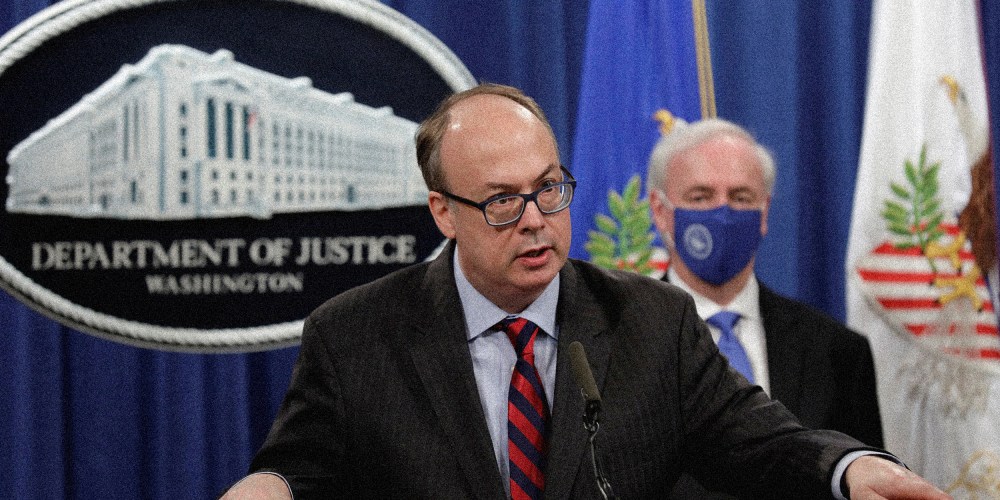
The select committee investigating the deadly Jan. 6, 2021, attack on the Capitol may be considering immunity for former Department of Justice official Jeffrey Clark. Clark invoked his Fifth Amendment right against self-incrimination over 100 times during his committee appearance last week. On Feb. 3, Rep. Zoe Lofgren, D-Calif., a member of the select committee, called Clark’s testimony “disappointing” and told CNN that one option the committee needs to look at was offering Clark something lawyers call “use immunity.” That would be a bad idea for at least three reasons.
Thecommittee investigating the deadly Jan. 6, 2021, Capitol attack may be considering immunity for former Department of Justice official Jeffrey Clark.
First, Clark is a relatively big fish in the ocean of people already called before the select committee. Clark was the acting head of DOJ’s Civil Division during former President Donald Trump’s waning weeks in office, and he served under then-acting Attorney General Jeffrey A. Rosen. A New York Times piece succinctly sets out what Clark, described by the newspaper as an “unassuming lawyer,” is alleged to have done during Trump’s final days: “force Georgia state lawmakers to overturn its presidential election results.” According to that report, “because Mr. Rosen had refused the president’s entreaties to carry out those plans, Mr. Trump was about to decide whether to fire Mr. Rosen and replace him with Mr. Clark.”
As laid out in a 400-page report the Senate Judiciary Committee released in October, top DOJ officials and White House lawyers threatened to resign if Trump ousted Rosen in favor of Clark.
Clark actually sketched out a map to guide Republican lawmakers as part of the plan. Trump eventually discarded the idea of replacing Rosen with Clark because Trump reportedly decided that the ensuing brouhaha over mass resignations and accusations would “eclipse any attention on his baseless accusations of voter fraud.” And, importantly, Clark had meetings with Trump to directly present and discuss the plot to overturn the election.

In my book, that means Clark is a candidate for criminal prosecution, not immunity. Potential federal charges could include interfering with Americans’ right to vote and to have their vote fairly counted, using official authority to interfere with a federal election — and even seditious conspiracy. Of course, a jury would have to weigh any charges.
Second, “use immunity,” which allows prosecutors to still charge a defendant as long as they don’t use anything they learned from the immunized defendant’s testimony, sounds great in a law school classroom, but not in a courtroom. If select committee members think they can get Clark to cough up his cohorts — maybe even a former president – and still expect DOJ to charge Clark, then they should check out the case law. Prosecutors would have to prove to a judge that every piece of evidence in their case was independently developed apart from, and devoid of, anything Clark provided. It’s the legal equivalent of trying to have your cake and eat it, too. But judges and defense attorney’s seldom swallow that.
In the infamous Iran-Contra arms for hostages case against Lt. Col. Oliver North, who served in the Reagan administration, a federal judge tossed out North’s case after special prosecutor Lawrence Walsh conceded he couldn’t prove that North’s convictions weren’t influenced by North’s immunized congressional testimony. Walsh blamed Congress.
It’s difficult to envision a good scenario here. More recently, and in the D.C. Circuit Court of Appeals, a judge dismissed charges against members of the private security firm Blackwater because prosecutors couldn’t establish that their evidence wasn’t tainted by testimony provided by immunized defendants. The court found that not only can the government not use “immunized testimony itself,” but that it can’t use any testimony that was “shaped, altered, or affected” by that testimony. The government also can’t use that testimony “to develop investigatory leads, to focus an investigation on a witness or to motivate another witness to give incriminating testimony.” That’s a problem. Third, and perhaps most importantly, Lofgren’s public pondering of immunity for Clark raises serious concerns about the current state of communication between the committee and DOJ, and DOJ’s willingness to hold higher-ups accountable. While Congress is permitted to offer immunity in return for testimony, any prosecutive decisions are made by the DOJ. It’s DOJ that would have to live with the undesirable results of Congress granting immunity to Clark. That means the select committee shouldn’t pontificate about legal decisions that may handcuff prosecutors from whatever they may be planning. It’s difficult to envision a good outcome here. Either the committee and DOJ have coordinated possible use immunity for Clark, or they haven’t. If DOJ has blessed potential immunity, that’s a sign that they don’t really intend to hold Clark criminally accountable. If DOJ said no to immunity, then the committee is ignoring the prosecutors. If the committee hasn’t even consulted with DOJ, then things are worse than we realize. There is one potential ray of light in this otherwise gloomy forecast. It’s possible that the committee and DOJ are somehow convinced that Clark holds the key to directly implicating Trump and they believe he’s willing to turn that key. It’s a long-shot bet that isn’t worth the risk of effectively jeopardizing holding Clark accountable. If Clark holds the Trump key, then he’s much more likely to use it if he’s staring at a criminal indictment instead of immunity. That’s a much safer bet — and the pay-off would be worth it.


