








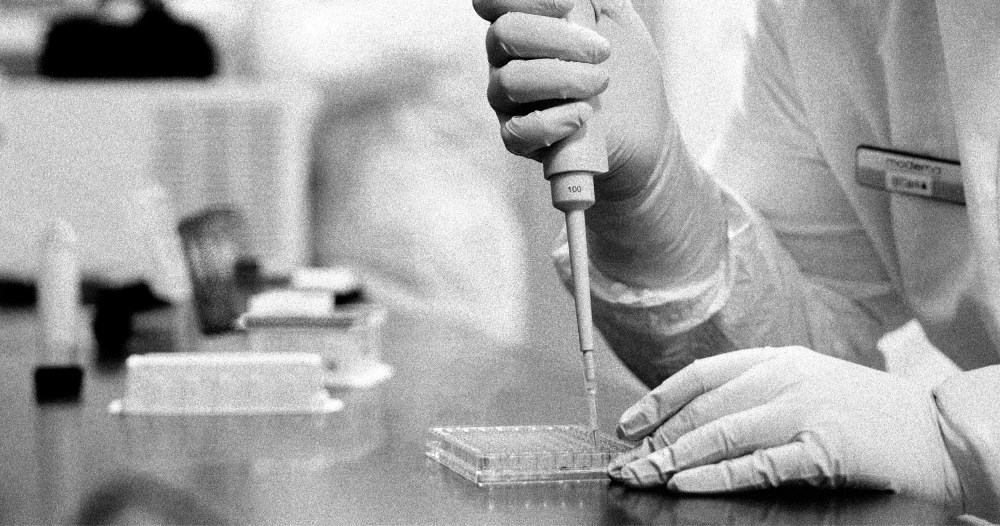
As we head into what some public health experts are calling the darkest days of the year, there are glimmers of light in the form of at least two — if not more — viable vaccines against SARS-CoV-2, aka Covid-19. As the Food and Drug Administration’s external advisory committee is scheduled to meet Thursday and Dec. 17 to discuss the Pfizer and Moderna vaccines, respectively, the tidal wave of questions about the vaccines has begun — many of which still have no answers, but the answers to some of which we can surmise from data released so far.
If you have questions, submit them via Twitter with the hashtag #AskDrKavita and we will do our best to provide timely responses.
As more data become available, we in the expert medical community will do our best to keep you posted. But one thing is unanimous: Scientist are flabbergasted at the progress that has been made with vaccine development. Some worry that the speed and President Donald Trump’s unfortunate moniker, “Operation Warp Speed,” indicate that safety is being compromised. Hopefully, the review of more complete data in the U.S. will reinforce what the U.K. has determined, which is that it is safe and effective for limited use.

I’ve decided to answer five basic questions about the vaccines here, but I’m sure there are many, many more. If you have questions, submit them via Twitter with the hashtag #AskDrKavita and we will do our best to provide timely responses.
So, let’s identify what we know — at least as of today:
1. How do these mRNA Vaccines work?
First, it should be said the Covid-19 vaccines cannot give you Covid-19 — some vaccines do contain live virus (like the chickenpox or measles vaccines), which can sometimes pose risks to people with compromised immune systems. But all of the Covid-19 vaccines to date, including the two up for immediate approval, don’t contain live virus.
Furthermore, because the vaccines are mRNA vaccines, they don’t affect or interact with our DNA. The mRNA vaccine gives instructions to cells to make the coronavirus spike protein develop an immune response which will prepare your body in case of exposure to the real Covid-19 virus. Think of the mRNA vaccine as an accelerated workout for your muscles to get ready for the Ironman triathlon — it helps prime your body in case you decide to run the race (or here, if you get exposed to Covid-19).
2. How will the vaccine be distributed?
Both vaccines require ultra-cold, freezer-level temperatures. Pfizer has an elaborate process to ship the vaccines, shipping each box of 195 vials with 50 pounds of dry ice pellets to ensure a temperature of minus 70 degrees Celsius, with shipment by plane, train or truck to states, tribal nations and territories.
The federal government will serve as air traffic control, telling manufacturers where to send shipments. States have submitted plans for distribution, and hospitals around the country have invested in freezers. space and staff to distribute the vaccine to health care workers and long-term care facilities as the first priority group.
3. How effective is the vaccine?
The vaccine will work best after you receive both doses — in other words, you really need the second dose to feel its true effectiveness — and the immune system response is at its best about one to two weeks after the second dose (just like your muscles are conditioned for the Ironman a few weeks into intensive training).
Once you do get the vaccine, it will be about 90 percent to 95 percent effective in reducing your chance of having the disease. This means that for people who are vaccinated, there is a 95 percent chance of reducing mild or moderate-to-severe disease compared to people who are not vaccinated. People who received the vaccine had 95 percent fewer cases of Covid-19 compared to those who did not receive the vaccine.
There are a lot of caveats around these numbers, and we believe that in the real world, the effectiveness percentage might be a bit lower, but it’s certainly enough to flatten the curves we are seeing.
We don’t have long-term data, but we have tens of thousands of trial participants who have been painstakingly scrutinized. No serious side effects have been observed. That doesn’t mean there are no side effects; local reactions (such as mild ache at the injection site), as well as feeling some generalized symptoms, have been observed. The FDA will continue to monitor long-term safety for side effects. As a cautionary measure, remember that the FDA isn’t granting a full biologics license application (which is considered a full approval). It’s essentially giving a temporary permit to use the vaccine (an emergency use authorization). Such temporary authorization can be taken away (as was done with hydroxychloroquine when it was discovered that it doesn’t help treat the virus) depending on the evolving data. The temporary authorizations mean that the benefits of a treatment outweigh the risks, to the best of scientists’ knowledge. And as a final reassurance to the public, tens of millions of health care workers will get the vaccine in the next weeks, so we will have real-world examples of any side effects from their experiences (keeping in mind the timeline — it’s a double dose separated by 21 to 28 days). That depends. States are permitted some flexibility. Some plan to vaccinate essential workers after health care workers and long-term care residents, while others are prioritizing elderly residents. You should ask your local health officials for details, and you can look here for details about your state’s plan. The hardest part of this next period will be identifying where and how to get your vaccine. Cost will hopefully not be an issue, because public and private payers have made a commitment to waive costs. But because of the complex storage requirements, it might not be that easy for every doctor’s office to stock the vaccine on site. The mRNA vaccines are stable for several days out of a freezer in a refrigerator and for up to three hours outside a refrigerator. That means supply initially might be limited to places that can handle storage as well as distribution in a timely manner with no potential for waste. Those are some basics about what we know. But of course, there is a lot we don’t know, including how long immunity lasts or what this vaccine means for children, pregnant women and people with compromised immune systems. Pfizer and Moderna have started testing the vaccine on younger adolescents and teens. Some adult women who didn’t know they were pregnant at the beginning of trials found out they were, in fact, pregnant after they received the vaccine, so we expect some data about those patients to be reported. Mostly, we expect that there will be incredible demand. It’s important to remember that vaccines don’t save lives — vaccinations do. In other words, you need shots in the arm for this to work. So if you thought making a vaccine in record time was the big hurdle, believe it or not, getting at least 70 percent to 80 percent of the country to be vaccinated or to achieve immunity by infection is really the hardest part. The best advice is to hold tight and to take an active part in the dialogue, and if you have questions, don’t be afraid to ask. And as always, we will do our best to keep you informed.
Dr. Kavita Patel
Dr. Kavita Patel is a teaching professor of medicine, Division of Hospital Medicine, at Stanford University and a board-certified internal medicine physician. She served in the Obama administration as director of policy for the Office of Intergovernmental Affairs and Public Engagement in the White House. Her area of expertise is around the intersection of health policy, clinical medicine and innovation. She also spends time advising venture capital and is a medical contributor for NBC News. 

4. How safe is the vaccine?

5. When can I expect to get the vaccine?
