








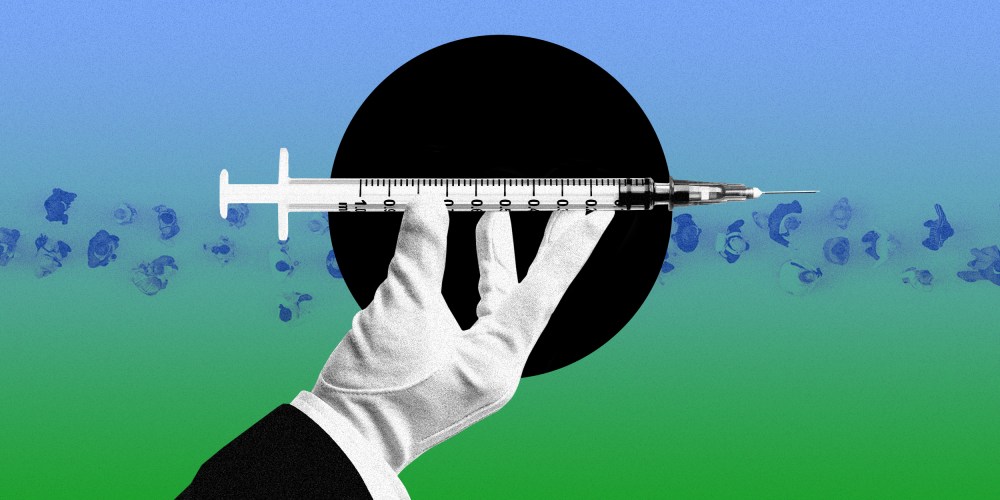
In the earliest days of the botched vaccine rollout in Florida, snowbirds from out of state, and in some cases from Canada, started flying in — some on chartered jets — to receive the Covid-19 vaccination, since distribution in the state was at that point inadequately regulated.
There are people who are not in a position economically to stay home. And they need the vaccine more than you do.
I’ve heard of people lying about having an underlying condition that would qualify them for the shot, or — and this one feels the worst to me — lying about being a health care worker.
In an era marked by persistent uncertainty, we know these things to be true: There are too few Covid-19 vaccines available. To account for this, tight restrictions have been put in place on who can get them right now. The vaccine rollout is taking too long, and this will continue to cost the lives of those who are unable to avoid potentially deadly exposure because they can’t afford to not work or because their work involves exposure to the disease.
“This virus has taken advantage of both natural and human-made inequities in our society,” said emergency physician Dr. Uché Blackstock. “To have these inequities further perpetuated in the vaccine distribution process by people skipping the line or the like feels morally reprehensible.”

Part of what makes it so reprehensible is that a giant percentage of the population, many not yet in line for a vaccine, is made up of people who are delivering food and all manner of necessities to your home or checking you out at the grocery store. These are people who are not in a position economically to stay home. And they need the vaccine more than you do.
Then there are those of us with the luxury to stay home, who have the means — the privilege, really — to stay home or to travel to a place where we can get the vaccine; those of us with the ability to jump through hoops, get online at odd hours and maybe, if it’ll get an appointment, be a little misleading or tell a white lie can probably get the vaccine sooner than the system would otherwise allow. Who wants to wait until summer or fall? We have plans to make, trips to take and people to see.
With the vaccine available but in short supply, they are proving what so many already knew: The system ain’t fair.
We have known about issues of inequality of access for some time; they existed long before Covid-19, and they showed themselves during months of testing. Now, with the vaccine available but in short supply, they are proving what so many already knew: The system ain’t fair.
Analysis of vaccinations in 17 states and two cities by the Associated Press shows that Black people are getting inoculated at levels well below their representation in the population, despite contracting Covid-19, and dying from it, at levels much higher. The Centers for Disease Control and Prevention reports that Black, Hispanic and Native American people are hospitalized from Covid-19 at 3 to 4 times the rate that white people are.
Just like there are food deserts and Covid-19 testing deserts, there are also vaccine deserts in which eligible people — often poor people and people of color — are having difficulty accessing vaccinations either because the vaccination centers are too far, are tough to get to or have systems in place that make it difficult to navigate and sign up.
Things as simple as online portals, where new appointments become available at midnight or at 6 a.m., are a challenge for people who don’t have internet at home. New York state, for instance, uses a largely online appointment system to get vaccinated in spots that have deliberately been placed among vulnerable populations.
The result has been that poor local residents without internet access (and there are more of them than you might think, especially after almost a year of joblessness caused by the pandemic) struggle to get a slot, while wealthy people from places like the suburbs of New York City have reportedly swarmed those special-purpose centers for the chance to snag vaccinations.
There are others who are able to sign up and grab an appointment, conveniently omitting a key fact (because maybe there’s no one to tell) that they know there’s nothing other than their privilege that makes them eligible to be vaccinated now. I’m talking about people pretending they have an underlying condition or that they fit into some other high-risk group when they don’t. I’ve heard people discuss this openly, and even with some pride.
“When people jump the queue by using their influence or money,” public health official Dr. Georges Benjamin told me, “they are not only creating a moral quandary, but are putting an unknown number of lives at risk.”

Because none of this is OK. I am a journalist, so I have traveled almost every week for many months for work. I get tested regularly. I quarantine as needed after I travel, and I know I don’t have antibodies. I could make a pretty good case for why it would make sense for me to get vaccinated early so I can continue to tell the stories of people affected by it.
But I won’t, because vaccines need to go to health care workers, the people who are most vulnerable, people who are poor, older people and to those with underlying conditions that would make getting Covid-19 a much more serious and potentially deadly condition.
Just like there are food deserts and Covid-19 testing deserts, there are also vaccine deserts.
When it’s my turn, and if my being a journalist qualifies me to be ahead of any group as a result of my age and health, it may make sense for me to take it because the highest-risk groups ahead of me will have had theirs. But until then, I will wait.
Because, as Benjamin said, “Every vaccine that doesn’t go to someone with diabetes, asthma or any pre-existing condition of vulnerability represents an opportunity for the pandemic to intensify its devastation.” Are there exceptions to this idea of “waiting your turn”? Definitely. Dr. Ala Stanford, who runs the Black Doctors Covid-19 Consortium in Philadelphia, told me that in the group’s effort to encourage more Black people to get the vaccination, they have recruited senior members of the National Pan-Hellenic Council, the consortium of Black sororities and fraternities known as the Divine Nine, as well as members of the clergy to get the vaccination and to publicize that they have done so. As role models for people in Black communities, these people are setting an example. If you truly are modeling behaviors to build trust or to convince someone who is otherwise reluctant to get the shot to do so, then by getting vaccinated you may saves lives — even if it isn’t your turn yet. But, Stanford warns, don’t use Black and brown people’s distrust of the vaccine as an excuse to take people’s place in line. While polling continues to show that fewer than 50 percent of Black people are willing to get the vaccination, she assured me she can dispense every last drop she gets in communities of color. And as time goes by, she says, more and more people are coming around to getting it. As science and health writer Melinda Wenner Moyer wrote for the New York Times, “Even if you feel it’s unethical that you have been offered a vaccine, that doesn’t mean it’s unethical for you to accept it.” “Even if you feel it’s unethical that you have been offered a vaccine, that doesn’t mean it’s unethical for you to accept it,” @lindy2350 says. “You’re not going to fix the broken system by opting out of it.” https://t.co/W9PfNtLghN Moyer was addressing people who are qualified to receive the vaccination but believe they should wait so it might go to someone who needs it more or is more at risk. Her point was that ultimately, as many people as possible should get vaccinated to help us achieve herd immunity. Certainly it doesn’t behoove us to try to undo the inherent biases in the system in this moment; especially with reports that unused vaccines are being thrown out when not enough patients show up, because of storage requirements. Everyone. Please, please read this story of a nurse in Harlem setting out on foot to find anyone eligible to vaccinate. Like all of health care in America, the more you have financially, and the more you know, the better you are going to do in life. Health care in America is a caste system, but our vaccine distribution shouldn’t be. If you’ve struggled to understand what it means to be privileged, being able to get a shot in your arm ahead of someone who is in a designated group to get that shot — that is privilege. While I can’t tell you how to handle yourself if you’re presented with that situation, I would humbly submit that this is one bit of privilege that will help you sleep better if you don’t take advantage of it. Hundreds of thousands of Americans will die before this is over. They will disproportionally be from communities that are not privileged. Don’t stand in their way or push them out of the line. The system already does that, and it doesn’t need your help.
Ali Velshi is the host of “Velshi,” which airs Saturdays and Sundays on MSNBC. He has been awarded the National Headliner Award for Business & Consumer Reporting for “How the Wheels Came Off,” a special on the near collapse of the American auto industry. His work on disabled workers and Chicago’s red-light camera scandal in 2016 earned him two News and Documentary Emmy Award nominations, adding to a nomination in 2010 for his terrorism coverage. 


This is so enraging. Utterly speechless. THIS DOES NOT NEED TO HAPPEN. https://t.co/9NJJzPdKSg pic.twitter.com/yBZTF4770x
