








Wendy Schiller is a professor of political science at Brown University and a frequent Nowist
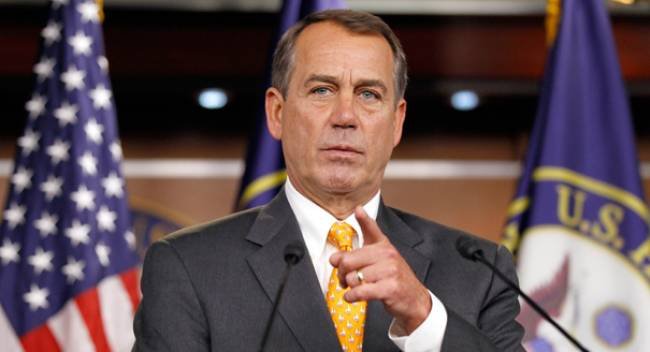
To mark the return of members of the House of Representatives to Washington on Tuesday, Jennifer Steinhauer of the New York Times has a front page story on Speaker Boehner’s attempt to start 2012 off on the right (pun intended) foot with his GOP caucus. And in this week’s CQ Weekly, Joseph Schatz has a cover story on whether the Republicans in the House and Senate can regroup to present a united governing and electoral front in 2012. Most Congress watchers wonder how that is remotely possible given the payroll tax debacle that marked the end of the 2011 Congressional session.
Historically, Speakers are unseated when their party caucus decides that they can no longer lead them to the promised land – both in terms of achieving policy goals and winning elections, or they lose their own seats. And neither party is immune to falling out of love with its leader. “Czar” Joe Cannon (R-IL), was ousted in 1910 by a coalition of members of his own GOP and Democrats who viewed him as an antiquated dictator who was out of sync with times. Speaker Jim Wright (D-TX) was ousted in 1989 for much the same reasons, with an added financial scandal to slam the door behind him. Tom Foley (D-WA) lost his own seat in 1994 as a casualty of the Republican sweep, which many observers attributed to his own lackluster leadership as Speaker. Newt Gingrich (R-GA) was brought down in 1998 by a fundamental misread of the American public desire to impeach President Clinton, and belief among his own caucus that he had grown too big for the job.
Which one of these ousted Speakers does Boehner most resemble? If anything, he probably most resembles Tom Foley, which does not bode well for him or the House GOP. Foley’s casual and accommodating approach did not work on a Democratic party that was desperately trying to hold on to its southern conservatives while expanding its liberal base. As that internal conflict became more public, governing in the House became more difficult to the point where the Democratic agenda came to a complete halt in 1994. And so voters reacted by sending the Democrats packing, including Foley himself. Without some dramatic transformation, and a personality shift, it is more than likely that Speaker Boehner will continue to struggle to control the House of Representatives. And a House that is in disarray, with major cracks in the foundation, usually crumbles.
Wendy Schiller Recommended


