








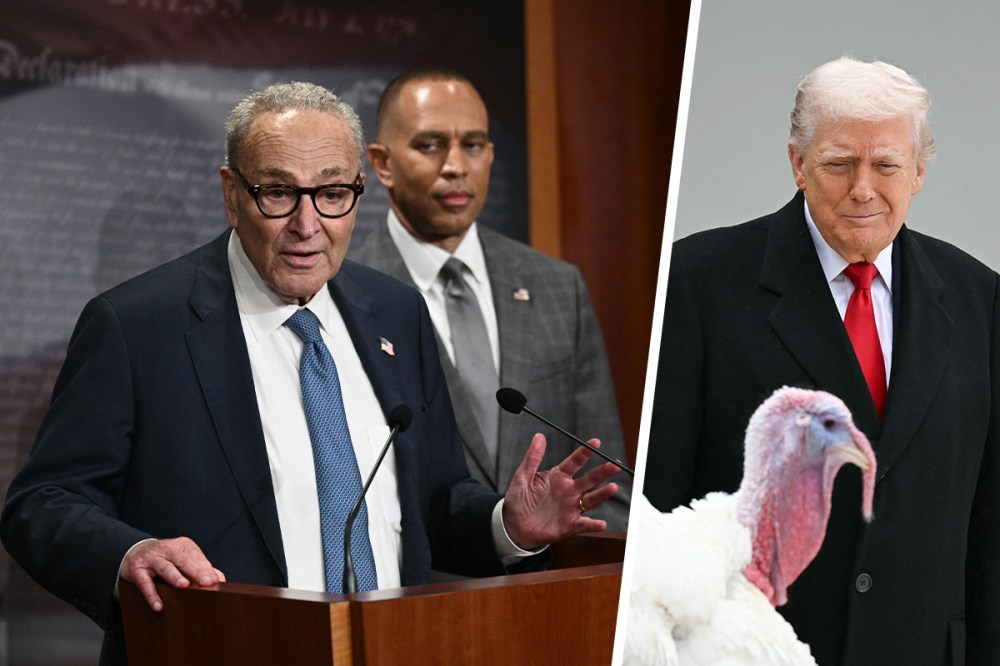
As Americans fill their carts with Thanksgiving staples and Black Friday deals this week, Democrats believe it could be an inflection point in their effort to take on President Donald Trump, underscoring for voters that Trump has not fulfilled a central campaign pledge: reining in prices.
“He promised to lower costs, but instead he’s done the opposite,” Rep. Ritchie Torres, D-N.Y., told MS NOW.
With Democrats already gearing up for next year’s midterms, they are zeroing in on affordability as a unifying campaign message. And as Republicans argue Trump is lowering inflation, Democrats think the next month — one of the busiest annually for U.S. consumers — will be a touchpoint for voters on that issue.
“There’s some folks who are saying prices are going down who might get a surprise,” said Rep. Glenn Ivey, D-Md.
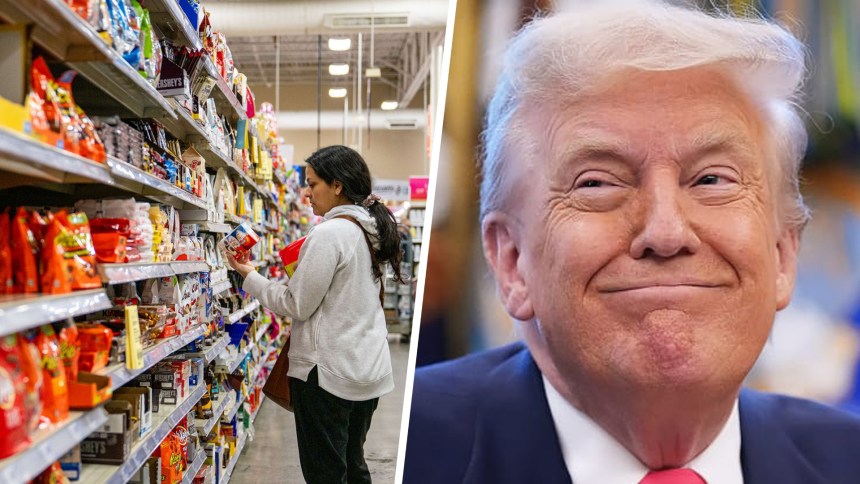
The economic data heading into Thanksgiving and the kickoff of the Christmas shopping season is mixed.
According to the American Farm Bureau Federation, the cost of an average Thanksgiving feast for 10 people will total approximately 5% less than last year — the third year-over-year drop in a row. The change is driven, in part, by lower turkey prices.
Republicans have pointed to this data point to push back on claims Trump is not following through on his campaign promises.
“Turkey prices are down. Egg prices are down. Gas prices are down,” Rep. Nicole Malliotakis, R-N.Y., told MS NOW.
However, overall prices for American consumers continue to rise — despite Trump’s assertions to the contrary. The consumer price index was up 3% in September over the year prior.
‘Everybody knows it’s his fault,’ Rep. Glenn Ivey, D-Md., said, referring to the president.
Rep. Torres argued “inflation has been more persistent than it should be,” blaming “the uncertainty that Donald Trump has unleashed” through his tariff policies.
“Everybody knows it’s his fault,” Ivey said.
Trump, of course, ran in 2024 pledging to lower prices. At an August rally in Pennsylvania, for instance, he told supporters, “Starting the day I take the oath of office, I will rapidly drive prices down, and we will make America affordable again” — a message he repeated over and over again.
Trump and Republicans find themselves in a classic bind on economic messaging. If he touts his successes too much, he risks looking out of touch to the struggles of voters — and he could lead some Americans to wonder why they’re not seeing the benefits that Trump is touting. If he’s more muted in his messaging, perceptions of the economy might be worse.
Of course, there’s little risk that Trump would ever be too muted in claiming victory on inflation, affordability, the job market and stock gains.
But recent polls suggest many Americans are underwhelmed by the economy — and are blaming Trump and his sweeping tariffs for making things worse.

A Fox News poll conducted in November found 76% of registered voters viewed the economy negatively. Sixty percent said grocery costs had increased “a lot” compared to a year ago — when Joe Biden was in the Oval Office. Forty-six percent said Trump’s economic policies had hurt them.
A CBS News poll from this month offered similar findings. According to the survey, 65% of Americans said they believe Trump’s policies are making grocery prices go up, and 64% disapproved of his handling of the economy.
Despite the polling, many Republicans insist the economic conditions — and public sentiment — are still a hangover from the Biden years, when inflation peaked at 9% (the inflation rate was far lower when he left office). The polling can turn around, they argue.
“We’ve inherited a bad situation,” Rep. Tim Burchett, R-Tenn., told MS NOW.
“It’s been 11 months,” Malliotakis said, arguing it “takes a little longer to undo four years of damage.”
Part of the GOP bet is that by next year, people will start to feel the effect of the tax cuts they included in their reconciliation bill, which was pushed through with only Republican votes earlier this year.
“People are going to see more money in their pockets when they do their tax returns,” Malliotakis said. “I think that’s when you really see things shifting in our favor.” But some Republicans are publicly sounding the alarm about costs, warning affordability is a vulnerability for their party — one that could undermine their chances of holding onto power in next year’s midterms. “Just had my haircut,” Rep. Don Bacon, R-Neb., told MS NOW, saying his barber “bought her turkey and stuff and she said prices are outrageous.” Bacon — who is retiring from Congress at the end of this term — likened Trump’s tariff policies to an “Achilles heel,” cautioning that members of his party should overlook affordability issues at their peril. “For someone to ignore that, then you’re whistling past the graveyard,” Bacon said. Rep. Brian Fitzpatrick, R-Pa., who represents a seat Democrats are targeting in 2026, told MS NOW that the “affordability crisis” has “been getting worse and worse for years, and nobody’s sufficiently addressed it. Nobody.” He is working on his own “affordability agenda” with Democratic colleague Rep. Tom Suozzi, who represents a New York district Republicans are targeting. The duo aims to roll out a package of proposals early next year, touching everything from energy policy to drug prices, Fitzpatrick said. “People can comment on whether they support it or not, and try to force it to the floor,” he said. The Democratic focus on affordability messaging began in earnest in the aftermath of the 2024 elections and Trump’s victory, when the top two Democrats on Capitol Hill — Rep. Hakeem Jeffries, D-N.Y., and Sen. Chuck Schumer, D-N.Y. — were forced to grapple with how to win back power in their respective chambers. One central message they settled on: the economy and affordability. It’s an idea both have returned to again and again in recent months. “The cost of living in the United States of America is completely and totally out of control,” Jeffries said at a press conference just last week The off-year elections earlier this month seemed to offer an early sign that this affordability focus is a decent bet. The Democratic nominees in New York City, New Jersey and Virginia all made cost a central tenet of their winning campaigns. Costs were also a defining theme of the record-breaking shutdown, where Democrats made addressing health care affordability their central demand, urging Republicans to join them in extending enhanced Obamacare subsidies to prevent premiums from skyrocketing. Lawmakers so far have not acted to address those pending premium spikes — which are set to hit on Jan. 1 — giving Democrats another prime target, just as the consumer rush of the holiday season comes to a close.
Kevin Frey is a congressional reporter for MS NOW. Recommended


