








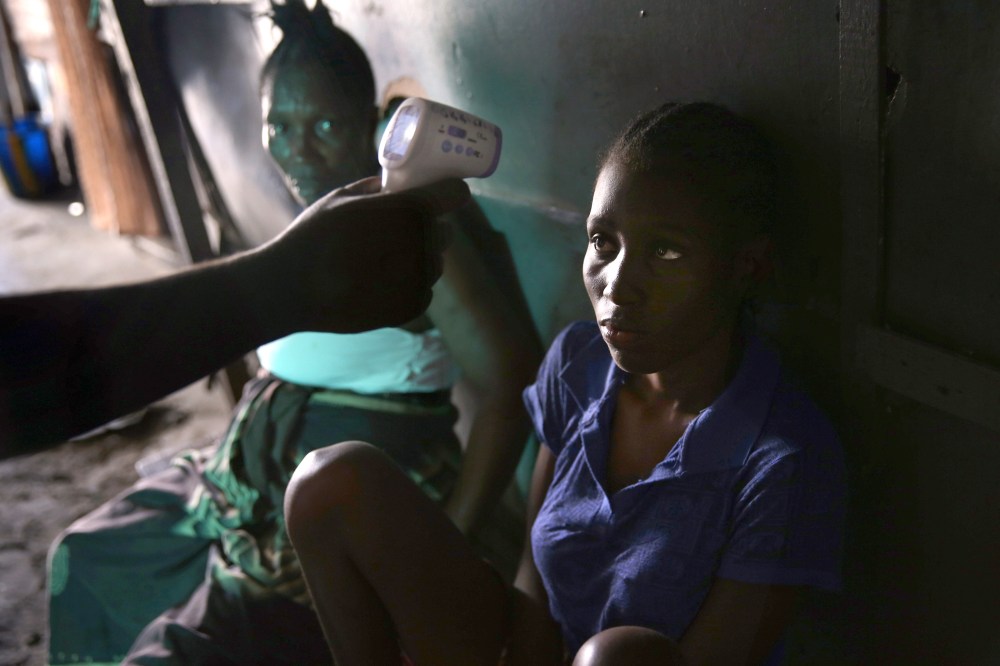
World Bank President Jim Yong Kim on Friday hailed Dr. Craig Spencer’s efforts to stop Ebola in West Africa, stressing that the fight against the epidemic overseas is the single best way to protect America—and the rest of the world.
Spencer, who works with the aid group Doctors Without Borders, was diagnosed with Ebola late Thursday in New York City. He recently returned to the U.S. after treating Ebola patients in West Africa.
“We have to understand that Dr. Spencer is a hero. He is doing exactly what’s needed to bring the epidemic to an end,” Kim said. “He went and did the one thing we need to do to stop more cases here and everywhere else: We need to have health workers.”
Kim, a medical doctor who co-founded the aid group Partners in Health, said the international community needs to focus on sending more health care workers to West Africa if it truly want to stop the virus. “The biggest concern—which is why Dr. Spencer’s case is so poignant—is that we’ll build facilities and we won’t have the work force to actually put them into use.”
RELATED: Ebola continues its deadly march
The U.S. has committed up to 4,000 troops to build 17 Ebola treatment centers in Liberia, but none will be providing direct care or management of those facilities.
Kim called on hospitals in the U.S. and elsewhere to join the fight. “We need literally thousands and thousands of trained health workers who will need more training around Ebola to step up and volunteer. We would love to see hospitals, systems in the United State volunteer numbers, we’d love to see countries in Europe.” He noted that Cuba, which has committed 450 health workers to West Africa, “has stepped up quite impressively.”
The U.S. has contributed more than any other country to the fight. There are currently 171 U.S. civilian officials and more than 600 troops in Liberia, and that number is expected to increase in the coming weeks. But like Kim, international aid groups on the ground are worried about a staffing shortage, pressing the U.S. government to allow the military forces to administer care directly to sick patients in Liberia.
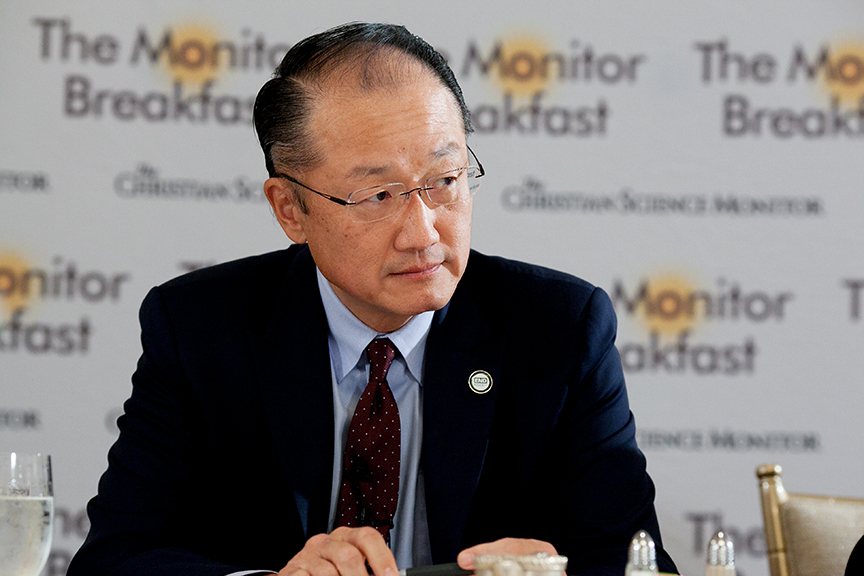
The World Bank president praised the immediate response by New York officials to Spencer’s case, describing the city and system as “extremely well prepared” and agreeing with their assessment that the chance of Spencer having infected anyone else before his temperature spiked was “almost nil.” Kim added that the U.S. has learned valuable lessons from Dallas. “We now have a much much higher level of suspicion, and we’re paying much much closer attention to travel history,” he said. But Kim said that it wasn’t necessary to mandate 21 days of quarantine for all returning health-care workers from West Africa. “I don’t think that quarantine is necessary. But I think mechanisms to detect when symptoms happened is a really good approach—it’s the approach they’re taking now,” he said. Spencer traveled to Guinea with Doctors Without Borders, which has sent more than 700 international staff to West Africa to fight Ebola; he is the first one to develop symptoms of the disease upon return to his home country Unlike the three West African countries at the center of the epidemic, the U.S. has all the tools to prevent an Ebola outbreak and boost survival rates. “In a developed country,” Kim said, “if you prevent any further infection, and you give intensive care to the people that are sick, you can stop the spread very, very quickly.”
Suzy Khimm Recommended


