








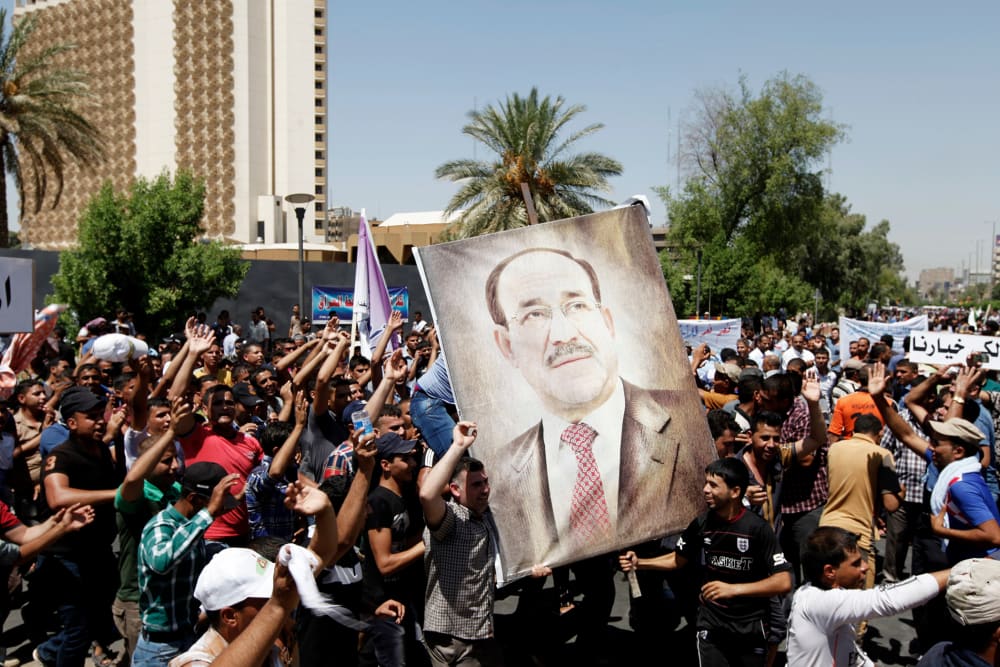
Discussions about the latest turns in U.S. military policy in Iraq have centered on President Obama’s plan to “degrade and destroy” the Islamic State of Iraq and Syria (ISIS). Yet that conversation doesn’t seem to include the elephant in the room — how to end abuses by the Iraqi government and its allies.
Obama has steered clear of pressing Baghdad on even nominal security system reforms, despite extensive documentation of abuses by Iraqi security forces, and their infiltration by the very Shia militias that have wantonly killed Iraqis and American soldiers. Until only a few months ago, the U.S. was supplying military hardware and training the forces operating under former Prime Minister Nuri al-Maliki’s direction without meaningful human rights vetting of those forces.
%22Instead%20of%20turning%20a%20blind%20eye%20to%20ongoing%20abuses%20for%20the%20sake%20of%20hitting%20ISIS%2C%20the%20administration%20needs%20a%20broader%20plan.%22′
Instead of turning a blind eye to ongoing abuses for the sake of hitting ISIS, the administration needs a much broader plan, alongside its military plan, that addresses this core issue. ISIS’s spectacular gains in Iraq and its horrifically brutal tactics there and in Syria have diverted attention from the critical need for the Iraqi government to stop using abusive tactics, especially if President Obama and his allies hope to undermine the militant group.
Iraqis know all too well that the strategy now advanced by the U.S. to defeat ISIS comes after years marked by indifference and seeming inability to recognize a growing threat. Where was the U.S. during the last nine months as the Iraqi government’s indiscriminate bombing of Sunni groups killed civilians and radicalized many of those who survived? Why was it that the U.S. gave such unquestioning support to the former prime minister? Iraqis have posed these questions to me countless times in recent weeks as they mull the abrupt U.S. policy turn that transformed Maliki from trusted ally to villainous scapegoat.
Over the past year, as the U.S. continued to ship military aid to Baghdad, Human Rights Watch documented unspeakable abuses by forces loyal to the Maliki government: indiscriminate air strikes that killed hundreds or even thousands of civilians in Sunni areas; torture and extrajudicial killings in prisons; a justice system that seemed exponentially more abusive than just; and, most recently, Maliki’s incorporation of Shia militia into the government’s security forces to the extent that the two are now effectively indistinguishable.
Whatever behind-the-scenes efforts Washington may have made to cajole Maliki into making reforms, U.S. policy may well have helped increase the threat that it now seeks to eliminate. The Obama administration ultimately worked to push out Maliki and emphasized the need for an inclusive government because it could no longer ignore that his abusive policies had alienated allies and undermined Maliki’s ability to keep Iraq “safe enough” so that the U.S. could continue to ignore the consequences.
But the U.S., with a new Iraqi prime minister at the helm, is again prioritizing military objectives over the institutional reforms that, in the long run, will be the key to ending the abuses that helped give rise to ISIS. With Maliki still in the new government, there is no indication who the most abusive elements in the Iraqi security forces and among the Shia militias are accountable to, and who — if anyone — will be held accountable for ending their abuses or eliminating abusive units altogether.
%22The%20U.S.%20is%20again%20prioritizing%20military%20objectives%20over%20the%20institutional%20reforms%20that%2C%20in%20the%20long%20run%2C%20will%20be%20the%20key%20to%20ending%20the%20abuses%20that%20helped%20give%20rise%20to%20ISIS.%22′
As it attempts to wipe away the stain of its unstinting support for Maliki, the Obama administration has remained mute about continued bombing and shelling by Iraqi government forces of densely populated Sunni civilian areas, including the use of barrel bombs, and its de facto support to the very Shia militias that it now proposes to defeat by arming “moderate Sunni opposition groups.”
It is no coincidence that Sunni groups that now support ISIS radically shifted toward that position after government forces attacked Sunnis at an April 2013 gathering protesting their disenfranchisement and abusive and sectarian policies by security forces, killing at least 50. No one, least of all the U.S., now refutes the fact that Maliki’s abusive sectarian rule alienated the Sunnis who led the Awakening Councils that defeated al-Qaida. Many of them are now backing ISIS and need to be brought back to the other side for there to be any viable anti-ISIS strategy. The U.S. needs to explain why it is supporting the new government and how it will address past abuses. It needs to redouble its efforts to engage with Sunni leaders to prevent further sectarian abuses and press for full accountability for past abuses against members of the Sunni Awakening Councils by Maliki’s security forces. Washington should also investigate whether militias have taken advantage of the latest U.S. intervention to carry out further abuses, say how it plans to deal with them and insist that the new Iraqi government puts a stop to these abuses. That’s essential to make sure that efforts to rid Mosul and Tikrit of ISIS won’t result in reprisal killings and other attacks on Sunni civilians there. The Obama administration has finally said it is ready to address the ISIS threat. It’s going to take more than a military strategy, and now is the time for the U.S. to say so and start correcting the past mistakes. Erin Evers is the Iraq researcher at Human Rights Watch.
Erin Evers Recommended


