








The engineer at the helm of the Amtrak train that barreled toward a stretch of track at speeds double the limit is now at the center of scrutiny for the crash that killed at least eight people and injured hundreds more along the busiest stretch of railway in North America.
Two days after the fatal derailment, that engineer — Brandon Bostian, 32, of Queens, New York — still has not met with federal investigators combing through the scene. In an interview with ABC News, his attorney Robert Goggin said Bostian does not remember any key details about the crucial moments before the Amtrak train jumped the tracks.
The engineer has agreed to be interviewed by the National Transportation Safety Board (NTSB), board member Robert Sumwalt said on Thursday evening. Inspectors from the NTSB plan on speaking with him in the next few days, he added.
Related: Death toll rises
“He remembers driving the train, he remembers going to that area generally, has absolutely no recollection of the incident or anything unusual,”Goggin said. “The next thing he recalls is being thrown around, coming to, finding his cellphone and dialing 911.”
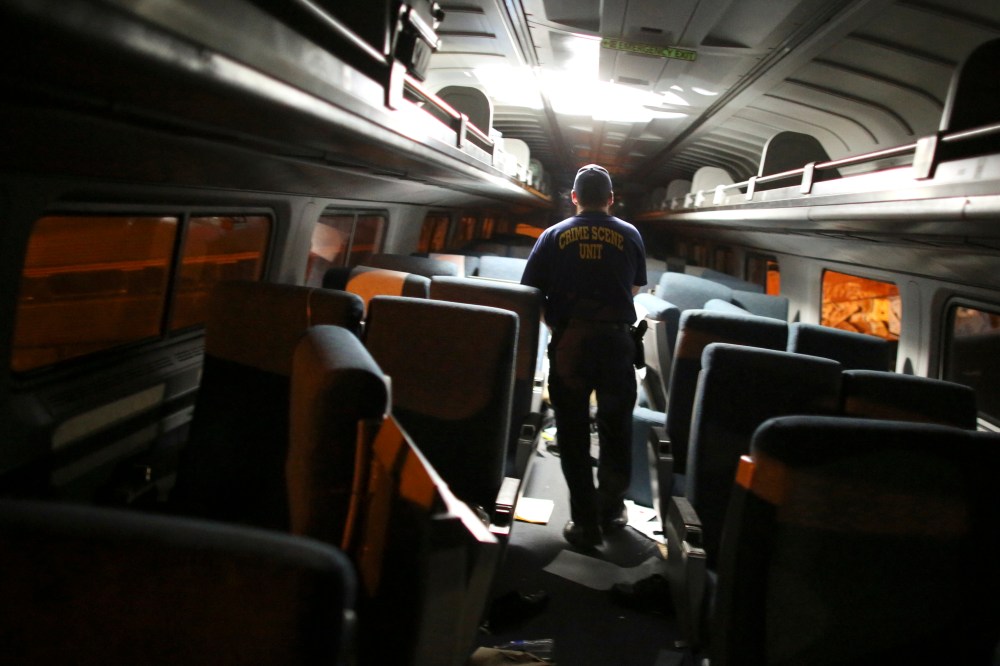
Federal investigators are still piecing together the sequence of events that sent Amtrak Train 188 careening off the tracks late Tuesday night. Authorities believe 243 passengers and five crew members were aboard the train traveling from Washington, D.C., to New York when it derailed at a bend in the track, upending train cars, tearing them apart from the engine.
The National Transportation Safety Board on Wednesday confirmed that the train was traveling at 106 miles per hour in a zone where the limit topped at 50. Though stretches of the Northeast Corridor route have a signal system called Positive Train Control, which monitors speeds and can slow trains along curves, it was not installed in the area of the fatal incident. Sumwalt said on Thursday that the system certainly would have prevented the tragic derailment.
While the emergency break appeared to have been pulled as the train hurdled through the bend, it slowed only slightly, derailing seconds later.
Goggin said the train engineer does not recall applying the emergency brake, only of waking up in the aftermath: “He was distraught as he learned of the devastation.” The engineer sustained multiple injuries, including a concussion, and was “pretty beat up,” Goggin added. Doctors put 14 staples in his head, and several stitches in his leg.
Investigators caution that beyond the details confirming the train’s speed, it is still too soon to know what variables factored into the deadly derailment.
Related: Everything you need to know about Amtrak Bostian has already met with Philadelphia police officials, consented to a blood test and turned his cell phone over to authorities. Goggin estimates that his client spent between five and six hours with police before he arrived at the scene. A person who knows Bostian describes him as a “cheerful guy” and a “rail buff,” telling msnbc that the engineer loves his job. The source, who declined to be identified, says he last saw Bostian two weeks ago. “We didn’t meet because of trains, but bonded because we both are fans,” the acquaintance said. “The notion that he ‘made it’ so-to-speak driving trains is of no surprise to me.” According to his LinkedIn profile, Bostian worked at Amtrak for nearly nine years, first as a passenger conductor before becoming a passenger engineer. Bostian also once worked in California for the commuter line Caltrain several years ago when the agency contracted with Amtrak, NBC Bay Area reported.
Amanda Sakuma Recommended


