








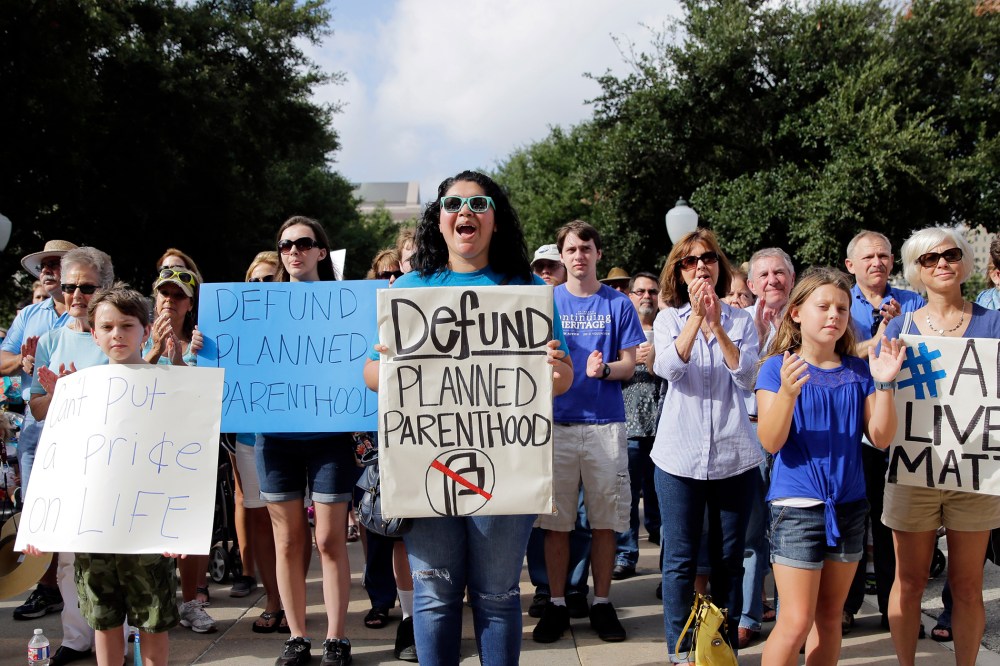
The Senate on Monday failed to advance a Republican-sponsored bill that would defund Planned Parenthood. Democrats filibustered the bill, which needed 60 votes to advance. The effort fell short in a 53-46 vote.
The bill would have stripped the women’s health organization of the more than $500 million it receives in federal funding.
In response to the argument that other providers can take up what Planned Parenthood does, Washington Sen. Patty Murray claimed that “is like saying you can pour a bucket of water into a cup. It will not work.”
On the other hand, Nebraska Sen. Deb Fischer insisted that the group has “lost the public’s trust and engages in violations of federal law.”
Unlike the House Republican budget proposal released in March, which would have eliminated the federal women’s health program entirely — the fourth attempt to do so since 2011 — the Senate bill under consideration Monday would redirect funds. Instead of Planned Parenthood, the focus under the new proposal would be on “places like community health centers and hospitals, which have almost fifteen times more facilities nationwide and provide more comprehensive health services,” according to a TIME magazine op-ed by the bill’s chief sponsors, Sens. Joni Ernst, James Lankford and Rand Paul.
Republican sponsors of the bill have insisted that women’s access to healthcare will be uninterrupted. Public health experts aren’t so sure.
RELATED: About those Planned Parenthood investigations
“It is impossible to know what would happen to the more than a million clients who rely on these centers for their care,” Kinsey Hasstedt, public policy associate at the Guttmacher Institute, wrote to msnbc in an email. But, she added, “Planned Parenthood health centers offer a broader range of contraceptive methods, are more likely to offer same-day appointments and have shorter wait times for women to get into care than any other type of provider. Planned Parenthood health centers are also more likely than health centers that deliver family planning services in a broader primary care context to offer contraceptive methods on-site as opposed to by prescription.”
Defunding Planned Parenthood has actually been put into practice in a populous state with many uninsured people, Texas. According to the state’s own numbers, the first two years of its multi-pronged attempt to make sure Planned Parenthood got no public funding in the state resulted in 9% fewer women being helped. That’s 18,796 women who didn’t get access to contraceptive counseling and prescriptions, pelvic exams, pap smears and testing for sexually-transmitted infections. Eighty-two health centers closed, some of them independent providers.
“The reduction in the number of women served is due, in part, to the change in the provider base that occurred in January 2012 with the exclusion of abortion providers and affiliates,” according to an official report to the Texas legislature by the state’s Health and Human Services Commission.
A study published in the American Journal of Public Health found even starker numbers: “Overall, 25% of family planning clinics in Texas closed. In 2011, 71% of organizations widely offered long-acting reversible contraception; in 2012–2013, only 46% did so. Organizations served 54% fewer clients than they had in the previous period.”
RELATED: Indiana clears Planned Parenthood of wrongdoing after videos
Under current law, no federal funding can go to abortion except in cases of rape, incest and life endangerment, though states can use their own Medicaid funding to cover abortions if they choose to. Texas does not. Before the legislature acted in 2011, Planned Parenthood affiliates getting funding through a state-federal program were already not performing abortions. That didn’t matter to then-Gov. Rick Perry or his allies in the legislature; as Perry’s spokeswoman put it at the time, “Planned Parenthoods across the country provide abortions, are affiliated with abortion providers, or refer women to abortion providers.”
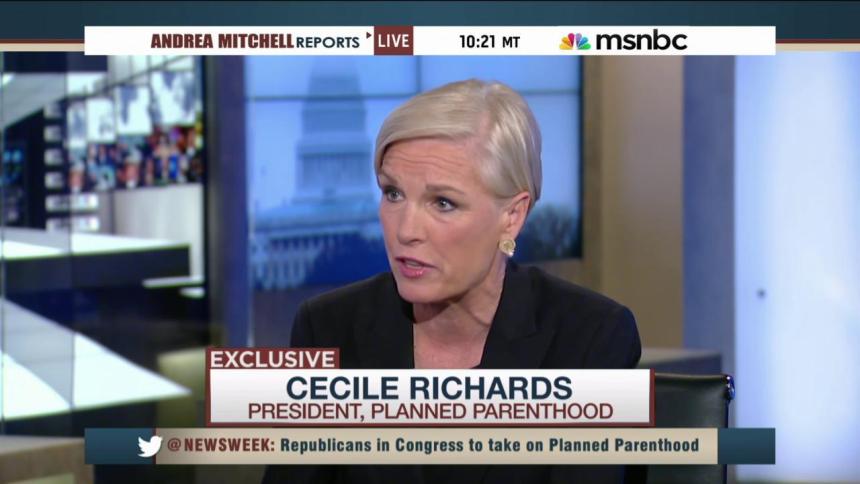
Texas dealt women’s health a one-two punch: It reduced the overall number of family planning funds, and then it put Planned Parenthood at the bottom of a tiered system for funds. Because federal Medicaid law prohibits discriminating against qualified providers, Texas also lost its federal matching grant in 2012. Some of those funds have since been returned to Planned Parenthood affiliates and other providers who banded together to sidestep the state. Under the program the state of Texas lost by refusing to fund Planned Parenthood, the federal government matches $9 for every $1 the state spends. “It varied in different parts of the state, but certainly in many areas, the community clinics were not able to just take up the slack left when Planned Parenthoods had limited services or in some case closed,” said Ibis Reproductive Health Vice President for Research Dan Grossman, who is part of a multi-year study of the impact of Texas policy on women. “They didn’t have the specialty providers that were trained to offer, especially, the long-acting methods, like implants or IUDs. They’ve really been focused on primary care and that’s not such an easy thing to do to reorient their focus.” Asked whether diverting funds away from Planned Parenthoods would make a difference, Grossman said, “Even if it were strictly an issue of providing a ton of money to them to scale up these services, that doesn’t happen overnight.” RELATED: Push to defund Planned Parenthood lacks votes to pass Grossman and his colleagues conducted a survey of abortion clinics in Texas last summer. Forty percent of the women there seeking abortions told the researchers they were unable to get the contraceptive method they wanted in the previous three months. “They cited the high cost of a method, or couldn’t find a place to go or didn’t know where to go,” Grossman said. In South Texas, which has been particularly hard hit by the closures, women with the freedom to cross borders said they go to Mexico to purchase contraception, and women who can’t try to find birth control at local flea markets. Further exacerbating the situation on the ground, had Texas agreed to expand Medicaid under the Affordable Care Act, 687,000 additional women would now be covered for care that includes women’s health services, according to a report from the National Women’s Law Center. This past June, Texas also banned Planned Parenthood from participating in a federal-state program that screens for breast and cervical cancer. About 10% of the women in the program had been going to Planned Parenthood for services. “I think Texas is a cautionary tale if you actually put your political agenda before women’s health,” Planned Parenthood president Cecile Richards told msnbc’s Andrea Mitchell on Monday. Texas isn’t alone in having relied on Planned Parenthood for its public health infrastructure. Until state disapproval and funding cuts shut it down, the only place that tested for HIV/AIDS in Scott County, Indiana, was a Planned Parenthood. That’s the same county that experienced an epidemic HIV outbreak earlier this year.
Irin Carmon Recommended


