








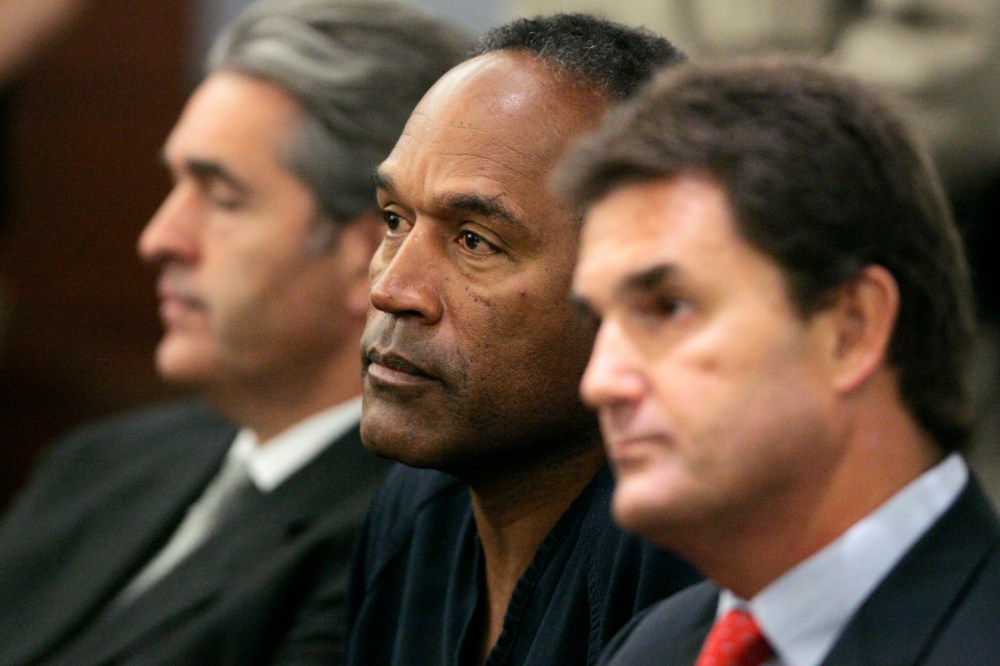
In the final episode of the critically acclaimed and highly rated FX series “The People vs. O.J. Simpson: American Crime Story,” Fred Goldman, father of murder victim Ron Goldman, is asked “What are we gonna do now?” In the show and in real life, Simpson was found not guilty in what became known as “The Trial of the Century.” It may also be the question fans of the show will be asking themselves after the last installment airs next Tuesday.
Besides resurrecting the careers of some of its stars, including John Travolta and David Schwimmer, and revitalizing the reputations of others (Courtney B. Vance should win every Emmy ever for his breathtaking turn as Johnnie Cochran), the series has riveted viewers who lived through the infamous double murder trial and those who only grew up hearing about it.
The series may have been little more than a critical darling had it not arrived amid a cacophony of Simpson trial nostalgia — there’s an ESPN documentary on the way in June, and this week Investigation Discovery announced a new docu-series that purports to prove the NFL Hall of Famer’s innocence. Produced and narrated by Martin Sheen, the series will air early next year. Meanwhile, the discovery of a knife this past month that was allegedly recovered from Simpson’s property years earlier has reignited questions about the ethics and efficacy of the investigation that took the nation by storm just over two decades ago.
RELATED: Prosecutor: If OJ Simpson trial were held today, it’d probably be a hung jury
There’s no doubt “People vs. OJ Simpson” benefits from the beauty of 20/20 hindsight. Prosecutors Marcia Clark and Christopher Darden, long ridiculed as bumblers who lost what should have been a slam-dunk case, are portrayed as earnest, sensitive professionals railroaded by sexism (in Clark’s case) and racial biases (in Darden’s). Even the late Cochran, who for years has been reduced to a caricature, comes across in the series as a complex and brilliant man haunted by his own brushes with institutionalized prejudice.
The show also illuminates why the Simpson case has long captivated the public with its combination of two of the biggest obsessions of the last century, race and celebrity, in a combustible and provocative mix. Is there any visual more striking from the 1990s than the divided racial response in the immediate aftermath of the Simpson verdict? The starkness of racial differences has rarely ever been laid as bare, and the national conversations about policing and profiling that continue to this day can be traced back to the circus-like atmosphere that surrounded the Simpson trial.
If anything, our culture has become even more obsessed with celebrity and its prurient underbelly in the years since. And we live in an era of perpetual recycling of old ideas. The biggest movie in the country right now features super hero characters that were created in the 1930s and have starred in 13 other films altogether. Despite the grisly nature of the crimes of which he was accused, Simpson, who was later found liable for the deaths of ex-wife Nicole Simpson and Ron Goldman in a civil case and currently is imprisoned for a 2007 armed robbery attempt in Las Vegas, has become fodder for reboot-crazy consumers.
“Things like this happen in Hollywood fairly frequently, where films with a similar theme or subject matter happen to come out around the same time. Off the top of my head, one sort of far-fetched example is when 2012 gave us two different takes on the Snow White fairy tale,” Slate‘s Aisha Harris told MSNBC on Friday. “On the other hand, like any other significant cultural touchstone, whether it’s JFK’s assassination (the James Franco mini-series ‘11.22.63,’ for example) or OJ, I think filmmakers and storytellers are going to continue to find a way to revisit such events and phenomena every few years or so.”
Could audiences stomach more iterations of OJ? The ratings for the FX series certainly demonstrate a high volume of interest, although it will be a tough act to follow. The success of the show and proliferation of Simpson-related content has spawned a series of pieces like this one seeking to diagnose why a case that was technically resolved decades ago can still generate more conversation and speculation. Polls have shown that the once polarizing racial divide over Simpson’s guilt or innocence has gradually melded into a large majority who believe he should have been found guilty. And while many are still embittered by the trial’s result, time has been kinder to the premise that the defense simply did a more effective job on behalf of their client and prosecutors may have dropped the ball by choosing to ignore the racial animus that surrounded the proceedings. Perhaps the OJ case remains a source of intrigue because of the sheer brutality of the murders. No celebrity of Simpson’s stature has been accused of a crime so grisly before or since. The Simpson murder trial changed everything — for better or worse, it began many of the sensationalist trends in American life that continue today. Take, for instance, the moment, dramatized in the series, when TV producers chose to cut away from an NBA Finals game to cover the Simpson Bronco chase live. In that small moment America turned a corner in terms of what we consider newsworthy information, from which we have arguably yet to return. The Simpson-centric series also reminds viewers of a pre-smartphone, pre-Twitter era so unlike today’s world, where every gesture and gaffe is both instantly dwelled upon and forgotten. Speaking of forgotten, where do murder victims Ron Goldman and Nicole Simpson fit in all this? Sadly, their stories are doomed to almost get short shrift in all of these commercial ventures, and that should perhaps give us all pause. Whether it be an unarmed black teen or the abused spouse of a former football hero, the value of human life is far too often correlated with its proximity to privilege in this country.
Adam Howard Recommended


