








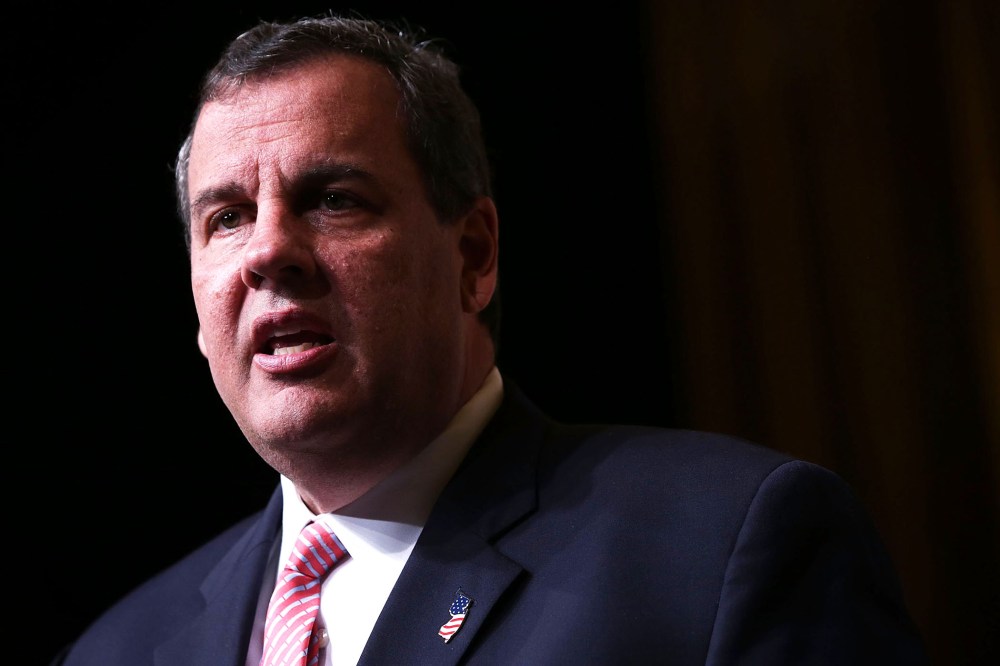
During Tuesday night’s Republican presidential debate, New Jersey Gov. Chris Christie hammered home the message that he had experience dealing with terrorism cases as a U.S. attorney in the aftermath of the 9/11 attacks — proof, the governor argued, that he has the national security chops to be commander-in-chief.
“I’ve fought terrorists and won,” Christie said during his opening remarks. “Terrorism, radical jihadist terrorism, is not theoretical to me,” he said later. At another point, the governor took aim at some of his GOP rivals, saying, “This is the difference between actually being a federal prosecutor, actually doing something, and not just spending your life as one of a hundred debating it.”
RELATED: Christie rises to No. 2 in New Hampshire poll
It certainly sounds impressive. But what, exactly, did Christie’s work on these terrorism cases entail?
Christie, who served as U.S. attorney from 2002 to 2008, arguably made more of a name for himself during that time period for prosecuting corrupt politicians (his office successfully prosecuted more than 130 public officials) than terrorists. But he did create a terrorism unit, and was involved in several terror cases. Two of those cases, however, have raised questions about potential entrapment and the heavy use of relying on informants. A request for comment on those particular cases was not immediately returned by his campaign. Here’s a look at the most prominent terror cases Christie has cited on the trail:
Fort Dix: As he travels across the country, Christie has frequently referenced the 2007 plot involving Muslim immigrants who were convicted of conspiring to attack soldiers at the New Jersey military base. During a press briefing in May of that year, as U.S. attorney for New Jersey, Christie declared that had the men carried out their plot, “It could have been a disaster” and that “These people were ready for martyrdom.”
Five of the six men convicted in the case insist they are innocent. Questions have also been raised following a lengthy investigative piece by The Intercept from earlier this year suggesting three of the jailed men, the Duka brothers, had been entrapped by government agents and that “over the course of hundreds of hours of surveillance, the plot against Fort Dix was never even raised with them.” One of the informants has also come out insisting the Duka brothers are innocent.
Hemant Lakhani: Christie’s office successfully prosecuted Hemant Lakhani, an Indian-born British man who was convicted in 2005 after he tried to sell a shoulder-launched missiles to shoot down American passenger jets to an undercover FBI agent. At the time, Christie called the verdict a “triumph for the Justice Department in the war against terror.” In 2005, “This American Life” did a piece on the conviction, describing Lakhani as an “amazingly incompetent arms trader” with FBI agents playing an outsized role in facilitating the plot, including the eventual supply of fake weapons. In 2009, MSNBC host Chris Hayes wrote for The Nation about how New York newspapers “breathlessly reported” the case but “only later did the government admit that the ‘plot’ consisted of an FBI informant begging Lakhani to find him a missile, while a Russian intelligence officer called up Lakhani and offered to sell him one.” Operation Arabian Night: Two New Jersey men – Mohamed Hamoud Alessa and Carlos Eduardo Almonte — were arrested in 2010 when they tried to fly from New York to Egypt to join the al-Shabab militant group in Somalia. Authorities said the two were planning to kill American troops. According to the Christie campaign, the probe began four years before the arrest with Christie’s office securing authorization for to engage in physical surveillance of Alessa and Almonte via the U.S. Foreign Intelligence Surveillance Court.Recommended


