








Abortion has been contested in the United States for at least a half-century, but 2015 took it to the next level.
It was a year of 57 new restrictions on the procedure in the states, according to the Guttmacher Institute’s Elizabeth Nash, and in which we learned the Supreme Court will finally take on one of the hundreds of recent restrictions. This was the year of the release of hundreds of hours of secretly-recorded tapes, used to accuse Planned Parenthood of trafficking in fetal parts, and of over a dozen official investigations that so far have yielded not a single criminal charge. 2015 saw Robert Lewis Dear storm a Planned Parenthood clinic in Colorado Springs, killing three people and saying it was because he is a “warrior for the babies.” 2015 also marked the intensification of anti-abortion promises among Republican hopefuls, who vied to offer primary voters the fiercest opposition to abortion – down to denying that a woman ever needs one to save her life.
As pitched a battle as 2015 was, much of this merely sets up the real reckoning to come: Supreme Court opinions are expected in June that tackle both abortion and contraception, and in November, an election in which the next president could appoint as many as three Supreme Court justices. Get ready. In the meantime, here’s a look back.
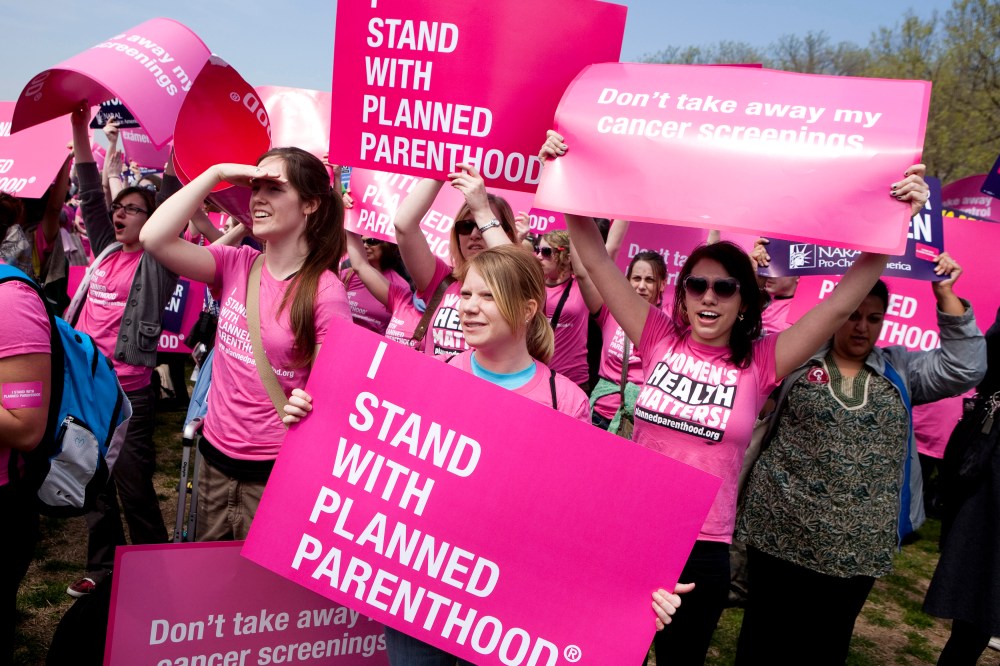
Planned Parenthood under fire. The nation’s largest women’s health provider may have had its toughest year yet – at least since around 100 years ago, when its founder was arrested for distributing information on preventing pregnancy. In July, the anti-abortion group the Center for Medical Progress released a series of secretly-recorded videos purporting to show Planned Parenthood illegally trafficking in fetal parts. Attorneys general opened investigations, as did three House committees, at least until Planned Parenthood got its own Benghazi-style select committee. Republicans in the states and in congress intensified long-running pushes to strip the group of the reimbursements it gets for providing health care to low-income women. The group’s president, Cecile Richards, was hauled before Congress for over five hours of disdainful questioning. All that was before Robert Lewis Dear, according to police, stormed into a Colorado Springs Planned Parenthood in November and killed three people, later telling authorities there would be no more “baby parts,” an eerie echo of lawmakers’ rhetoric.
RELATED: Planned Parenthood president grilled on Capitol Hill
Planned Parenthood’s troubles are hardly over, but it’s ending the year in fighting shape. The group managed to end the year with its federal funding intact, and judges have largely sided with Planned Parenthood in its quest to hold onto state funding. The group has strenuously denied the charges of breaking the law, and pointed out the tapes were altered. No state level investigation has managed to turn up any lawbreaking. Even Rep. Jason Chaffetz (R-Utah), chairman of the House Oversight and Government Reform Committee, blurted out of his inquiry into the group, “Was there any wrongdoing? I didn’t find any.”
Abortion and birth control headed to the Supreme Court. This year made it official: Eight years after its last abortion case, and over 20 since its last major pronouncement on the issue, the Supreme Court will consider how far states can go in restricting abortion. At issue: Whether Texas can shut down two-thirds of its abortion clinics in the name of protecting women’s health. Bonus round: The court will also hear a sequel to Hobby Lobby, on the question of whether the Obama administration’s opt-out process for covering contraception itself violates religious freedom.
Women were prosecuted for having abortions. Despite claims by abortion opponents that women would not be prosecuted if abortion were banned, women were prosecuted in 2015 for allegedly self-inducing their own abortions. In March, Purvi Patel, a 33-year-old Indiana woman, was sentenced to 20 years in prison on the charge of feticide; prosecutors say she took abortion-inducing drugs ordered on the internet. In December, Tennessee prosecutors charged 31-year-old Anna Yocca with attempted first-degree murder for allegedly using a coat-hanger to self-abort. Meanwhile, public health researchers at the University of Texas found that as many as 100,000 women in Texas have tried to end their pregnancies themselves. That’s a lot of women to prosecute. RELATED: Shuttered: the end of abortion access in red America Republicans took it to the next level. If Todd Akin were to repeat his soliloquy on “legitimate rape” during the current Republican primary, he would probably have to fight for airtime. Anti-abortion rhetoric and positions among Republicans appear to be at an all-time high. Republican presidential candidate Carly Fiorina claimed she saw a video with “a fully formed fetus on the table, its heart beating, its legs kicking, while someone says, ‘We have to keep it alive to harvest its brain.’” (No such video exists, but despite numerous fact-checks, Fiorina held firm.) GOP front-runner Ted Cruz happily accepted the endorsement of a man who has called for the execution of abortion providers, and whose close associate once tried to bomb an abortion clinic. Wisconsin Gov. Scott Walker denied that a woman ever would need an abortion to save her life, flouting science. Florida Sen. Marco Rubio hastened to assure GOP voters that he opposes rape and incest exceptions for abortion. The list went on, and it will get longer in 2016. Pro-choice activists fought back. It wasn’t an easy year for them, but there were a few rays of hope for supporters of abortion rights. A handful of House Democrats tried to upend the status quo of no federal funding for abortion with the EACH Woman Act. The Supreme Court did not make it harder for pregnant women to sue for discrimination. And activists working to keep abortion and contraception legal and accessible had a lot less trouble showing people what was at stake.
Irin Carmon Recommended


