Thirty-seven years ago, a pair of Boston University social scientists took a close look at U.S. health trends and drew an astonishing insight. America’s annual death rate had plummeted since the start of the century, pushing average life expectancy from 48 years to more than 75. But the analysis showed that, contrary to received wisdom, medical treatment had almost nothing to do with it. More than 96% of the decline in mortality was attributable to non-medical factors—less poverty, greater literacy, better housing and nutrition. In fact most of the progress (92% to be exact) had already occurred by the time modern medicine and health care spending took off in the mid-1950s.
“When the tide is receding from the beach,” the researchers quipped, quoting René Dubos, “it is easy to have the illusion that one can empty the ocean by removing water with a pail.”
Today it’s widely accepted, at least among policy wonks, that health is a product of social conditions. No one pretends that medicine can undo the lifelong health effects of poverty and its related pathologies. Yet we still think of health care as a synonym for health. As a nation, we spend more on medical services than on all other social services combined. Other developed countries do the opposite—and the United States trails them on virtually every measure of health and wellbeing. As Yale researcher Elizabeth Bradley concluded after comparing the United States to 30 peer countries, “It’s time to think more broadly about where to find leverage for achieving a healthier society.”
In a report released Monday, the Robert Wood Johnson Foundation Commission to Build a Healthier America takes up that challenge. The new monograph, titled Time to Act, distills five years of research into three basic strategies for improving the nation’s health, and none of them involves more medicine. The panel focuses instead on expanding early-childhood education, building communities that promote healthy living, and shifting the focus of health care from treatment to prevention. They’re hardly novel ideas, but the panel lends them new urgency by detailing the science behind them, and by demonstrating through real-life examples that these remedies can actually work.
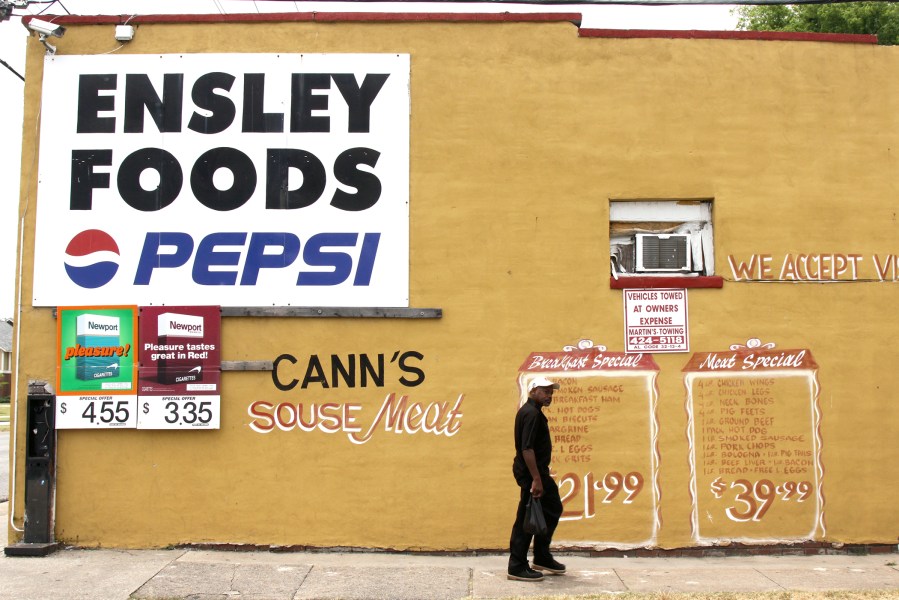
The need for bold public action is hard to dispute. As the report notes, a fifth of America’s kids live in poverty, and half of African-American children live in high-poverty areas marked by “limited job opportunities, low-quality housing, pollution, limited access to healthy food, and few opportunities for physical activity.” A third of America’s kids are overweight or obese, and three out of four youths are ineligible for military service because they’re unfit, uneducated or carrying criminal records.
“Recent decades have seen major advances in our understanding of how education, income, housing, neighborhoods, and exposure to significant adversity or excessive stress affect health,” the authors write. “Every one of us must take responsibility for making healthy choices about what we eat, how physically active we are, and whether we avoid risky habits like smoking. But when it comes to making healthy decisions, many Americans face barriers that are too high to overcome on their own—even with great motivation…. It is time to invest more wisely in all areas that affect health.”
It takes a teacher
The panel’s first remedy—early-childhood education—has rarely been so popular. Universal preschool was a centerpiece of President Obama’s 2013 State of the Union address. New York City’s new mayor, Bill DeBlasio, campaigned successfully on it. And Congress is considering bipartisan legislation that would subsidize preschool for all four-year-olds living below 200% of the poverty level, while expanding and strengthening Head Start.
The economic benefits of early education are well known; the Brookings Institute estimates that a $59 billion investment in universal preschool could add $2 trillion to the U.S. economy by 2080. But early education promotes health as well as productivity. Recent research suggests that the stress of an impoverished childhood can have lifelong medical consequences ranging from chronic inflammation to increased insulin resistance. Early-childhood education can counter those toxic effects by placing disadvantaged kids in supportive relationships and equipping them for social and academic success—both strong predictors of lifelong health.
Yet as the new report notes, the United States ranks 25th out of 29 developed countries for investments in early childhood education. Along with a “significant shift in spending priorities,” the commission advocates rigorous new quality standards for early-childhood development programs, and it calls on child welfare agencies to help disadvantaged parents create richer home environments for their kids.

It takes a village
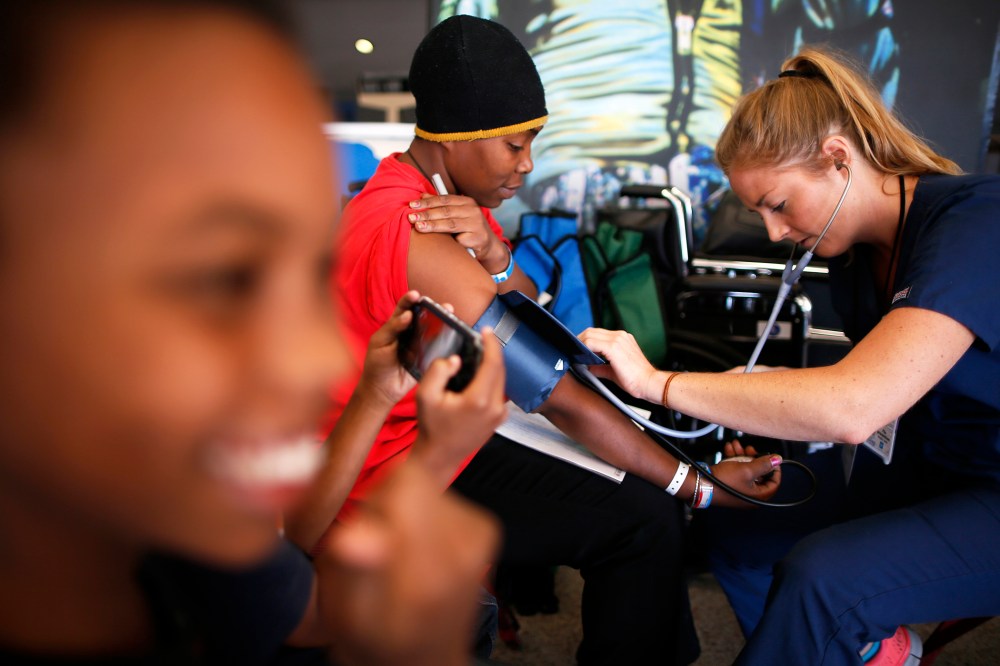
Parks, playgrounds, bike paths and supermarkets may not sound like health interventions, but a community’s “built environment” can have profound medical consequences. In neighborhoods dominated by liquor stores, fast-food joints, abandoned lots and street gangs, healthy living is an act of willful defiance. Research abounds to show that people make healthier choices when they have better options. So the commission urges policymakers to get beyond building clinics (though those are critical too), and focus more on creating communities where the healthy choice is the easy one—places where the flow of daily life keeps people well rather than making them sick. That’s unlikely to happen until we expand health policy to include housing, education, transportation and land use. Nearly a fifth of all Americans live in neighborhoods where, as the report puts it, “job opportunities are scarce, access to adequate housing and nutritious food is poor, and pollution and crime are prevalent.” To address that situation, the report’s authors urge agencies and organizations to abandon their silos and exploit shared opportunities to foster healthier communities. “Investments in transportation or housing can improve health and generate cost savings to the health care system,” they write. When that happens, “a portion of the health care savings could be re-invested in additional health-promoting neighborhood improvements to create a virtuous cycle of cost savings and health improvement. It takes a (different kind of) doctor The panel’s third strategy is in some ways the most radical. It calls on health care providers to move beyond clinical medicine to address the nonmedical factors that make their patients sick and keep them from getting well. “A patient may not take insulin as prescribed because he or she has no transportation to get to a pharmacy, or no way to refrigerate it,” the authors write. “Other patients may be unable to follow recommendations to eat more fruit and vegetables because they can’t get to a supermarket or afford the food. Under a broader approach that emphasizes overall well-being, a health professional could offer a referral to a transportation service or vouchers to a nearby farmers’ market to obtain healthy food.” As a first step toward this broader vision of health care, the commission suggests all providers expand the standard list of vital signs (heart rate, blood pressure, and so on) to include social indicators such as employment, safe housing and basic health literacy. By recording those signals in medical records—and linking patients to the services they lack—providers could improve their health while reducing the need for costly clinical care. The catch is that our medical reimbursement system has long rewarded costly clinical care. Providers have lacked financial incentives to prevent the conditions they treat. That’s changing under the Affordable Care Act, as insurers and providers cultivate payment schemes that give all parties a stake in keeping people healthy. But as this report makes clear, there is more to prevention than vaccination and screening tests. Bus tickets, veggie vouchers and job training can have medical consequences too.
Geoffrey Cowley Recommended