








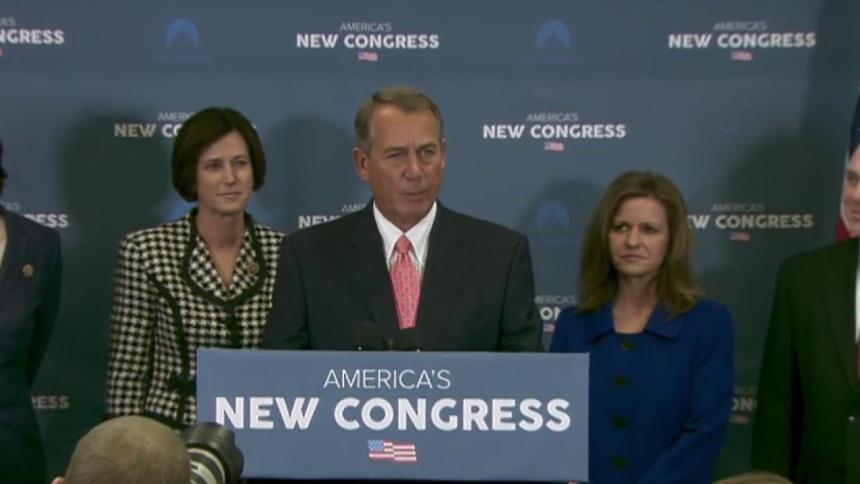
WASHINGTON – Republicans say they dislike interference with private insurance markets and tax hikes. But the anti-abortion bill passed by the GOP-controlled House of Representatives Thursday — the misleadingly-named “No Taxpayer Funding For Abortion Act” — would do both.
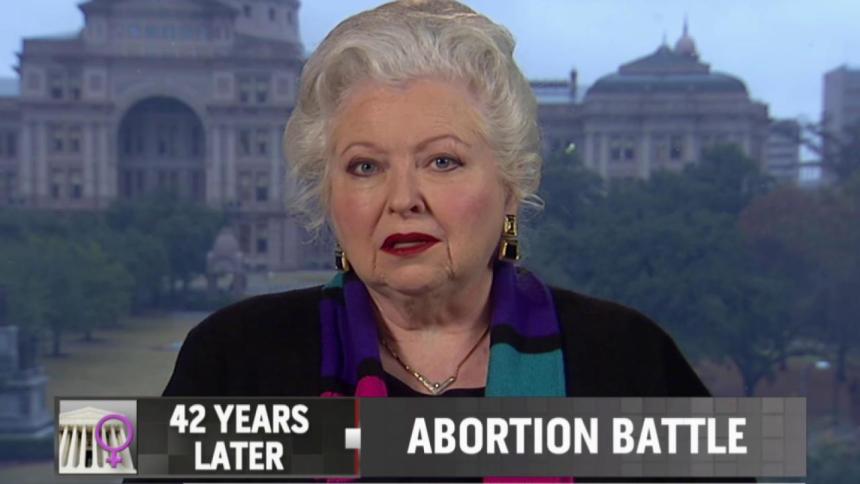
The Hyde Amendment has banned almost all public funding of abortion for almost 40 years, much to the consternation of abortion rights advocates. Thursday’s bill would codify that and go even further, preventing any private insurance plan that covers abortion from receiving a federal subsidy under the Affordable Care Act. That, according to the National Women’s Law Center, “could result in the entire private insurance market dropping abortion coverage, thereby making such coverage unavailable to anyone.”
WATCH: Abortion vote halted by GOP
The bill, though long a conservative priority, wasn’t supposed to be the showpiece on the 42nd anniversary of Roe v. Wade. But House Republicans needed to shift gears hastily after some Republican moderates balked over a ban on abortions after the 20-week mark. After all, GOPers needed something to pass in time for the cheers of anti-abortion protesters at the annual March for Life on the National Mall.
But that didn’t happen. The problem wasn’t the substance of the bill, but rather a provision requiring rape victims to report to the police to qualify for an exception, which almost all Republicans had voted for in 2013.
The 20-week ban has for quite a while been a priority of national anti-abortion groups, despite the fact that it only affects approximately 1% of all abortions. Anti-abortion strategists have long hoped their imagery of “fetal pain” — however contravened by the medical evidence — would sway Supreme Court Justice Anthony Kennedy, or any other swing voter out there.

At Thursday’s march, some anti-abortion activists said they felt betrayed by the GOP move, and they added a new stop to their traditional march to the Supreme Court to voice their discontent: the office of North Carolina Rep. Renee Ellmers, credited with orchestrating the GOP moderate rebellion. (One of the protest’s organizers, Jill Stanek, told msnbc she preferred no rape exception at all, but if there had to be one, she believed the reporting requirement would both get perpetrators off the street and prevent women from lying about rape.)
Still, those activists got their insurance coverage ban, which the ACLU’s deputy legal director, Louise Melling, called “a mean-spirited bill that takes abortion coverage away from millions of women.” Its immediate, federal impact is blunted, with a tough road in the Senate and the promise of a presidential veto. But on funding for abortion, anti-abortion activists have already won. According to a Kaiser analysis, six in 10 women already live in states where they can’t get insurance coverage for abortion, either because their state has already banned it or because there’s no provider with coverage for the procedure. That burden, of course, falls most heavily upon low-income women. RELATED: GOP shelves abortion ban vote after women revolt Henry Hyde once described the 1976 amendment named for him by saying, “I certainly would like to prevent, if I could legally, anybody having an abortion, a rich woman, a middle-class woman, or a poor woman. Unfortunately, the only vehicle available is the … Medicaid bill.” As House Republicans and state-level Republicans have shown in recent years — including with the funding bans, as well as closure or threatened closure of dozens of clinics, leaving only those who can afford to travel with access — that last sentence is no longer accurate.
Irin Carmon Recommended


