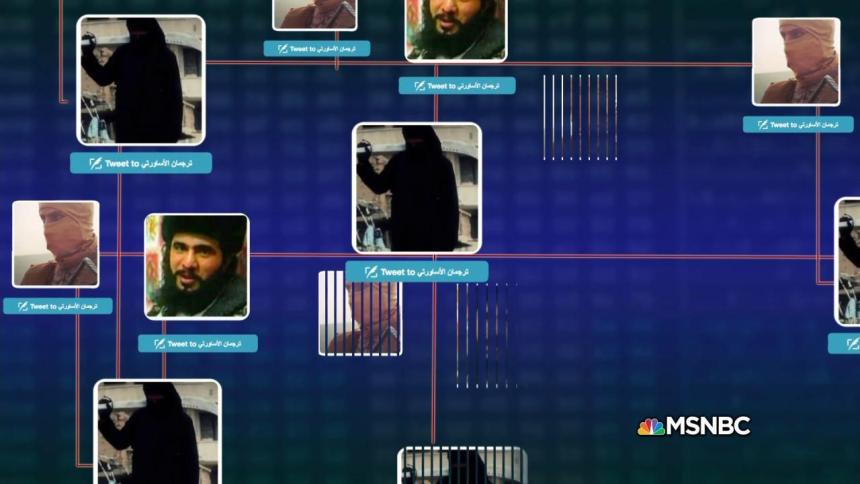
A trove of ISIS personnel records obtained by NBC News has now been analyzed by experts at West Point, who say it’s the largest and “most significant” document cache of its kind, providing new insight into the terror group’s grand ambitions and diverse recruits.
The files reveal that the jihadists who joined the Islamic State in 2013 and 2014 were largely uninterested in suicide missions, better educated than expected and, to the alarm of those trying to stop the export of terror, very well-traveled.
RELATED: US to send 200 more troops to beat ISIS in Iraq, Ashton Carter says
NBC News received the dossiers from a Syrian man who said he stole the information, stored on a flash drive, from a senior ISIS commander. Over the last month, NBC News has worked with the Combating Terrorism Center at the elite military academy to transform them into a database of more than 4,000 foreign fighters from 71 countries.
Watch ‘NBC Nightly News’ on Monday for more on the ISIS Files
The analysts believe the documents, which were also given to a British media outlet, are genuine and the details in them revelatory. They show the bureaucracy behind ISIS’ enlistment operation and a surprisingly varied fighting force captivated by the promise of a global Muslim caliphate.
“The largest takeaway from these documents is the massive diversity of the population,” Brian Dodwell, deputy director of the Combating Terrorism Center at West Point, told NBC News.
“We are talking an average age of around 26, 27 years old but we’re talking about everywhere from teenagers up until men in their 60s,” Dodwell added. “We’re talking about very diverse backgrounds from an education perspective — individuals who list their education as none up to those who listed their educations as Ph.D.s, masters degrees, MBAs … Everything from laborers to doctors and lawyers.”
The papers, written in Arabic and fully translated by NBC and West Point for the first time, provide a snapshot of each fighter — from nom de guerre and blood type to travel history and contact numbers for next of kin.
Among the key findings:
Most don’t want to be martyrs
Each candidate was asked if he wanted to be a regular fighter or a suicide bomber or suicide fighter, but only 12 percent ticked the box for martyrdom.
That ratio stands in stark contrast to another set of foreign fighters, those who joined Al Qaeda in Iraq in 2006 and 2007, more than half of whom volunteered to blow themselves up, according to West Point. And analysts say the disparity reflects how ISIS marketed itself to the world and the kind of future it envisioned.
“While they do need some suicide bombers, if all of their troops selected into the suicide category who would be left to fill that conventional army? Who would be left to serve as the Sharia officials, the police or the administrative?” Dodwell said.
“They’re selling this narrative of victory and sustaining… Many of these individuals it would seem are buying into that message and are going into there to live — not die.”
They cover the generation gap
Nearly two-thirds of the enlistees were in the 21-30 age group, but the other ends of the spectrum were also well-represented. Some 40 recruits were under age 15 and about 400 were under 21. Almost a quarter fell between ages 31 and 40. About 4 percent were between 41 and 50 and there were even 42 men over the age of 50.
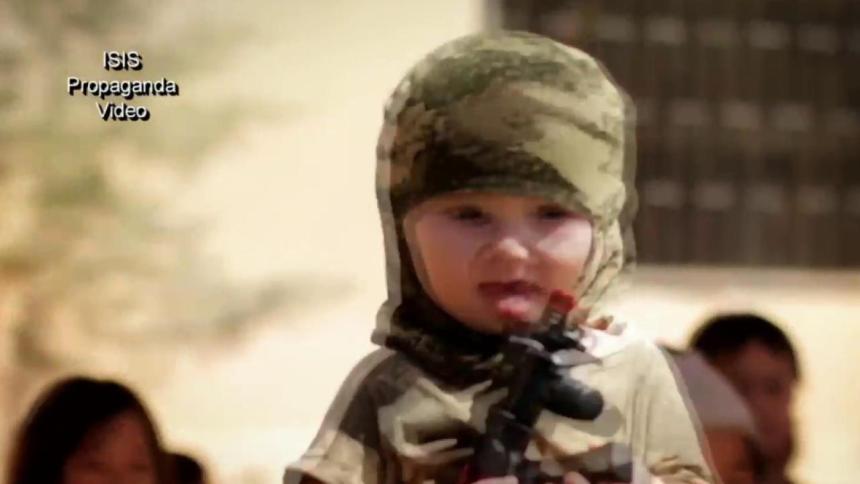
The oldest person in the database was nearly 70, a married father of five from Kyrgystan who wanted to be a fighter and not a suicide volunteer.
Many have families
While six out of 10 fighters were single, 30 percent reported being married — and they had more 2,000 children between them. The notes on some of the applications show that some showed up with hopes of bringing their families along later if they could get the money needed for travel.
The Caliphate called to them
The dates on the records give a sense of what might have propelled some these men to join ISIS. One peak came in November 2013, a few months after the militants split off from the Al Qaeda-affiliated Nusra Front and rebranded themselves as the Islamic State or ISIS.
But the biggest recruitment period was July 2014, following some of ISIS’ most significant territorial seizures and the announcement that it was establishing a caliphate with dominion over the world’s Muslims.
They were schooled
“They are perhaps more educated than we would expect,” Dodwell said.
A third went to high school and a quarter had a college education; only 17 percent said they stopped their schooling after elementary or middle school. That level of education was higher than the average for many of the countries the men called home.
The group was less educated on Islam than might be predicted. Seventy percent said they had only a basic understanding of sharia. And in an unexpected turn, those with a deeper understanding of Islamic law were actually less likely to choose to be suicide bombers or fighters, despite the religious justification for suicide attacks.
They’re jacks of all trades
The applicants came from all job sectors. Listed occupations included beekeeper, perfume salesman, airline steward, Saudi intelligence worker, soldier in the Tunisian army. One reported he was in “counter-narcotics,” another that he was a hashish dealer. “May God forgive him and us!” that file added. There was someone who worked at a Starbucks in London, and another who boasted of being a mixed-martial arts trainer with gold medals to his name. Overall, though, the fighters were more likely to have worked in low-skilled jobs. Only 104 had high-skilled or white-collar positions. There were 700 laborers, roughly 10 times the number of teachers, IT employees, or those in the military or police. But the vast majority were employed before they joined: Only 255 said they were jobless. Another big group had yet to enter the labor force: 656 students. They span the globe The three biggest feeder countries were Saudia Arabia (797 fighters), Tunisia (640) and Morocco (260), although Tunisia has the highest per capita rate. But they came from all corners of the world — from China (167) to Iceland (1) and Australia (13) to Trinidad and Tobago (2). About 10 percent hailed from Western nations, including the United Kingdom (57) and the United States (14). In Europe, France (128) and Germany (80) had the highest numbers. The international nature of the group is cause for concern, giving a glimpse of the ease with which ISIS members might be able to move around and blend in across the globe. Fifty-eight cited the U.S. as a country they had visited. “They were from all over the world and the individuals had traveled all over the world,” Dodwell said. “I wouldn’t say a majority of them, but a good number of them were heavily traveled. One individual said he had been to 38 countries around the world. So some of them certainly have international experience and significant experience moving throughout the region and throughout the world.” “Important, he has expertise in chemistry,” one notation said. Another: “He has experience in making explosives. He refused to provide his mother’s name out of concern for her safety.” The dossiers contain the names of those supposedly vouching for the recruits, and it’s clear connections were important. “His brother executed the metro operations in Madrid,” one note said, apparently referring to the 2004 commuter train bombings by an Al Qaeda cell that killed 191 people. A different applicant “tried to join the State through Abu-Ayman al Iraqi [a top ISIS commander killed in 2014] but they refused for lack of recommendation,” the file said. Problems with vision or hearing were duly recorded, along with other medical conditions. “His right leg is amputated,” one file said. “He wears a prosthetic.” There were contact numbers for family members and also instructions on whether they were to be contacted. One Spanish fighter left this directive: “He does not want anyone to know.” RELATED: Obama: Deadly consequences if ‘madmen’ terrorists get nuclear material A college student from Libya who volunteered to be an inghimasi, a type of fighter who plans to die on the battlefield, left a message for those at home: “Tell my mother and my father to forgive me.” To validate the documents, the West Point center cross-referenced them against a repository of ISIS records maintained by the Defense Department and corroborated about 98 percent. Dodwell said that while much of the material confirmed the center’s understanding of who joins ISIS and why, the “massive amount of diversity” was the biggest eye-opener and poses a challenge for those researching how to counter radical extremism at the root level. “What it shows us is that it’s very difficult to determine who exactly these types of programs should be targeted towards because they come from all walks of life,” he said. Marc Smith also contributed to this report. This article originally appeared on NBCNews.com.
Richard Engel
Tracy Connor Recommended