








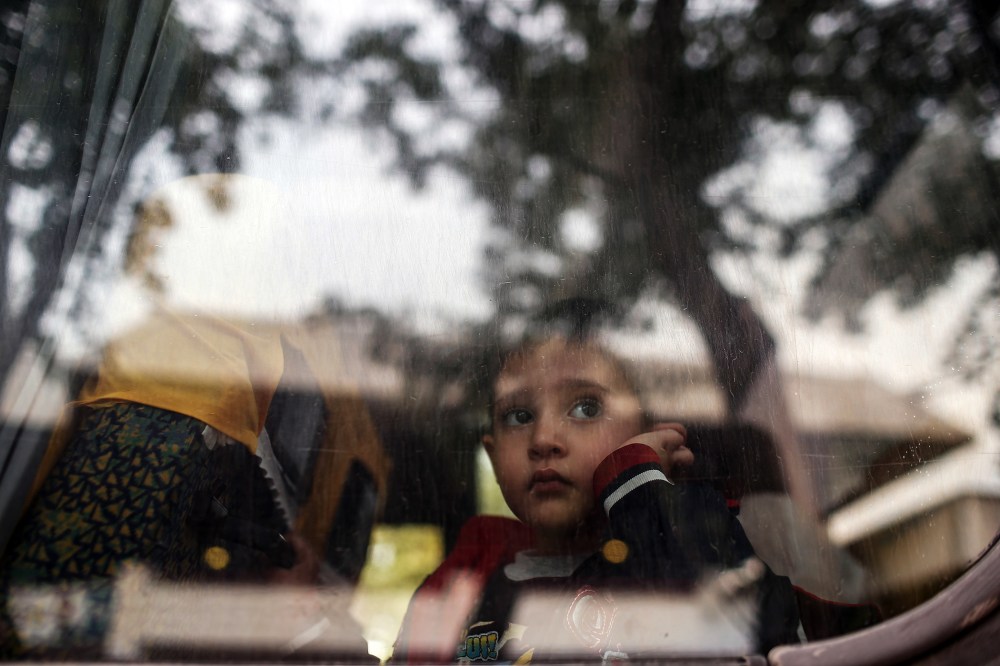
ISTANBUL — The Aksaray neighborhood of Istanbul is a veritable smugglers’ den, where you can watch asylum seekers and migrants huddling and planning their next moves. But when I spoke with people there several days ago, I also saw many people with blank stares, the ones who had tried and failed, and were left broke and worried that they had no moves left.
Syrians, Iraqis and Afghans gather in the square outside the Aksaray metro station talking quietly about their growing doubts that they will be able to follow the hundreds of thousands who made the journey to Europe this summer. The weather is getting colder. More worrisome, word is spreading that Turkey has stepped up its coast guard patrols and is arresting migrants and asylum seekers on its western border.
Their anxieties are not unfounded. The European Commission has announced the main points of a deal with Turkey, including billions of euros in funding and visa liberalization for Turkish citizens, in return for Turkey’s cooperation in stemming the flow of third country nationals into the European Union.
Among those turned back at sea was “Eddie,” a Syrian Kurd, whose first hurdle was crossing from Syria into Turkey in mid-September. He said that Turkish border guards opened fire on his group: “They were definitely targeting us and there was no other fighting going on in the area. We were not armed. My brother-in-law was shot in the waist. We were in Turkish territory. I asked the Turkish guards for an ambulance. They did not cooperate … and told us to go back to Syria.”
How%20can%20Syrians%20follow%20the%20order%20to%20leave%20the%20country%20when%20they%20were%20just%20arrested%20for%20trying%20to%20leave%20the%20country%3F’
Eddie managed to get his brother-in-law into a hospital in Syria, then successfully crossed back into Turkey and headed directly for the coast. He joined 38 others on a rubber boat bound for Greece on Oct. 7. The Turkish coast guard stopped them, disabled their motor, and splashed water into the boat. To keep from sinking, the passengers threw all their wet and heavy belongings overboard. Although they survived, they returned to the point of embarkation much poorer than before.
Among Syrians arrested on land were “Harun,” his wife, “Hanifa,” and their 6-month-old baby. They are from Khirbet Ghazaleh, in Daraa, a hotbed of opposition to the Bashar al-Assad regime, where, Hanifa told me, army and militia forces associated with the Assad regime killed 65 of her family members in May 2013. She and her father were both wounded as their house caved in after being hit by a mortar round. Armed men dragged her father out of the house, tortured him on the spot, shot him, and left his body in the street. Harun and Hanifa fled to Jordan, then tried to go to Lebanon but were denied entry at the Beirut airport and, fearing deportation to Syria, opted to proceed to Turkey.
RELATED: Syrian refugee gives birth safely in Germany
On Oct. 7, smugglers in Istanbul crammed them into a seatless minivan with 25 others bound for the coast. “I thought we would suffocate,” said Harun. The smugglers took them to and from the shoreline half a dozen times, but finally gave up, because they never saw a break in the Turkish coast guard patrols. The smugglers then abandoned them in pitch darkness on a rainy night. They wandered to a village and found shelter in some abandoned buildings.
The next morning, Turkish police caught them, took them to the Malkara police station, fingerprinted them, and held them for the next three days with about 45 other Syrians in an old cinema, then put them on a bus they said was bound for Istanbul. But the bus continued past the city, and took them under police escort to Tokat, a Turkish town in distant Central Anatolia.
After they arrived, at 4:30 a.m., an official told them that if they signed a paper written in Turkish, they would be allowed to go back to Istanbul. The paper, which they couldn’t read, said they were caught trying to escape Turkey and were required to leave the country within 30 days. Within the hour, they bought bus tickets and immediately embarked on the 16-hour return trip to Istanbul.
Penalizing people for trying to leave a country by ordering them to leave that county — complete with a pointless 34 hour trip to nowhere and back — is a logic that could best be appreciated by Kafka. With%20no%20way%20to%20leave%20Turkey%20lawfully%2C%20Syrians%20are%20faced%20with%20the%20threat%20of%20being%20deported%20into%20the%20hands%20of%20a%20regime%20they%20believe%20would%20kill%20them.%20′ Beyond the hardship these young parents and their baby experienced as they were dragged across Turkey and back, they are now left with the confounding and frightening threat of deportation hanging over their heads. How can they follow the order to leave the country when they were just arrested for trying to leave the country? Their only option for legal exit would be back to Syria, where they fear for their lives. With an EU migration cooperation deal moving toward a conclusion, Turkey appears not only to be cracking down more forcefully on irregular emigration, but to be stepping up efforts to restrict entry, as they did with Eddie and his brother-in-law, and to pressure Syrians in Turkey to go back home, as they have done with Harun and Hanifa. Eddie is destitute and stranded; Harun and Hanifa have lost even the minimal protections they enjoyed under Turkey’s temporary protection system. With no option to leave Turkey lawfully and enter the EU, they are faced with the threat 30 days from now of being deported into the hands of a regime they believe would kill them. RELATED: The Syrian refugee crisis won’t be solved with small gestures Rather than face that prospect, Harun told me he would attempt the sea voyage with his wife and baby that very night. As I looked at them, I thought of my conversation with Eddie the day before, and wondered if they would be caught and turned back, only to be stuck again, with no exit and an order to leave. Or worse, if their fates would be joined with those of the more than 3,000 people this year who left and never reached any shore. Bill Frelick is the director of the Human Rights Watch Refugee Rights Program.
Bill Frelick Recommended


