








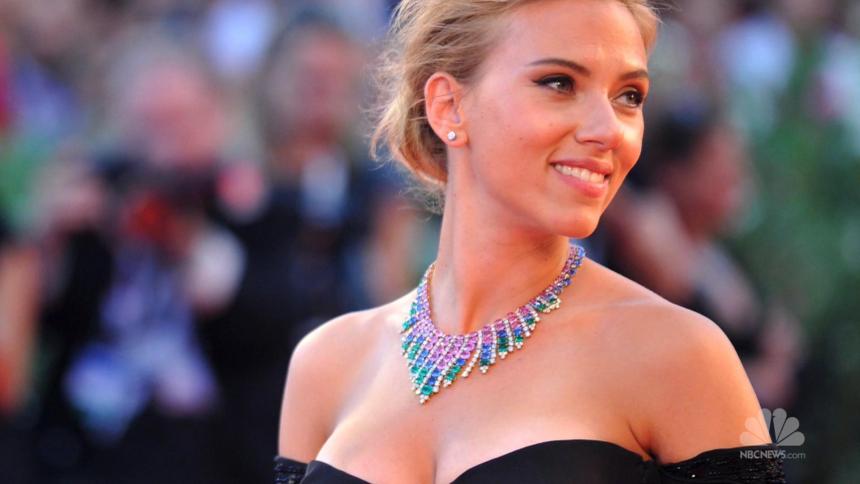
The casting of Scarlett Johansson in a role that was originally conceived as an Asian woman in the upcoming film adaptation of the popular anime series “The Ghost in the Shell” is just the latest example of a Hollywood trend of whitewashing that has been lurking under the radar for decades.
The issue reared its head last year with the casting of Emma Stone in “Aloha” as a half-Chinese/half-Hawaiian character and seven years before that when the real-life Chinese-American people who inspired the blackjack film “21” were re-imagined as white in the big screen version. But casting white actors to play Asians is part of a long and racially insensitive Hollywood tradition (think the late Mickey Rooney’s grotesque Japanese caricature in “Breakfast at Tiffany’s”) but, even with a national dialogue on diversity inspired by the #OscarsSoWhite controversies of the past two years, Asian representation has lagged behind nearly every ethnic group.
RELATED: Cameron Crowe apologizes for casting Emma Stone as Asian character in ‘Aloha’
Adding insult to injury, comedian Chris Rock ironically made a tasteless joke alluding to Asian child labor at the Academy Awards this year, right after delivering a well-received monologue about the need for more opportunity for people of color in the film industry. According to a February study from the University of Southern California’s Annenberg School for Communication and Journalism, which analyzed hundreds of films and television shows from 2014, “at least half or more of all cinematic, television, or streaming stories fail to portray one speaking or named Asian or Asian American on screen.”
It's okay that they hired a woman for the ancient one but come on look at her smh#RepresentAsian #OnlyOnePercent pic.twitter.com/bbzr0Iw8sV
— [g a c h a p i n] (@VALESKAAAR) April 13, 2016
This would seem to be counter-intuitive considering the fact that Asia has rapidly become one of the biggest international markets for American-made films. In fact, according to the Los Angeles Times, the continent is on pace to surpass the U.S. as the world’s biggest film market by next year.
“The total box office in the Asia Pacific region alone in 2015 was actually greater than North America’s,” Daniel Loria, managing editor of Pro.BoxOffice.com, told MSNBC on Monday. “So yes, the region is hugely influential: the biggest single region in the world in terms of box office power.”
And yet, Johansson is attached to the role of Major Motoko Kusanagi in “The Ghost in the Shell,” which is now referred to only as “Major.” Meanwhile, ScreenCrush has reported that the studios releasing the film, Paramount and Dreamworks, explored using visual effects to make their star (who is of Danish-Polish ancestry) look “more Asian,” a claim they deny.
Nothing against Scarlett Johansson. In fact, I'm a big fan. But everything against this Whitewashing of Asian role. https://t.co/VS6r6iish9
— Ming-Na Wen (@MingNa) April 14, 2016
But the problem is deeper and more widespread than any one film. In the upcoming adaptation of Marvel’s “Dr. Strange,” the Tibetan character of “The Ancient One” will be played by Tilda Swinton. Then there’s the proliferation of unflattering images of Asian men — which an online video from Mic recently explored, calling into question why so many roles they’re cast in are aggressively emasculating and desexualized:
Yet while the lack of prominent Asian roles and casting has cropped up as an issue with increasing frequency lately, it hasn’t gotten the same level of publicity or inspired quite the same institutional calls for reform that efforts to improve African-American representation have. “We don’t have the star power,” Diep Tran, an associate editor at American Theatre magazine who has written extensively on Asian inclusion (or lack thereof) in entertainment, told MSNBC on Monday. “We don’t have an Asian version of Oprah or Will Smith … someone who can be a leader on these issues.” She believes that the whitewashing phenomenon is part of a “200-year history of it being OK to fetishize a certain group of people in all aspects of entertainment.” “There is a tendency to love Asian costuming and architecture and art, and not so much the people,” she added. “I think it comes down to an unconscious bias, about Hollywood seeing Asians as foreigners and people with accents.” There are some glimmers of hope on television, where actors like Steven Yeun (“The Walking Dead”), Ming-Na Wen (“Agents of S.H.I.E.L.D.”) and Josh Chan (“Crazy Ex-Girlfriend”) are defying stereotypes and playing roles that could just as easily have been cast with white actors. Tran is encouraged that at the very least conversations are taking place about colorism and diversity, which is a far cry from the days when Rooney’s offensive characterization was widely accepted as “normal.” “I would love to get to the point where we can talk about nuance and proper representation, and not just any representation. Everyone wants to see themselves portrayed in a multifaceted way,” added Tran, before issuing an economic warning to Hollywood. “Diversity is coming sooner or later and you can either prepare for it now or lose money in the future.”
Adam Howard Recommended


