








Texas State Senator Wendy Davis explained in a recent article why she fought so hard to stop Republicans in her state from passing the omnibus abortion restriction bill that sparked widespread protests and national attention in the last month.
The bill “rolled back constitutional rights and would reduce the number of women’s health clinics from 42 to 5, thereby threatening the health and safety of thousands of Texas women,” she wrote.
As the most visible figure in the Texan fight to prevent that bill’s passage, Davis has come in for her share of praise and, of course, of bitter partisan criticism. There is no doubt that filibuster inspired fellow Texas lawmakers to take action against the bill and to speak out. As fellow lawmaker Leticia Van De Putte put it: “At what point must a female senator raise her hand or her voice to be recognized over her male colleagues?”
But the fight to restore reproductive freedom for the people of Texas and beyond is, and always has been, bigger than Wendy Davis.
Republican Governor Rick Perry plans to sign the bill Thursday. His office’s press announcement about the signing notes that Perry will be joined by “lawmakers and invited guests,” to sign “pro-life legislation to protect the unborn and women’s health in Texas.”
But millions of people will be adversely affected when Texas’s new abortion restrictions kick in. The most obvious are women in need of healthcare – either to keep a pregnancy healthy, or to terminate a pregnancy they don’t want or can’t sustain. Texas will now ban abortion after 20 weeks, and while a tiny percentage of abortions happen that late, most of the ones that do are performed to save the mother’s life, or to spare her the pain of giving birth to a fetus with such severe abnormalities that it cannot survive outside the womb.
Then there are the hundreds of thousands of Texans who rely on those clinics for primary healthcare: for mammograms, pap smears, contraception, STI testing, and more. What happens when a person doesn’t have access to preventive healthcare? What happens to a populace when thousands of its citizens no longer see doctors and nurses, no longer get tested for HIV, or breast cancer?
The need for abortion is not diminished with the disappearance of clinics. In their place, expect unsafe, illegal abortion. Before Roe v Wade, illegal abortion was a leading cause of death for women of childbearing age. Sixty percent were already mothers at the time.
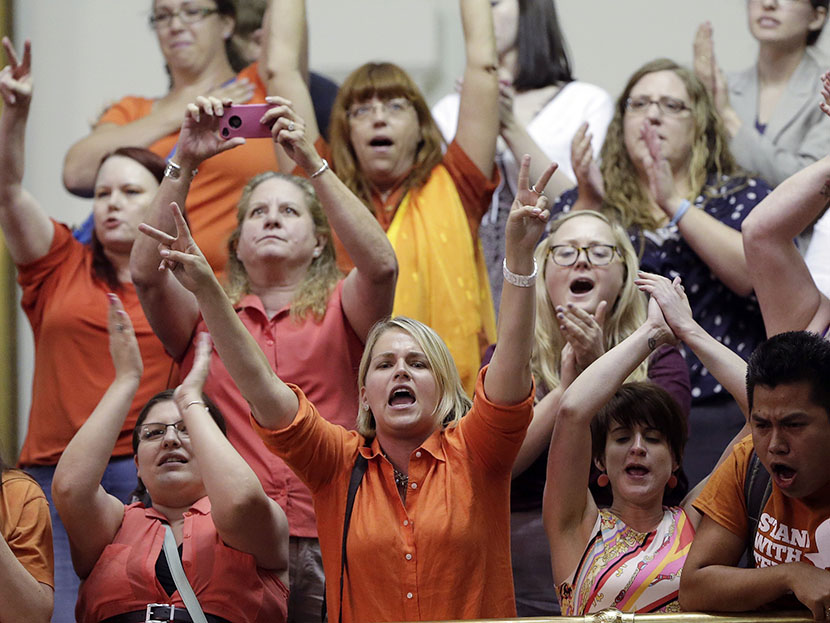
Finally, there is a larger group, one that includes virtually every single Texan, whether they realize it or not: anyone who relies on or loves a person who needs reproductive healthcare. That’s not just anyone with a mother. It’s anyone with a daughter, or a girlfriend, or a colleague, or a sister, or a wife, or a friend who needs the services that these clinics provide. Many Texans know this, and that’s why thousands of them showed up at the state house in the last few weeks. As Texan reproductive rights activist Jessica Luther told me last week, “the numbers got bigger every time,” and some of the people who were in the state house when the bill was passed were on their eighth and ninth trips to Austin in the last month alone. Last Friday, Luther said, people from all over Texas arrived at the Capital at 1am to line up to be let into the State House, and stayed there for more than twenty-four hours. It will now take a 16-hour round trip drive from El Paso to the nearest clinic, and the people who drove from El Paso to Austin last week know that. “I am horrified by the ramifications,” Luther said, “but I am inspired by all these people.” Reproductive rights are not just about abortion, and they are not just about women. They are about the health and freedom of an entire populace. That’s why the people who marched and protested and filibustered in Texas, not to mention the people from around the country who donated money and food and other supplies to that protest effort, were of all genders. This is bigger than abortion, and bigger than the enormous state of Texas. And it is bigger than Wendy Davis. As inspiring a figure as Davis is, as central as she is to these efforts, we ought to remember that the fight for reproductive freedom is about millions of people, not just one.
Chloe Angyal Recommended


