








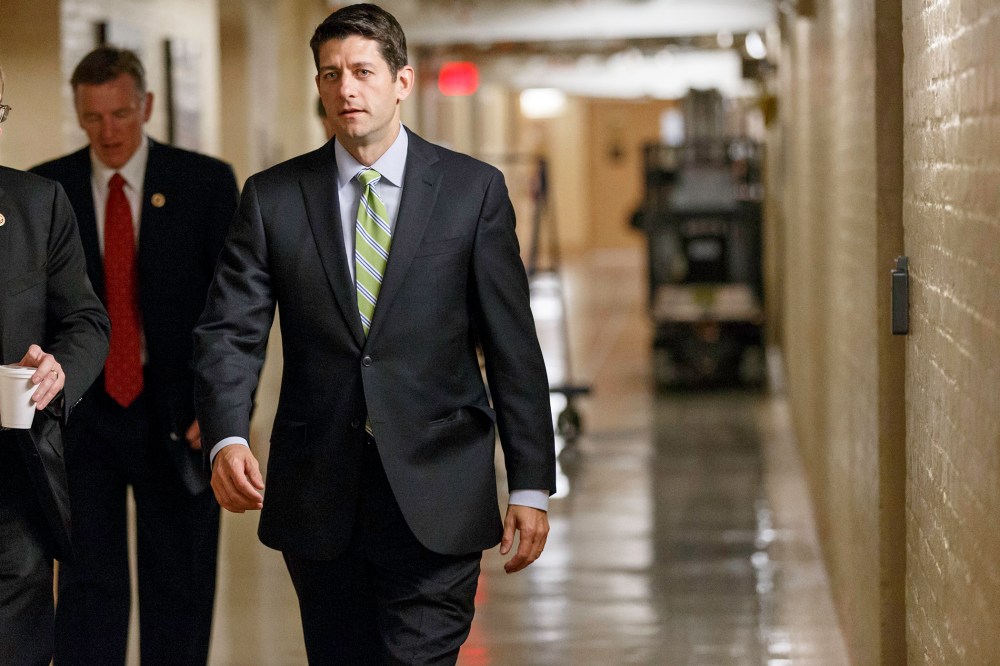
Wisconsin Republican Rep. Paul Ryan will unveil a new anti-poverty plan this week that moves away from austere budget cuts and focuses instead on consolidating social services, expanding tax credits for low-income workers and other policy reforms.
Ryan will propose to consolidate a variety of safety net programs, including food stamps, section 8 housing vouchers, rental assistance, home weatherization, and welfare payments. If states opt into the pilot program, they would have more flexibility in designing them, according to Stuart Butler of the Heritage Foundation, who has seen a draft of Ryan’s proposal.
Ryan’s plan is the latest attempt by a leading Republican to recast the GOP as more sympathetic to needs of the poor—and a significant break from the austere budgets that Ryan has pushed in recent years that make massive cuts to the safety net.
Ryan’s proposal is expected to be unveiled Thursday in a speech at the American Enterprise Institute. The proposal will be deficit-neutral and won’t touch overall spending levels.
“We can argue about the budget but we need to figure out how to make these programs really work,” says Butler, who will be speaking alongside Ryan, chair of the House Budget Committee, at Thursday’s event. “This approach would apply to whatever the level of the budget there is.”
If states opt for the new streamlined approach, their programs will have to meet new federal benchmarks, including work requirements and greater involvement of non-governmental local organizations, added Butler, who compares the overhaul to the welfare reform of the 1990s.
“There have got to be real performance measurements — it’s not just giving the states a blank check,” he said.
Ryan’s other major policy proposal will be an expansion of the Earned Income Tax Credit to single, working adults without dependents. President Obama has proposed similar reforms, but wants to pay for the expansion by closing tax loopholes for the wealthy. Ryan wants the expansion to be offset by cutting energy subsidies, according to The Washington Post. Ryan’s plans will also include education, regulatory and criminal justice reforms. Ryan wants to overhaul the student aid system and make alternative forms of higher education more easily available, according to Butler. He also will propose to loosen regulations for occupational licensing, which could lower the barriers to professions like hair-braiding, taxi-driving, and drug-counseling. Like a growing number of Republicans, Ryan will also endorse criminal justice reforms to reduce sentencing and support alternatives to incarceration. “Democrats welcome any ideas that lift more Americans out of poverty and create pathways into the middle class – but we will oppose any plan that uses the sunny language of ‘reform’ as a guise to cut vital safety net programs,” said Rep. Chris Van Hollen, the ranking Democrat on the House Budget Committee.
Suzy Khimm Recommended


