









The death of Justice Antonin Scalia has set up an important, controversial question: Should President Obama, in his last 10 months in office, be allowed to appoint a justice who would likely create a liberal majority on the Supreme Court?
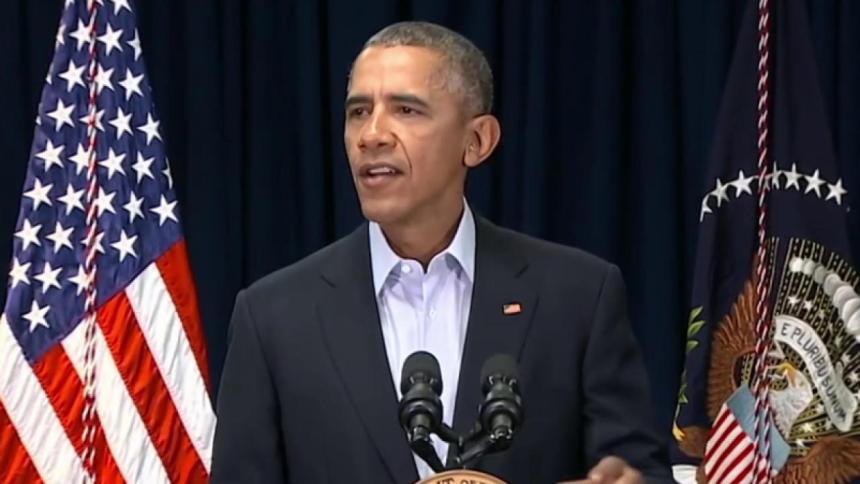
Late Saturday night, the president announced that he plans to move forward with his “constitutional responsibilities” and name a successor to Scalia in “due time.”
The Supreme Court has long been divided between five justices appointed by Republicans and four by Democrats.
If the Senate confirms Obama’s pick to replace the deeply-conservative Scalia, it would tip the Court’s balance, giving the liberals an advantage that could endure well beyond the president’s tenure.
A liberal majority would carry deep implications on a number of issues, from corporate power to abortion policy to affirmative action.
The importance of this potential nomination fight explains why the reaction in the wake of Scalia’s death quickly become very political and divided along partisan lines. The parties started debating the potential timing of the confirmation of Scalia’s replacement almost immediately after confirmation of his death.
Senate Democratic Leader Harry Reid and other Democrats demanded the GOP-controlled Senate pledge to confirm a new nominee before Obama leaves office.
RELATED: Both sides of political aisle pay tribute to Scalia
“The president can and should send the Senate a nominee right away,” Reid said in a statement. “With so many important issues pending before the Supreme Court, the Senate has a responsibility to fill vacancies as soon as possible. It would be unprecedented in recent history for the Supreme Court to go a year with a vacant seat. Failing to fill this vacancy would be a shameful abdication of one of the Senate’s most essential Constitutional responsibilities.”
Pat Leahy, the Vermont senator and top Democrat on the Senate Judiciary Committee, which holds hearings for potential nominees, said, “It is only February. The President and the Senate should get to work without delay to nominate, consider and confirm the next justice to serve on the Supreme Court.”
But Republicans, including Senate Majority Leader Mitch McConnell, said that the candidate elected in president in 2016, not Obama, should be allowed to pick the new justice.
“The American people should have a voice in the selection of their next Supreme Court Justice. Therefore, this vacancy should not be filled until we have a new President,” McConnell said in a statement.
Conn Carroll, the communications director for Utah Sen. Mike Lee, who serves on the Senate Judiciary Committee, said, “What is less than zero? The chances of Obama successfully appointing a Supreme Court Justice to replace Scalia?”
“If anything this will put a full stop to all Obama judicial nominees going forward,” he added in a Twitter message.
Related: What Scalia’s death means for 2016 race
And five out of six Republican presidential candidates at Saturday’s GOP debate in South Carolina said Obama should either not nominate a justice and leave the decision for the next president, or the Senate should block any pick.
Jeb Bush said Obama “has every right” to nominate Scalia’s successor, and urged him to pick a consensus candidate — but added he was sure that wouldn’t happen.
“I think it’s up to Mitch McConnell and everybody to stop it. It’s called delay, delay, delay,” Donald Trump said.
The Republicans, with 54 seats in the Senate, have control over the confirmation process.
The death of a justice who could swing control of the Court, in the midst of the election cycle, raises a number of key questions. Will Obama publicly campaign to demand the Senate fill the open seat? Will he suggest a more centrist or conservative justice who Republicans might consider backing? Will the Democratic and Republican presidential candidates offer their own list of potential candidates?
South Carolina Sen. Lindsey Graham said it was possible that Senate Republicans and Obama could find a “consensus choice.” But the name he offered, Utah Sen. Orrin Hatch, a conservative Republican, is unlikely to win much support from Democrats.
This process has risks for both parties.
For Republicans, they could lose this fall’s presidential election and control of the Senate, leaving the incoming Democratic president the chance to appoint a more liberal candidate to the Court than someone who would be confirmed under a Republican majority. For Democrats and Obama, if they aren’t able to appoint someone in the next 10 months, Republicans could cement a majority on the Court by picking a younger conservative to replace Scalia. How does the process work? The dynamic is unpredictable, bitterly partisan and sure to upend the 2016 campaign. But here’s a briefer on how the process of a Supreme Court justice’s appointment and confirmation typically works: According to the “Appointments Clause” of the Constitution, the president “shall nominate, and by and with the Advice and Consent of the Senate, shall appoint … Judges of the Supreme Court.” In the modern era, that means a lengthy Senate confirmation process for an enormously influential post that lasts from a justice’s swearing-in until his or her death or retirement. (In rare cases in history, president have made “recess appointments” to the Supreme Court without the approval of Congress, but those appointments have expired at the end of the Congressional session rather than being lifetime posts. But the last president to do so was Dwight Eisenhower.) Once a president announces the White House’s choice to fill a Supreme Court vacancy, that person must first fill out paperwork about his or her background and finances, while the FBI conducts a background check. Since 1925, nominees have first been considered by the bipartisan Senate Judiciary Committee, which currently has 20 members — 11 Republicans and 9 Democrats. The panel investigates the background of the potential justice and prepares questions, while the nominee traditionally does “courtesy calls” on Capitol Hill to meet with individual senators in advance of the hearing. The hearings themselves have become huge media spectacles, with the nominee answering a battery of question about past decisions, judicial ideology and professional qualifications. After those high-stakes hearings have concluded, the committee members vote on the nominee — but no matter how their assessment goes, the nomination is typically sent to the full Senate for a vote. In 2013, Senate Democrats amended filibuster rules to require only a simple majority — and not a three-fifths vote — to end debate on executive branch nominations and lower court federal judicial appointments. But Supreme Court appointments still essentially require the consent of 60 senators to go forward. This article first appeared on NBCNews.com.
Carrie Dann
Perry Bacon Recommended


