








The Obama administration is still trying, against the odds, to push the Trans-Pacific Partnership trade and investment agreement (TPP) through the lame-duck session of Congress after the November presidential vote. The administration knows that TPP can’t pass before the election because both Hillary Clinton and Donald Trump oppose it; therefore, they are hoping for a stealth Senate vote between the election and inauguration of the new president in 2017. We can therefore “thank” TransCanada for reminding us why the TPP needs to be scuttled.
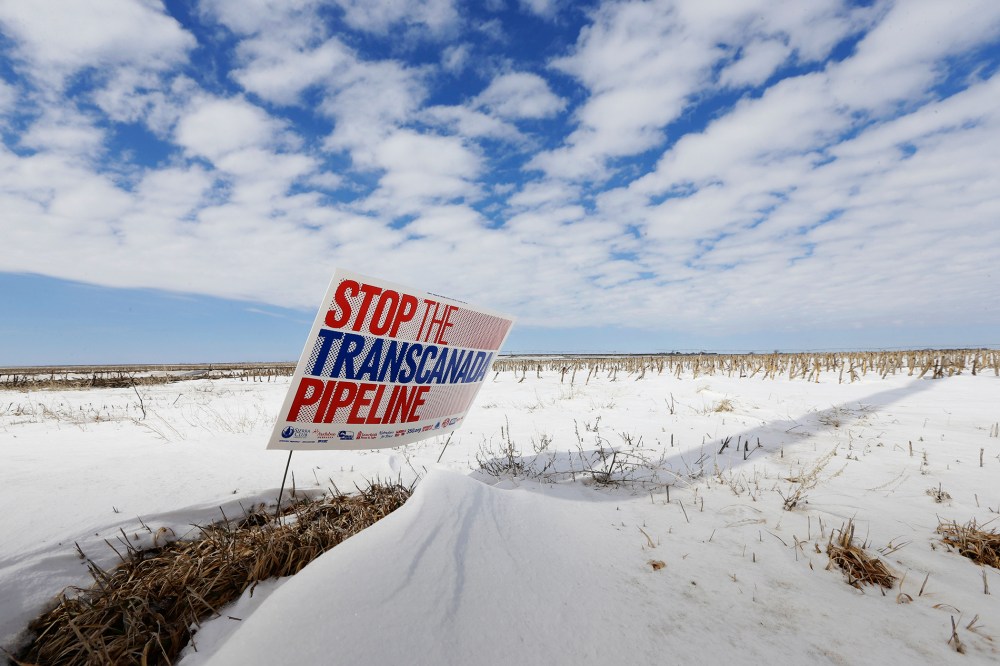
TransCanada is the Canadian company that was trying to build the Keystone Pipeline to carry Canada’s polluting oil sands to U.S. refineries. It was a terrible idea, since the pipeline would have supported the development of one of the world’s high-carbon energy sources at exactly the time when the world needs to, and has agreed to, decarbonize the world energy system. The Obama administration overcame an onslaught of lobbying to reject the pipeline on the grounds that it would undercut the fight against climate change. In response, TransCanada has now sued the U.S. government — and hence us as taxpayers — for $15 billion in “damages.”
RELATED: Bernie Sanders scores big wins with Democratic platform
TransCanada is using an arcane part of recent trade agreements called ISDS, standing for “Investor-State Dispute Settlement.” ISDS, included in the NAFTA agreement among Canada, the United States and Mexico, permits private investors from a NAFTA party to directly sue the government of another NAFTA party in which they have invested, hence permitting TransCanada’s action, as a Canadian company, against the United States. If TPP were to be adopted, the same procedures would suddenly enable corporations from much of Asia to sue the U.S. government as well.
TransCanada is claiming damages for lost profits as if it had a right to proceed with the project in the first place — even though these profits would have come from an environmentally damaging project that the government had every reason to deny. Yet the ISDS process is so misguided and poorly conceived that TransCanada might well have a strong legal case under ISDS despite having no policy or ethical case.
Astoundingly, TransCanada, a Canadian corporation, benefits from investor protections that are stronger than any U.S. corporation would have under U,S. law (despite the United States Trade Representative’s claims to the contrary). Under NAFTA’s ISDS clause, TransCanada can, and now has, bypassed U.S. domestic courts and laws entirely.
Three ad hoc arbitrators will have the authority to review President Obama’s decision on Keystone. If this tribunal ultimately finds that NAFTA’s specific protections that apply only to foreign investors have been breached, they could well order the government to pay for TransCanada’s alleged lost profits. In other words, seven years of domestic debate, decision-making and policy determinations, and the critical global public policy issues underpinning the decision to deny the pipeline can all be undermined by a single ISDS claim in front of an ad hoc tribunal that would override U.S. law. The scariest thing of all is that TransCanada just might win.
Domestic citizens and corporations, unlike TransCanada, are bound by the legal and regulatory processes that have been carefully and democratically developed over time to protect the rights of all interested parties. When government actions infringe on a foreign company’s economic interest, however, even in cases where regulatory actions were taken in the public interest, foreign investors like TransCanada can seek damages from the U.S. government for lost profits with some chance of success. Even the threat of a massive ISDS claim will often be enough to deter governments from introducing regulations to protect its citizens or the environment or even from enforcing existing regulations. It is time that we recognize the threat that ISDS truly poses for democratic and law-based policy-making.
RELATED: Opinion: Why Trump’s foreign policy won’t make America great again We have long been sounding alarm bells about the risks of ISDS — along with Sens. Elizabeth Warren and Bernie Sanders, Professors Joseph Stiglitz, Laurence H. Tribe, and Judith Resnik, representatives of state and local governments such as the National Conference of State Legislators, and more than 450 environmental, landowner, Indigenous rights, and allied organizations. But this case challenging such a critical matter of public interest — domestically and globally — should be the death knell for ISDS, in TPP and elsewhere. Currently, about 10 percent of foreign investors into the United States have access to ISDS to challenge U.S. policy decisions. If the U.S. ratifies the TPP, this number will roughly double. Ratifying TPP with the proposed ISDS provisions would mark a dangerous and wholly unjustified expansion of corporate power over domestic and global policy. Trying to sneak it through a lame-duck session would also be a flagrant end-run around public opinion and deliberation. Our democracy, and our environment, cannot afford to expand the deeply flawed ISDS system. Jeff Sachs is the director of the Center for Sustainable Development at Columbia University. Brooke Güven is a legal researcher and Lisa Sachs is director of the Columbia Center on Sustainable Investment (CCSI), a joint center of Columbia Law School and the Earth Institute.
Jeffrey D. Sachs
Brooke Güven
Lisa Sachs Recommended


