








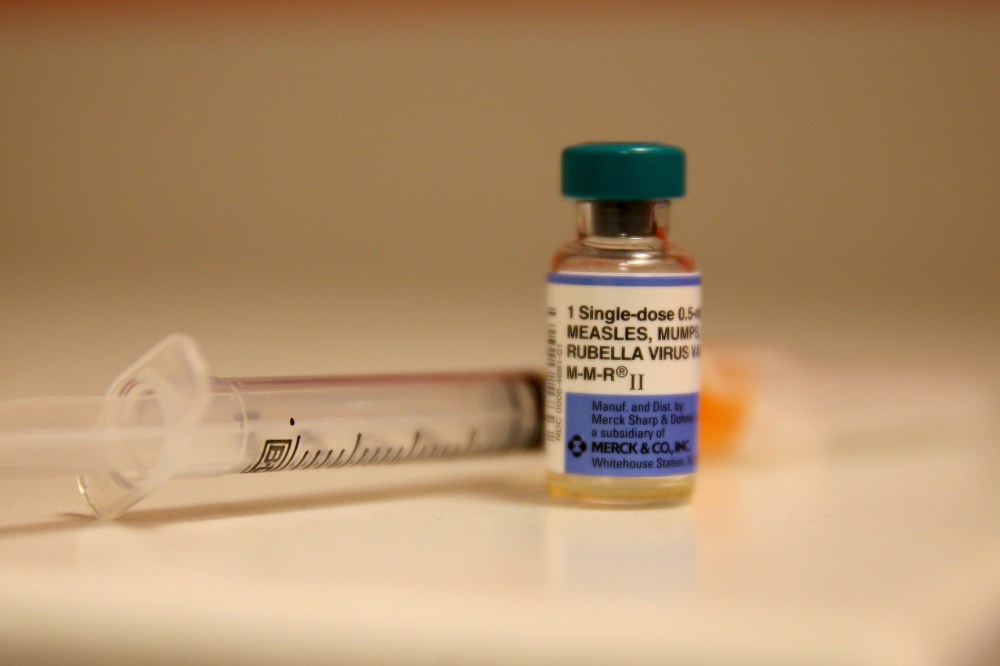
Another study aimed at soothing the fears of some parents shows that vaccines don’t cause autism.
This one takes a special look at children with older siblings diagnosed with autism, who do themselves have a higher risk of an autism spectrum disorder. But even these high-risk kids aren’t more likely to develop autism if they’re vaccinated, according to the report in the Journal of the American Medical Association.
“We found that there was no harmful association between receipt of the MMR (measles, mumps and rubella) vaccine and development of autism spectrum disorder,” said Dr. Anjali Jain of The Lewin Group, a health consulting group in Falls Church, Virginia, who led the study.
Kids who had older brothers or sisters with autism were less likely to be vaccinated on time themselves, probably because their parents had vaccine worries. But those who were vaccinated were no more likely than the unvaccinated children to develop autism, Jain’s team found.
Autism is very common. The Centers for Disease Control and Prevention says one in 68 U.S. kids has an autism spectrum disorder.
RELATED: Christie comes out swinging on vaccinations in New Hampshire
Numbers have been growing but CDC says much of this almost certainly reflects more awareness and diagnosis of kids who would have been missed in years past.
Although fears grew 15-20 years ago that vaccines might cause autism, research backing up these worries has been discredited and study after study since then has shown no link. The Institute of Medicine, an independent group that advises the U.S. government on health matters, has strongly advised that researchers stop wasting time looking at vaccines and look elsewhere for the causes of autism.

Most research shows genes are strongly involved, and some studies suggest the DNA flaws that cause autism often arise randomly. But fears persist about vaccines. The most recent fallout: a measles outbreak that started at California’s Disneyland that infected 147 people in the U.S., including 131 in California.
CDC said unvaccinated people were the source.
Many vaccine-averse parents argue that while vaccines might be harmless to most kids, their own children have a particular susceptibility. Jain set out to see if this might be the case. The Lewin Group looked at more than 95,000 children covered by health insurance who were born between 2001 and 2007. As expected, kids with an older sibling who had an autism spectrum disorder were more likely to have autism — about 7% of them did. And they were less likely to have been given an MMR vaccine. “Their vaccination rates were about 10% less than kids with unaffected siblings,” Jain said. But the risk of autism was less than 1% in vaccinated kids, whether they had an older sibling with autism or not. “These findings indicate no harmful association between MMR vaccine receipt and ASD (autism spectrum disorder) even among children already at higher risk for ASD,” Jain’s team wrote.
Maggie Fox Recommended


