








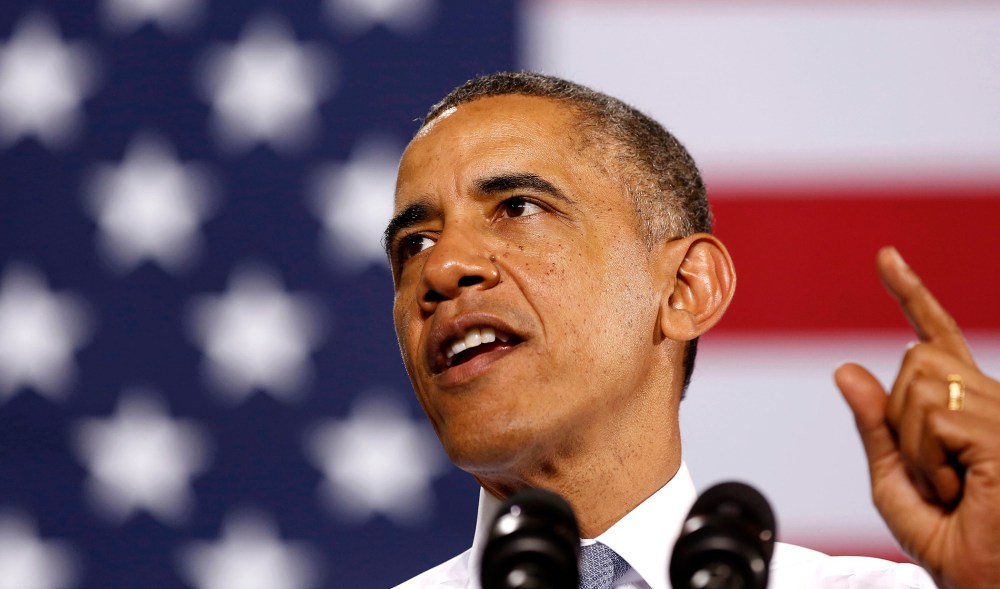
President Obama sounded an encouraging note this week on immigration reform, crediting House Republicans with producing a set of principles that could realistically lead to a bipartisan deal.
But lurking behind the president’s kind words was a subtle threat that, should Congress fail to act, they might not like what happens next.
In an olive branch to Republican leaders, Obama told CNN’s Jake Tapper on Thursday that he was not necessarily opposed to a plan that legalized undocumented immigrants but didn’t include a “special path to citizenship.”
“I genuinely believe that Speaker Boehner and a number of House Republicans, folks like Paul Ryan, really do want to get a serious immigration reform bill done,” Obama said.
Republican leaders deliberately left their language on citizenship vague, which gives both sides a fair amount of breathing room to negotiate. While Republicans rejected a “special path to citizenship,” they didn’t say they would specifically bar undocumented immigrants from eventually obtaining citizenship through means available to other immigrants. Depending on the details of a bill and how thoroughly it revamps the existing visa system, millions of immigrants could potentially become citizens. Obama recognized this possibility in his interview.
“If the speaker proposes something that says, right away, folks aren’t being deported, families aren’t being separated, we’re able to attract top young students to provide the skills or start businesses here and then there’s a regular process of citizenship, I’m not sure how wide the divide ends up being,” he said.
Echoing the sentiments of top Democrats and many immigration advocates, the president made clear that he saw nothing in the House GOP principles that would necessarily preclude a deal. But that’s partly because they’re so vague, which is why activists are eager to see actual draft legislation soon.
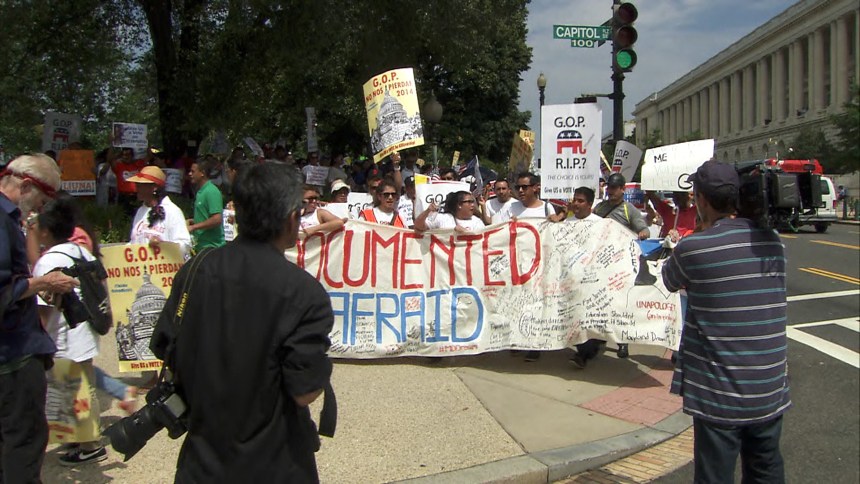
So what happens if House leaders come back with something unacceptable or, facing a revolt from their caucus, decide to shelve immigration until at least next year? In keeping with his State of the Union pledge to bypass Congress when necessary, Obama hinted Friday that immigration might be a candidate for executive action.
Here’s how that might work. For years, activists have pressed Obama to halt deportations for immigrants that would likely be legalized under a new immigration reform law. In 2012, the president partially heeded their demands and granted temporary protection to young unauthorized immigrants, known as DREAMers. But he has told activists since then, including a DREAMer who heckled him in November at a rally, that he lacks the authority to go any further.
On Friday, he took a question during a Google+ hangout from a woman who wanted to know whether, given Obama’s State of the Union remarks, he would be willing to use “executive authority to halt deportations which have been ripping families apart until Congress passes a comprehensive immigration reform.” While Obama said he was “modestly optimistic” Congress would reach an agreement, he didn’t exactly rule out revisiting the deportations issue, either.
“Obviously, if at some point we see that it’s not getting done, I’m going to look at options to make sure that we have a rational, smart system of immigration,” he said. “But I’m going to do everything I can in these coming months to see if we can get this over the finish line.” This is delicate territory for the president. Republican immigration supporters and opponents alike say that one of the biggest obstacles to passing reform is their party’s fear that Obama will deliberately refuse to enforce new security measures included a bipartisan immigration bill. Putting aside the merits of the argument, it’s become an article of faith on the right that Obama too often usurps Congressional authority by issuing new enforcement priorities, waivers, and executive orders. Florida Rep. Mario Diaz-Balart, a longtime pro-reform Republican, told msnbc on Thursday that Obama had made a serious mistake invoking unilateral action in his State of the Union. On the other hand, the threat of executive action could also be used as encouragement to pass a bill. By dropping hints of a bold executive move, Republican reformers could argue that Congress needs to pass an immigration bill that explicitly ties the president’s hands before he can bypass lawmakers. Marco Rubio, who co-sponsored the bipartisan Senate immigration bill, made this very case to a Florida radio host last year in defending his work on the issue. There are political risks for Republicans, too, if Obama goes it alone. Obama rallied Latino voters in 2012 by halting deportations for young immigrants and forced Mitt Romney into a difficult position when he was grilled on whether he’d let DREAMers granted such protections stay in the U.S. if he were elected president. If the House kicks the issue into the next election and Obama expands protections further, it could have a similar effect and provoke a damaging debate in the Republican presidential primaries. For now, the conventional wisdom is that Obama’s best bet for facilitating a deal is to stay quiet and let Congress work things out on its own. The White House understands this dynamic, which likely explains why there was almost no mention of immigration in the president’s State of the Union speech. Obama has made it clear he’ll be patient as long as there’s movement towards a deal — so long as the GOP understands that patience isn’t unlimited.
Benjy Sarlin Recommended


